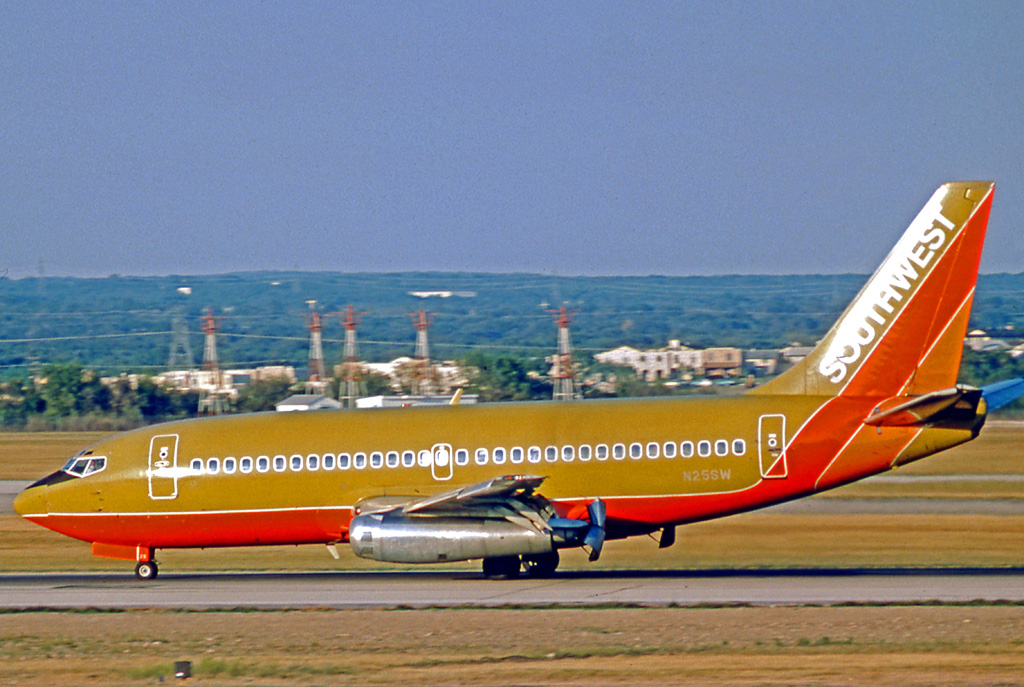
Southwest was the model for all the new entry airlines that followed as a result of the Deregulation Act of 1968. It had been a marked success and all the others hoped to follow in its footsteps. They created what they thought were business plans that emulated that of Southwest. We did much of that at Florida Express.
Some of the examples were the way pilots did things that they don't do at the older, established companies. Helping straighten out the cabin with the flight attendants after deplaning, to facilitate a quick turn and helping with the loading and unloading of passenger baggage would be a couple examples. Working in non flying capacities, such as teaching ground school and creating schedules were a couple more. The idea was that we had attached our wagons to this star and would be loyal in the lean times in hopes that it would become a success the way Southwest had and we would all reap the rewards. Federal Express was another such example. They started flying Falcon 20s. These were planes that had been used as corporate jets. Nice planes, but small by airliner standards. The business plan was to fly small, but important packages around the country at night, and to guarantee next day delivery. They were important enough to justify a high price and hopefully help FedEx succeed.
It worked ultimately, but at first there were rough times. There were stories going around about pilots needing to buy fuel and the company credit card not being accepted. The pilots paid for the fuel on personal credit cards and were reimbursed later. Eventually, they began to add Boeing 727s to the fleet.
The thing that Southwest and FedEx had in common, was a love affair between the company and the employees, especially the pilots. An unpleasant fact for typical businessmen is that if you are going to run an airline, you need pilots and it helps if you have a fantastic relationship with them. As we shall see later, not all businessmen are capable of grasping that premise. We were close to having that great relationship at Florida Express. The pilots were free to run the operations side without much interference. There were certainly some pilots who did not buy into the love affair, but most did. In the early stages, we thought the management wanted to create something like Southwest and Federal Express had created. We thought we had a chance of making it and reaching the levels of pay that existed at the traditional airlines. I can remember a few flight attendants complaining about heavy passenger loads, when we were in our busy times. Occasionally, I was inspired to explain that the passengers were the reason we needed flight attendants and if they ever stopped showing up, we didn't need flight attendants...nor pilots for that matter.
I now look back on the Florida Express days as an idyllic time in my life and in my career. I was flying as well as I had ever flown since my first lesson in a Cessna 150. I had the respect of everyone in the company, other pilots, the company management, the flight attendants and the mechanics, who were sometimes in an adversarial position. I had a wonderful family. Doreen was great with the children. She was the parent who was with them 100% of the time, I was gone half the time. I thought it was wise to let her set the agenda for raising them, while I backed her up. I had input, but I saw myself in a supportive position in her program. In retrospect, I believe that worked out well. We raised two great, high achieving children. I loved my job. I enjoyed going to work so much, that I had a feeling very much like guilt when I left my family. I knew they did not like seeing me leaving, but I was so excited about the rewards of job satisfaction, that it made me feel I was being a little selfish when I left. I got over it quickly. I have always been able to compartmentalize things like that. When I went to work, I was at work. When I came home, I was at home. One of the things I did as soon as I came home was to clean the pool. It was a mindless, routine process that kind of allowed me the opportunity to get myself adjusted back into home life. It had been nearly 20 years since I made the first steps toward an aviation career. Every day was telling me that I had made the correct choice. I was always meeting people who were telling me they wished they had been pilots. It was a career choice I was feeling a little smug about. When I told people what I did for a living, I always had a big smile on my face. I don't think everyone is as fortunate as I was to get myself in exactly the best profession I could have gotten myself into. I know many, many people who are just kind of sleep walking through their lives, because they are unhappy about what they must do for a living. I felt that I had very precisely dropped myself into exactly what I was cut out to do. If you read this blog from the very beginning, you may be able to understand that and see how it developed. This is one of the reasons I am writing this blog. I still have vivid memories of the struggles in my life to find the niche into which I would fit. It had to be something that captured my imagination, that interested and excited me, that motivated me to give my best effort. I have tried many times to talk about this subject with youngsters, but often see a lack of understanding of why this is so important. What are you going to do in your life to support yourself and your family? Have you thought about what it will be like to spend 40 or 50 years doing something that makes your mind go numb? This is one of the most important decisions you have to make, because everything else in your life will be painted in vivid colors or in dull shades of gray, based on how you play this. All of your other relationships will be impacted by how you feel when you are going to work. I loved going to work. I wish everyone could feel like that when they go to work. Why didn't everyone want to be a pilot? I just didn't know. I had worked at many jobs in my early life. Stock clerk/cashier at a super market, car salesman, insurance salesman, real estate salesman, motorcycle mechanic. Theater usher, hamburger flipper, grocery deliverer, as a high school student. I hated all of them, except for the motorcycle mechanic job. I simply could not get myself motivated to do the best I could do. Flying planes was what I was made to do. I loved everything about it, good or bad. The only other possible career choice for me could have been the military, but it would not have provided the juice that flying airplanes had done. I try to tell the young people I encounter in my life to spend the time and effort to explore all the different possible ways that you can spend your life. I tell them they may not have any knowledge of the job they are best suited for. Go to the library, get a book on careers, shadow people who are doing things you think you might want to do. It is one of the most important things you have to work out in your life. I didn't know all this at that time, but I am able to see it with retrospect. All those years of working as a flight instructor, air taxi pilot, flight engineer instructor, ground school instructor and even the time at Pacific Express had been building the foundation for being where I was at Flex. I could have been very happy spending the rest of my career there, when things were going well. Unfortunately, the good times did not roll indefinitely. Things started going badly. I guess there are many opinions about how things started going down the tubes. I think much of it had to do with the mechanical issues of the BAC 1-11. One of our captains told me that while he was on a layover in Norfolk, he called a travel agency, pretending to be looking for a flight to Orlando. He said the agent made an eight point argument about why he should pay more and go through a hub like Atlanta or Charlotte with one of the older airlines, instead of flying on Florida Express. When the airline started and only had three planes and one of them broke in the bank that was going north, a decision had to be made about which flight was going to be hosed. It was always the one with the fewest passengers and that was frequently the one going to Norfolk and Richmond. That flight was canceled. The CEO had told us at a pilot meeting that the brain trust had assumed most of our passengers would be people going on vacation, not repeat customers, such as business people. He also said they believed most of our passengers would be booking flights through our own reservation system. They thought they could get away with a certain level of mechanical delays and cancelations, because they would not be screwing the same people over and over. He told us they had tried to maintain the planes to a higher percentage of reliability, but that had been too expensive. They backed off to a lower level, that was much less costly. They thought they could get away with that. They were wrong about one of their assumptions. Most of our people were booking through travel agencies. Therefore, even though our passengers may not have been repeaters, the travel agents were. They kept hearing horror stories about how their clients were getting screwed and having their vacations ruined by our junky BAC 1-11s. This explains why they were selling so hard against our little airline, despite our low fares. Furthermore, there were also lots of business people flying with us. They know how to save a buck. One of the things the management looked into when things were going badly, was to talk to KLM about a code sharing deal. KLM would fly one of its 747s from Amsterdam to Orlando. Our pilots would then fly it around the US to several cities, picking up and dropping off passengers, then back to Orlando, where their crew would take it back across the pond to its home airport. We would also be carrying passengers from their inbound flights in our system and then feeding their return flights to Amsterdam. This plan would have been tap dancing around the edges of the cabatoge rules in place at the time. The big domestic airlines would not appreciate our efforts. We were attracting their attention. Previously, they were ignoring us, as long as we were flying to medium sized cities with small planes and not going to their hub airports. This would have been stepping on their toes in a big way. There were several mergers taking place at this time among the big airlines. Northwest purchased Republic, Continental merged with People Express, Frontier and New York Air. Previously these airlines each had planes competing on many of the same routes. When they merged, there were some extra planes, so they started flying some of our routes. This was something I had seen at Pacific Express. The bigger airlines would fly our routes, with better planes, at the same fares, with the express purpose of bleeding the smaller airline. They had many more flight segments and could subsidize the lower fares against us. This was starting to look like deja vu all over again.
Someone in the Florida Express management pilot group came up with an innovative idea about the time I became a check airman. We had lots more check airmen than we needed, so that we could rotate duties. We flew the line 2 months of 3. Then we did one month of checking duties. Part of the duties is Intitial Operating Experience (IOE), which is training in the airplane. Therefore, the month you were on duty, you could be training or checking in the simulator at USAir in Pittsburgh, or actually flying the line with a new first officer (co-pilot) or an upgrading captain. This helped prevent our check airmen from getting burned out. It is a rare pilot who enjoys year after year of only doing the training and checking stuff. Dixon had a group of pilots he consulted with. I was a member of this gang, which became known as Dixon's Mafia. I think he was smart in doing this, because he was able to draw on a tremendous wealth of experience and knowledge about the airline business. This is why I have always considered him the best boss I have ever had. I have already mentioned several of these pilots - Information Victor, Warren, Dave, Tomcat, Pepe were among the "insiders". There were also the 2 original check airmen, Jay and Mike. There were Bobby Z and Bob H. Later, several of these pilots would end up being directors of training, chief pilots (during a time when Dixon wanted to relax and enjoy flying the line) and ultimately, directors of operations. The down side was, that some of the other pilots began to see themselves as "outsiders" and in some cases, it was true. I tried to talk to Dixon about that and he seemed to acknowledge the point I was trying to make. One of the things I didn't like about being a check airman was that I was seen as "management" by some of the pilots. In other words, if they had a complaint about something, they thought they could unload their opinions on me. I only had the ability to try to influence those who really were at the controls with persuasion. Sometimes that worked, sometimes it did not. I hated having to defend policy I had no part in making, but happily defended anything in which I had involvement. Dixon always had a way of finding some basis for firing a pilot who needed to be fired. You may remember the story of Harry Larry, the guy who was number one on the seniority list, but could not get anyone to recommend him for a captain check ride. After doing some research, Dixon became aware that H. L. had been fired from a couple airlines before and failed to reveal that in his hiring process at Flex. Lying on an application will get you fired every time. (Of course, telling the truth may prevent you from getting hired in the first place.) I had some involvement in some of the other cases. We hired a guy who had flown for one of the contractors for UPS, it might have been Orion, the one I had interviewed with (can't remember which one for sure). He made a big splash when he first showed up. After only flying for us for a few weeks, he stood up at a pilot meeting and said all the pilots were not landing the BAC correctly. I wasn't there, but heard all about it for weeks. At that time, it was policy for jump seaters to wear a shirt and tie. This guy showed up with a Magnum P.I. shirt one day. That was all the buzz for a month or so. Then there were several captains complaining to Dixon or Bobby Z about this guy. Dixon asked me to fly with him for a month and write a report on the experience. Aside from telling me several times about how big his son's penis was, there was not much to complain about. However, it just seemed that he had no idea of what was or was not appropriate to say in several different situations. He could fly the plane well, but he was an annoying guy and I began to understand what people were complaining about. The thing that annoyed me the most, was that he was always lobbying to ask the controllers if we could land straight in, even when the airport was operating in the opposite direction. He had been used to flying in the middle of the night and I was quite certain the controllers would not allow opposite direction landing traffic when they were busy during the day. That didn't stop our boy. He would talk about it every time we were approaching an airport, even though I had discussed it with him in great detail and told him I didn't want to make us look like private pilots by making such a request. It was like being tapped on the head by a hammer after a few weeks, but he wouldn't let up. This and his comments about the way the group was landing the plane and disdain for the dress code for jump seating indicated that he had contempt for Florida Express. One afternoon, during a very busy time at Miami, he wanted to ask if we could land east when the airport was operating west. I was flying, so I said, "Go ahead and ask." He had a look of victory on his face. I wish I could remember exactly what the controller answered, but if you could read between the lines, it was something like, "What the ____ are you thinking, you stupid ____ing ___hole?" I don't believe the subtlety had any effect. So, after a month, I wrote my little report. I did not write about the repeated discussions of his son's genitalia. I said he was a good and safe pilot, but he had this thing about repeatedly wanting to go against the flow at busy airports and being a general pain in the captain's ass about it. No is no, dude. STFU. (I didn't put that last part in. I thought my wording was pretty mild as a matter of fact.) I didn't realize it, but the head shed guys were looking for any reason to dump this guy, so they called him in and began the process of telling him he was canned. He started crying and told the 2 Bobs, Dixon and Z, that he didn't realize what a pain in the ass he was and offered to seek counseling with a shrink. They declined and said adios. That night, he called me at home and said that report I wrote got him canned. I said, "Hold on there. I have been hearing negative stories about you since you first came onboard." I mentioned the meeting, I mentioned the shirt on the jump seat, I mentioned the many complaints from other captains. I said I didn't know they were spring loaded to dump his ass, but thought they might talk to him and give him another chance. They had had enough. I told him I didn't mention our intimate discussions about his son, but I told him how inappropriate that was. I told him that he needed to learn how to be more humble at his next place of employment. That was the best I could do for him. Then there was the story of Perry. He was a first officer who was getting lots of complaints, because he did not appear to be able to fly the freaking airplane. Dixon briefed me and assigned me to fly with him for a month and try to get him straightened out. Normally we alternate legs flying and non flying. I started out with Perry following that pattern, but soon saw that it seemed the intervals between each were causing him to not get the duties of each nailed down. He couldn't even get the non flying stuff right. I decided to fly several days and let him do the non flying stuff, leg after leg, to kind of get the hang of it through repetition. When he seemed to be doing well enough on that, I had him fly each leg repeatedly, while I did the non flying stuff. When he flew an approach to land, I had to take the plane away from him. I did so at the point where I thought the passengers may be able to sense that things were going wrong and were getting scared. With repetition, I was able to work him closer and closer to the runway. The landings were always an adventure. I'll bet most of you didn't know this kind of stuff was going on up there, did you? He couldn't get anything right. He messed up all the FO ground duties, like copying clearances and preflight inspections. I had to go back over everything he did to find all his mistakes. One time, as we were beginning to taxi from a gate in St. Petersburg, I tried to turn the steering tiller to the right and it wouldn't move. I slammed on the breaks before I hit anything and started trying to get to the bottom of the issue. The BAC had a steering tiller on both sides and now I am understanding why they don't do that on every airliner. Perry had this big clip board and laid it on a little fold out table over there in a way that it blocked his tiller, and therefore mine, from moving to the right. It was just one thing after another.
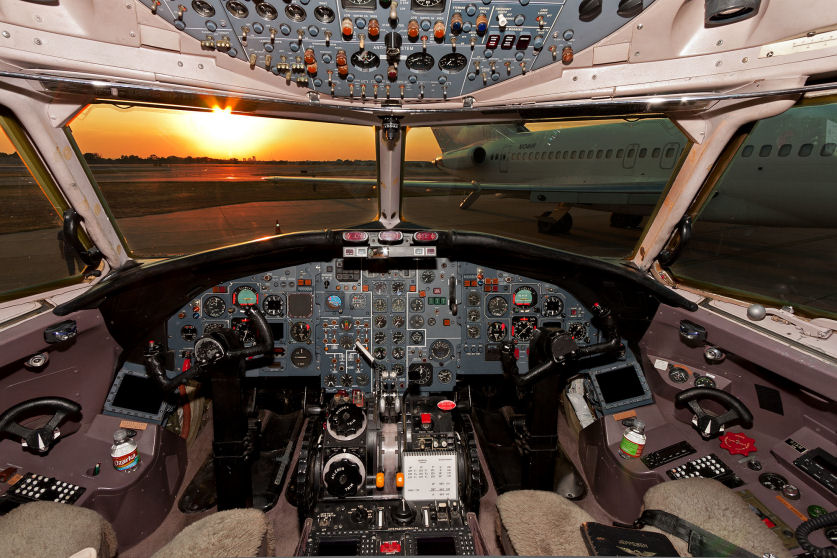
BAC 1-11 cockpit. Notice the partial wheels on each side.
One night we were flying to Middletown Pennsylvania for an overnight. That is the airport for the state capital, Harrisburg. As we were descending, the weather went below our minimums. The dispatcher and I agreed that we needed to go to Philadelphia. Philly was not one of our regular airports, but was an alternate for Harrisburg. You may remember my discussion about off system airports and how I hated going to them. We had a book in the ship's library that supposedly gave us all the information we needed at an alternate airport. Where do we park, who fuels the airplane, stuff like that was supposed to be in there. I had to park the plane on a taxiway, as I looked through the book for the pertinent information. There was an FBO there, that I had visited during my general aviation days and that was listed as the company that would handle us there. I called their frequency and they didn't know anything about us. Long story short, I finally found a place to park. We let the people off the plane on the ramp and they all wanted to know what was in store for them. I didn't know until I called the company in Orlando and they were not at all prepared for this situation. Normally, when things like this happen, the company puts everyone in a hotel, but we worked for an el cheapo airline. They decided to hire enough buses to take the people to Harrisburg that night. They were not happy, because it was already very late. I was the only representative for the company on the scene. Perry was useless. My brother, Kevin was working in Philadelphia as a controller and I called him. He came over to say hello and laughed at the mess I was in. That's what brothers are for. Next morning, the company wanted me to fly the plane to Harrisburg to position it for the normal flight back to Orlando. We would be very late, but we could get those passengers and the plane back in the system. However, my headaches were not over. With tail mounted engines, the BAC is a tail heavy plane and requires ballast in the forward baggage compartment when there are no passengers onboard. Sand bags are used normally. We had no one who had any spare sand bags laying around, so I had to use my creativity. I called USAir at the PHL airport and was connected with the man who was in charge of all their ramp workers. I tried sucking up to him by telling him I had worked for USAir for 3 years and that I was in a bind. He said he had no sand bags to spare, but he had many cartons of inflight magazines that he could bring over and they could be sent back from Harrisburg on a USAir flight later. Brilliant. He brought them over and had his guys load them and off we went to Harrisburg. While I was flying with Perry for the month, I began to learn what he had said about his background before getting hired at Flex. He had been a flight engineer at TWA, but had never upgraded there before he was furloughed. He claimed to have flown the Mitsubishi MU-2, known as the Rice Rocket, after he was furloughed. It is a turbo prop airplane that is very short coupled and is a very squirrely airplane. I know, because my old pal, Weber was flying one and I had read about it. It is challenging for good pilots, for lots of reasons and I could not imagine Perry being able to handle it and then looking so pathetic in the 1-11, a relatively docile airplane.
Mitsubishi MU-2
Dixon started digging around and there was reason to believe Perry had not been completely honest with us. Orlando was his home town and he thought, because we were a tiny company, he could pull a fast one on us. At the end of the month, he was called in to the office and he never showed up. Adios II. The third part of this story involves the pilot I mentioned earlier, who called in sick more than all the other pilots combined. This particular pilot had busted a simulator check ride in Pittsburgh while doing a go around from a non precision approach. I was assigned to go to USAir with the pilot and train to proficiency. I read the notes and discussed what happened with the pilot. It involved a simple misunderstanding, but I couldn't believe that a pilot had gotten this far and could still have this particular misunderstanding. We discussed it, then went in the sim. and just kept doing one non precision approach after another with go arounds, until I saw one that was good enough to pass. Badda Boom, Badda Bing. I had been a check airman for about a year and a half and realized I did not like having these career effecting situations as much as I was having, so I returned to the line. Adios III.
I made this little video of myself writing my blog.
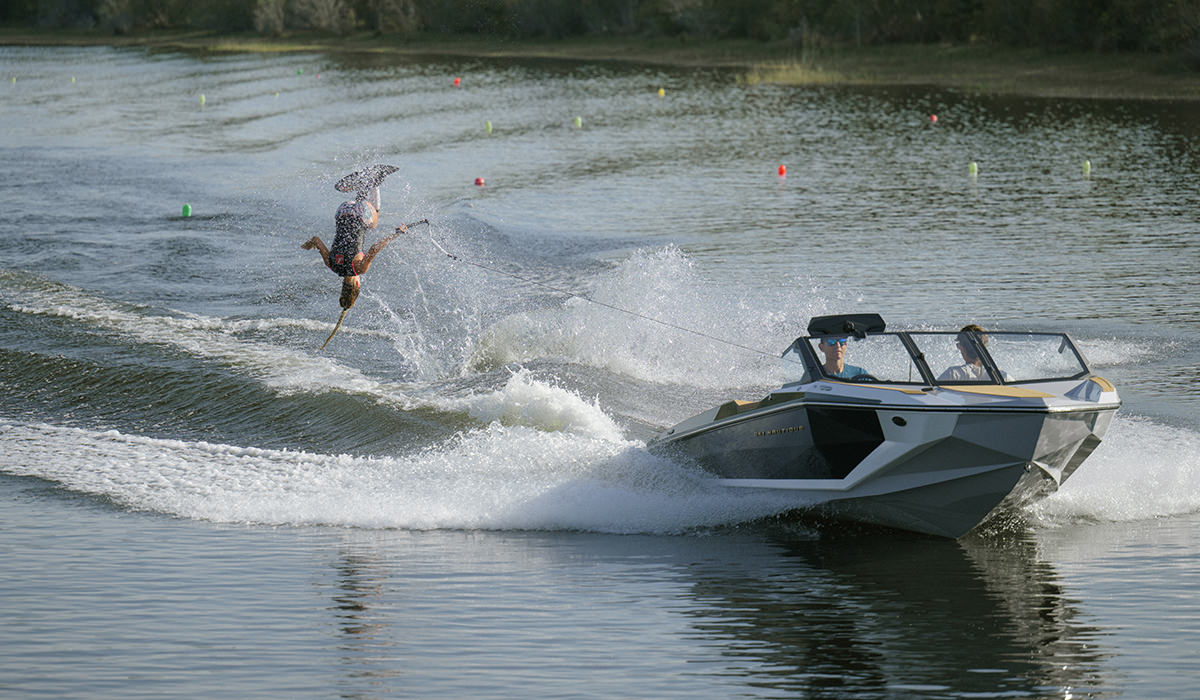
Florida Express made this little video to sell seats on our airplanes. I had several favorite first officers to fly with at Florida Express. One was Maurice, Pepe Le Pew. He had a French accent and had a funny way of saying some American sayings, such as "piece of pie", instead of piece of cake. He was always looking for the romance with the womens and that is how he got his nickname. He would drive his Mercedes home from the airport, wearing his pilot hat and a white scarf and if he pulled up next to an attractive woman at a light, he would lower his power window and say in his accent, "Good evening". I guess it must have worked some times, because he continued doing it. Maurice lived in an apartment at the Lake Fredrica Apartments. They were on the north shore of Lake Fredrica and Maurice bought a Ski Natique boat designed for pulling water skiers. This became the basis of several company parties on the lake shore.
When Dave was first hired, he had to do Initial Operating Experience (IOE), some of which can be done while riding on the jumpseat. I was flying with Maurice, so Dave rode with us and Maurice suggested a landing contest. Dave would be the judge. Maurice was leading until the very last landing, which was mine. I got really lucky and made one of those landings in which you don't even know when you have touched the ground. It was a heart breaker. Sorry Pepe. Of course, I had opportunities to fly with Dave and that was cool, partially because it was a kind of role reversal. He had been one of my early flight instructors and my chief pilot at Graham Aviation many years before. Another favorite was Doug Rothermund. Doug was a tall, thin guy, very nice and a very good pilot. One of my favorite stories about him occurred on a pleasant evening flight from one of our cities on Florida's southeastern coast. I can't remember exactly which one, it could have been Miami, Ft. Lauderdale or West Palm Beach. Whichever it was, the other two flights were also returning and we were lined up on the arrival to Orlando. We were not the first flight in line and heard the air traffic controller call traffic for the flight we were following. "FlexAir XXX, you have traffic at XX o'clock, a Skyhawk at X thousand feet." When he called the Flex traffic to the light plane, the pilot said, "It is not a Skyhawk, it is a Skylane."
Cessna Skyhawk
Cessna Skylane
Can you tell me the difference between these two planes from these pictures? Me neither, especially when they are several miles away from me, when I'm flying a jet at 250 knots.
The reason the controller makes those calls is to allow pilots in both planes to be aware of each other and to give them some basic information that will allow them to understand the performance differences and what to look for.
The Skyhawk and Skylane are both made by Cessna and look nearly identical, especially in the circumstances I described. Their performance is very similar for our purposes. The Skylane is a little bigger, has a more powerful engine, carries a little more weight, goes a little faster and costs a little more. However, the only pilot who would be compelled to correct the controller on that traffic callout would be the owner of said Skylane. It really wouldn't make that much difference to a renter or to any of the other people involved in the situation. They are usually just referred to as Cessnas when being called as traffic. The controller kind of apologized and corrected himself and I could tell from his tone that he was thinking, "So what?"
Doug was flying this leg and I was talking on the radio. I kind of laughed and said to Doug that we must have been hearing the owner of the Skylane. He kind of chuckled. When the controller called the traffic for us, a Skylane, I asked, "Are you sure it's a Skylane and not a Skyhawk?" (Wise ass airline pilot.) The controller said, "Oh no, it is not a Skyhawk, it is a Skylane." as if he were talking to a child. Doug and I would have fallen out of our seats laughing if we were not buckled in.
From that time on, Doug and I always called each other Skylane.
I have been jumping around in time a little on this Florida Express segment of the saga. I'm telling the stories in the order I remember them. I've never forgotten this one, but I think this is a good time to tell it. Upon parking on the Orlando ramp after a morning flight from Cincinnati, I noticed Chief Pilot Dixon walking toward my jet carrying his flight bag and wearing his uniform. I knew what was happening. Earlier that morning, Captain Twirly (Dave) had driven Doreen to the hospital. When he saw that she was in good hands, he hugged her, said good luck and left. The nurses thought he was her husband and were dumbfounded. I almost wish I could have witnessed that, but if I had, it wouldn't have happened. This is getting confusing.
So anyway, Dixon came on the plane and told me what's going on and I headed for the Orlando Regional Medical Center, arriving in time to witness the birth of my son. He was a big one, 8 lb. 15 oz. He was a chunky rascal and I always said he was like a chunk of moose meat. Oh, come on, it's a father and son thing. His nickname was Moosey. Caitlin's was Boo Dinky which evolved to Boom when she was a little older. Doreen said she was glad that I got my son, but I would have been very happy to have another daughter. I really liked my kids when they were growing up. They were lots of fun and in some ways I wish we all could have frozen all our ages in the Florida Express era. Captain Twirly became Uncle Twirly, except that the kids had a funny kid way of pronouncing Twirly. Twirly became Torly or Tor. Maurice became Uncle Pepe. We were a small, tight group at Florida Express and everyone knew everyone. I always felt that I could have walked into the office of the CEO, addressed him by his first name and discussed anything with him. Of course, I would not violate the chain of command. The military experience still had a strong influence on how I conducted myself. If I were going to talk to him, I would get permission from the chief pilot or director of operations. We started looking for a house to buy when I was able to exercise my first option on the shares of stock that I received for setting up the ground school. The shares opened on the market for more than the price I was offered and I bought and sold them in one transaction, netting enough for a nice down payment. Although we were not looking for a house with a pool, the first house we both liked had one. We knew the problems this created for parents of young children. Drowning and near drownings were pervasive in states like Florida and Texas, where there were lots of pools and other bodies of water. We were determined to do everything in our power to assure that our children would be safe with a pool in our backyard. Doreen heard about a guy who offered swimming lessons to children. We talked to lots of people and watched several lessons in progress. After talking to the guy, Harvey Barnett, and his wife, we decided to enroll our kids in lessons. Mike was about 20 months and Caitlin about 3 years. There is much controversy about this guy and his company and method, but we were convinced that it was something we had to do. It was kind of like getting inoculations for your children. They don't like it and cry and you don't like seeing this happen to them, but you know it is something you must do.
This is Harvey at work. It seems a little rushed and abrupt compared to my memories of our kids' lessons, but Harvey was a little more abrupt and less gentle than his wife was. We believed in all the reasons for doing this and wanted our kids to be able to buy time for themselves and even be able to return to the side of the pool and get out, if they fell in. They learned how to do that and I have an old video on tape that proves it. Learning all this was not enough. We bought a special fence and had it installed around our pool. We had to be concerned about the children of our neighbors and we had to have a barrier right at the edge of the pool. There were all kinds of stories about children climbing chain link fences around back yards or finding doors that were not secured and getting into pools. When they get into water without training, children try to doggy paddle and remain vertical. Then they sink and drown. Near drownings are nearly as tragic. The lack of oxygen causes severe brain damage. They must be trained to rotate to their backs and float. Their legs are shorter and weigh less, so they float easier, than adults do. They also cry, which is like an alarm sounding to alert adults that something is wrong. I have video of Mike from under water. I am always impressed when I see the change in his demeanor as soon as he rolled face down and started swimming toward the side of the pool. He went from crying to all business. You can see him looking around to find the wall and then getting busy propelling himself toward it. When he got tired and needed air, he rolled to his back and cried a little. When he was rested, he rolled again and moved toward the wall in a calm, but serious fashion. He would hold the side of the pool and then hike his leg up and crawl out. When kids are beginning their lessons, they start crying while floating. If they cry too much, they blow all their air out and sink a little into the water. I was always intrigued watching them experiment to see how much air they could expel in their crying to be able to stay on top of the water. Because of the age difference, Caitlin was finished earlier than Mike. Harvey wanted to teach her to snorkel with fins and we said OK. At this point, his stern attitude and abruptness began to bother me. She had learned the survival techniques we had set as our goal and I thought that was enough. It was time for her to start having fun in the water, instead of working. When they were both finished, we started spending hours in our pool, having fun and learning how to swim better. I would challenge them to swim across the pool, then the length of the pool, then go to the bottom, 8 ft. deep and retrieve objects. There was a slide into the pool and we were having a blast. I think the pool helped us all get through the hot days and evenings of the Orlando summers. When there was no adult at the pool, the fence went up and it was off limits for the kiddos. I think these lessons did a lot to teach our kids how to deal with challenges and adversity. I often told them later that they had that to fall back on when things were looking tough for them. They had been taught and challenged from an early age to persevere and they succeeded. The mental toughness they gained from this experience would serve them well in later years, when they grabbed the responsibility for their educations by the horns, when that was necessary. Caitlin became a very accomplished competitive swimmer in later years. I thought that Doreen had demonstrated such interest in the training, that I suggested she become an instructor, if she wanted to. After a little thought, she decided to give it a go and this would be very helpful to us a few years later. In the mean time, she was teaching children in our pool and I think she was a much better and effective teacher than the guy who developed the system. As I said there is much controversy surrounding that guy. You can Google his name or Infant Swimming Research if you want to see what I am talking about. He has changed the name of his organization slightly a couple times. I have mixed feelings about him. However, I think the purpose and fundamentals of what he is doing are important and I never regretted having Caitlin and Mike take the lessons.
The symbol above was created by my son, Mike, for the cover of his Flexible Flyer song and the CD album of the same title. You may recall that one of the reasons I came up with the title of my blog was the Flexible Flyer sled I had as a child. Another part of that was our call sign at Florida Express, Flexair. It came from the first two letters of each of the words FLorida EXress. Yes, I know most of you are smart enough to figure that one out. Remember Pacific Express was PacEx.
The call sign was often abbreviated to Flex, by both our pilots and the controllers. Often when we were just talking about the airline with fellow pilots, it was referred to as Flex. We had to be very flexible to fly for that company, so that is just about all that went into the process of coming up with the title. As I said, I thought about this for a long time and used to bug Mike to write a song titled Flexible Flyer or even use that as a name for one of his bands. I wasn't all that serious about that, but I guess he thought I was.
I look back on this time as the peak of my flying skills. I had spent 3 years teaching the systems of the plane I was flying. I had spent more than a year thrashing around learning how to fly it in mountainous parts of the American West, eventually upgrading to captain. About a year after upgrading to captain at Flex, I became a check airman. This meant I was a training captain for both new captains and new first officers. Check airmen did the training in the simulator in Pittsburgh and in the airplane while flying the line.
We had to be able to fly the plane from either the left or right seat. This was a little trickier than you might think. One of the first things you would notice when training someone who was moving from the right seat to the left seat was that they did not line up on the runway or taxiway center line at first. This was not too big a challenge to correct. It was just necessary to show them the sight picture when they were on the line. Of course, another issue was switching the hands with which you flew the flight controls and moved the throttles. (They are called thrust levers on American made jets, but were still called throttles on the British Bullet.) It may just have been me, but another issue was getting used to having all that open cockpit space on the side where I had become accustomed to having a wall and window. It was weird....weird I tell you.
My friend, Warren, became a check airman at about the same time. We could give each other our required line checks while flying on the same trip together. One such occasion occurred on a nasty winter night, while flying to the Akron-Canton airport, one of our new destinations as we acquired more planes.
I was flying and Warren was in the right seat, acting as FO, but also checking me. When we got the ATIS (Automatic Terminal Information Service - I know you remember this from my previously mentioning it.), we learned that the cloud ceiling was 200 ft. and the visibility was 1/2 mile. Those were our minimums for starting the approach. If they would have been worse, we would have had to go to an alternate, without beginning the approach at the destination.
This situation was a classic example of a problem we emphasized to newly upgrading captains with our airline. I mentioned earlier, that we were flying the BAC to the limits of its range, far more than the original intent of the designers. Preflight planning by the dispatchers and pilots require having enough fuel to fly to the destination, then to an alternate if weather requires, then for an additional 45 minutes. Jets have a much higher fuel burn rate at lower altitudes than higher. Once you leave your cruise altitude, descending to the destination, your options are limited. While at the higher altitude, you could glide at idle thrust to all the airports within a mileage radius of about 3 times your altitude (33,000 ft. = 99 miles glide), so you should be checking weather at all these places and talking to dispatch to make all these decisions before you have to descend to the original destination.
The Akron - Canton airport (CAK) is between Pittsburgh and Cleveland and is definitely the smallest dog in that fight. By this, I mean those two busier airports have higher priority in the air traffic control considerations when it comes to the strategic planning and developing of arrival and departure routes as well as the tactical considerations in real time. What this meant to our Flexair flight that night is that we were held a little high by the controllers and had to do a "slam dunk" descent, with speed brakes, to get down in time to be at the correct altitude to begin the approach.
Warren is a big dude, from Texas and likes to hear himself talk. Nothing wrong with that most times. He is smart and knows a lot about a lot of subjects. I always enjoyed listening to him talk. On this particular night, I found myself wishing he didn't talk so much. As we approached the point where we needed to begin our descent, we had the big picture on surrounding airport weather and our plan was to attempt the approach, then go to an alternate, if we missed the approach (did not see enough to land). Warren got into a conversation on our second radio involving dispatch and the Florida Express station people at CAK. Blah, blah, blah!!!!
I needed him to be dealing with the ATC situation, as they were not giving us the descent altitude clearances we needed and we needed to brief the approach to make sure we were both on the same sheet of music. We were both check airmen and had flown together enough that we could do that in abbreviated terms, but we still needed to make sure we had the same plan.
The procedure for the ILS approach would be to get slowed and configured for landing before intercepting the glide slope, then flying the GS to 200 ft. above the runway. This would all be hand flown, because we did not trust our old autopilots to do it as well as we could and well, we just liked the challenge of doing that.
When we got to minimums, there are several specific things the pilot not flying needs to look for. If he sees one of them, he calls it out and we land. If he does not, he calls that out and we execute a go around. We practice this stuff in the simulator all the time. No sweat.
Some of the problems with this particular approach, was that the runway was short, it was covered with snow that had been plowed and was hardened by planes operating on it. It would create a braking challenge. Furthermore, the plowed snow was piled up along the side of the runway into snow banks.
My plan was to fly the glide slope to the runway, with very little landing flare and get the plane on the ground at the earliest possible point. The snow would soften the landing a little, but I was more worried about getting stopped in time. I would not use the wheel brakes until I was convinced they would not cause a skid. I would use the engine thrust reversers until I was certain the plane would stop before running off the far end of the runway. Normally we would stow the reversers as we decreased through 80 knots, but I was going well below that to about the speed you would use to walk on a slippery sidewalk.
Yak, yak, yak. I finally said, "Just tell them what we are doing and get back in the dance. I need you here with me." or something to that effect. Real captain stuff. As I said, it didn't take much time to transfer my plans and we were in agreement.
This turned out to be one of the best approaches I ever flew and that is probably why I remember it so well. When we got to 200 ft. Warren could kind of see the glare of the bright, flashing approach lights, we call the rabbit, coming up through the fog and snow. We decided that was enough and continued to 100 ft., where we saw runway lights. That is the definition of one of the requirements for what we must see on such an ILS approach. Very cool.
I was locked on the localizer and glide slope and Warren was watching for any deviation. If it happened, he would call it out. It all went just as we had planned. We touched down in the target, got into reverse, stayed in until we were down to walking speed, then tested the wheel brakes and stowed the reversers. We were about the length of the plane from the end of the runway at that point. If it had looked closer, I would have tried the brakes a little sooner.
Taxiing in those conditions is as challenging as flying. We made our way to the ramp, parked and shut down as the passengers walked off the plane into the blizzard. Warren said he was buying the beer at the debrief at the hotel. See you at the bar.
We discussed one of our captains who called in sick more than all the other pilots combined and frequently ended up at alternate airports. Warren explained it this way: "When guys like you and I learn that the weather is 200 and a half, we think, 'Oh, I have a chance to get in there and we fly the approach and miss if we don't see anything. When (blank) learns that weather is at minimums, (blank) thinks, 'I'm calling in sick or going to the alternate.'"
There were three cycles in our business in Orlando. It was like a wave, building up to a peak, three times a year. The first wave build up of the year was Spring Break. The passenger count would build slowly after the first of the year, until the spring frenzy was over.
The next peak was during summer. The loads would begin to build until late in August, then drop precipitously. The third wave built up until Christmas, then there was another big drop. We had three frantic periods, then three periods during which we could take a breather.
The problem for the managers of our little airline was staffing. If they staffed for the peaks, they had too many people for the valleys. If they staffed for the slow time, we would be overwhelmed during the busiest times.
Staffing in other departments had issues also. For example, the agents and mechanics in Orlando were very busy when the planes were on the ramp in a bank, but things were snoozy after they left.
In experimenting to find the best level of staffing, the company let things get a little thin and expected the pilots to pick up the slack. They started calling us on our days off to come out and fly. Some of the pilots bought answering machines and screened their calls. Some decided to just say they could not fly when called.
One very busy day, when several pilots had refused to come in on a day off, Director of Operations, Captain Al Frink was in the crew room, where dispatch and scheduling were located. He lost it and said, "Fire the next pilot who refuses to come in." You may recall, Jim, the guy who ran dispatch and scheduling at Pacific Express and then came to Florida Express in the same capacity. When he heard what Frink said, he said, "Wait a minute. We have a problem with not enough pilots and you want to start firing them? Why don't you offer them money to come in?" They did and it worked and this was the beginning of the end of our lousy salary system of pay.
The pilots had been hanging in with the company, flying tough schedules and junky airplanes and making it work. It was time to find a way to reward their loyalty.
The first attempt was to offer a bonus based on fuel consumption. There were comparisons of the fuel burns of all the pilots on all the various legs and those who had the lower burns were given a bonus. It didn't take long to understand the pitfalls of this process. Pilots were beginning to experiment with techniques that had dangerous potential. Just one example had to do with what is known as "stabilizing" an approach to land.
Jet engines are a little slow to "spool up" from idle to an engine speed that produces significant thrust. The conservative way to fly an approach is to slow the plane, extend the gear and flaps, establish the correct speed for weight and conditions, then adjust the power setting to maintain all that on the correct glide path to the runway. Everything is stable and most airlines require this to be done by 500 ft. above the runway. This can be done earlier, which is more conservative, but uses more fuel. It can also be done later, which is less conservative and saves fuel. The problem with the latter, is that if something which requires a go around occurs, there may not be enough time for the engines to spool up, before the plane contacts the ground.
With all the variables, it is far more complex than that, but I think that gives you an idea of where some of the folks were trying to get that bonus money. The good thing about our little company was that we could see things like this happening, bring them to the attention of the chief pilot and get them corrected quickly. The company was pretty good about letting the pilots run the flight operation side. They had learned to trust that we were doing what was in the best interest of the company.
After the fuel conservation pay program was broken up, the company came up with one that paid a bonus for flying extra hours each quarter. It is not easy to explain and I probably don't remember it as well as I could, but essentially, if a pilot flew 25 extra hours each quarter, there would be a bonus paid.
I talked to my friend, Warren, who was holding some position in pilot management at the time, and he gave me all the details and answered all my questions. The thing about pilots is, that they are really good at figuring out ways to work a pay system.
After getting the fine points of this system digested, I took a pencil to it and determined that I could make an additional $10,000 per year. To confirm my thinking, I called Information Victor and he agreed with me. It would be rather easy for a pilot to make an additional 10 Grand. We had more than 100 pilots at the time. 10,000 times 100 equals a million bucks. I called my friend Maurice (also known as Pepe Le Pew, because he was French and he was always chasing the womens), explained the deal to him and asked him if he thought he could do what was necessary to make the 10 Gs. I picked him, because he was sharp with the $s and he was about midway on the seniority list. He said he could do it.
So, within a few hours of knowing the details of the pay plan, 3 pilots had determined that it had the potential to cost the company a million dollars or more.
Maurice and I went to the pilots who were currently managing the flight operations department and asked if they would like us to monitor the system and maintain a howgozit view of it. Dixon was taking a break from management and went "back to the line", to just fly the airplane for a while. The new guys said no, there was a new computer system tracking everyone's time and they would just wait until the end of the year and total it all up for the bonus. We said, "Oh", and just kept track of how we were doing as individuals and we were on schedule all year to do what we thought we could do. We actually wondered what we might be missing.
At the end of the year, our CEO had another pilot meeting. He announced that we would not be doing the bonus for time plan the next year, because it cost more than $ 1 million and they did not expect it to be that expensive. Information Victor, who was never bashful, stood up and told the boss that a few of us dumb pilots had gotten together as soon as the plan was announced and calculated that it would cost the company a million bucks, so why didn't management know that. The boss said, "Well Victor, I guess you are just smarter than us." He was right.
There was one guy, who was even smarter than we were. We all flew our butts off each month. This guy saw that all you had to do was fly your butt off one month each quarter, then goof off the other two, to get the 25 extra hours each quarter and 100 for the year. This was what the bosses were mad about and probably the main reason they decided to cancel the program for the future. If we had been allowed to monitor the process, as we requested, we would have seen what he was doing and what the group was doing and given them a heads up, but NOOOO! They had a computer doing all that.