Featured Post

Friday, February 26, 2016

Bend Ze Knees, 15 Dollars Please


Little brother, Kevin, rode down to Atlanta with me.  It was Christmas break.  I rented another UHaul trailer, loaded my junk and headed north.  Ugh!  

I had been enjoying the milder winters.  The summers were a little too hot, but I was not crazy about the prospect of living in snow country again.  It was the middle of winter, going through the mountains of West Virginia and it was not a flying job.

I spent the quiet time during the drive trying to solve that problem.  What could I do to make myself look forward to winter in Pittsburgh?

The answer that kept coming back was skiing.  Yeah, I only had a couple encounters with that and they were not enjoyable, but everyone else seemed to be having fun.   Perhaps if I could learn how to do it.

Making a financial commitment always helps me focus.  I went to Willi's Ski Shop and dropped $500+ on equipment and clothes.  That was real money for me in 1980.

But before that, I started my time of employment at USAir on NewYears Eve 1979.  I guess I didn't do much that first day.  All I can remember is that I had a cold.

I would be working with Jim Quinzi and Doc Watson on the BAC 1-11, a small, British jet.  It had been the primary plane of Mohawk Airlines, which merged with Allegheny, which became USAir.  The BAC (some people pronounce it Bock, the Brits always say B.A.C.) was a stepchild airplane at USAir.  Jim and Doc were mechanics and had gone to the factory school in England when Mohawk first bought the plane.  There were a couple other instructors who had gone also, but they had moved on to other planes at USAir.  Jim and Doc knew all the nuts and bolts of this plane and would begin my training program.

When I first started flying, Allegheny was the airline I wanted to fly for eventually.  My ex-wife worked for them.  My friends, Dan and J.B. worked for them.  Allegheny was my home town airline and it was now called USAir, which implied they intended to grow the company's system beyond the regional system they had always operated.  Pay and benefits were good and it seemed like a good place to hang out until something came along.

Somewhere in all this time, one of my students offered me a job.  His company sold large, industrial pumps.  He was one of the guys who got all the licenses to fly his Seneca II, but hired me when he was flying employees or customers.  He had even taken me on some really cool trips to the Eastern Shore of Maryland. 


The Eastern Shore is a place that seemed to have been left behind a little by the passage of time.  It was quaint and beautiful.  We flew down there to hunt geese on one trip and to go fishing in the Chesapeake Bay on the other.  These are examples of the some of the fringe benefits of working at Graham Aviation.

Any way, this guy wanted me to work as a salesman at his company and be available to fly the airplane.  There were times during the five years at Butler when I probably would have jumped at that opportunity.  

The belief that I would live my dream and become an airline pilot wavered dramatically and the thought of such a corporate job would have been very attractive.  However, once I made the decision to get the flight engineer rating, I felt I had to follow through and give it my best shot or regret it for the rest of my life.  I explained that to my student, friend and prospective employer and he understood.

Jim Q. told me to learn one of the airplanes systems at a time.  I would start with the Auxiliary Power Unit (APU).  This was the small turbine engine mounted in the tail, that drove a generator to provide electrical power and used bleed air from its compressors to provide air conditioning on the ground.
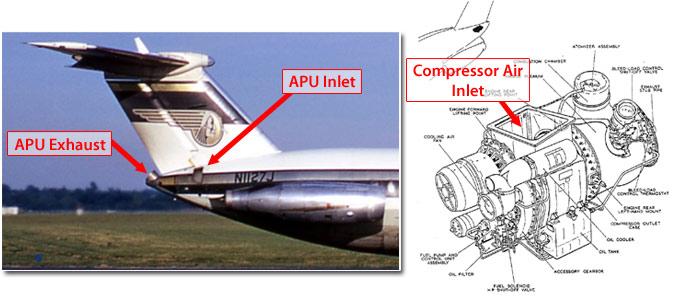


I read manuals and sat in on classes as Jim taught them.  He was a very funny guy and we always had a lot of fun in his classes.  He set the tone for our group.  The format for all our classes was to use a slide projector with lots of pictures.  They were sequenced properly to tell the story we were telling.  They were the lesson plan outline that I had learned about in the army instructor classes.

Early on, Jim told the students how we taught the plane.  He said that we were going to tell them what we were going to tell them.  Then we were going to tell them. We would follow this up by telling them what we told them.  Repetition.  We reinforced this by having them talk about nearly the entire plane with each of the three of us in the classroom, to get a slightly different perspective and way of describing it from each of us.  If I taught the APU yesterday, Jim or Doc would start the next day by going around the classroom asking each student what he or she had learned the previous day.  We would do this until we were satisfied that all the important stuff was digested and understood.  Then we would have a big overall review just before the written test.

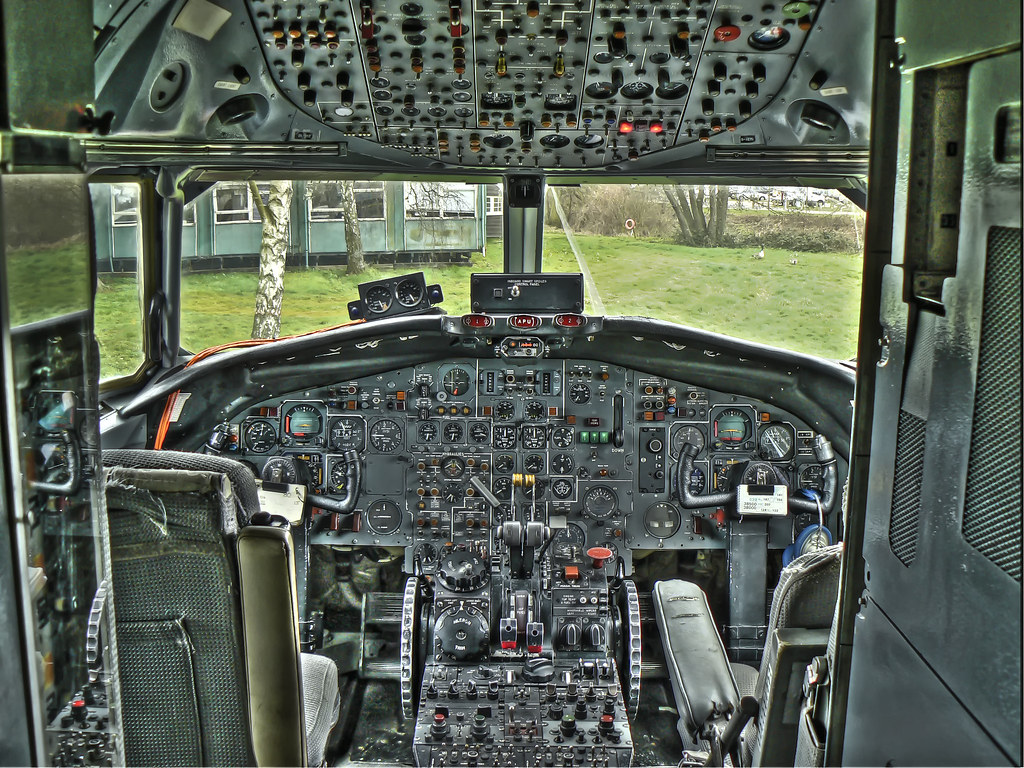
The way we told them what we were going to tell them, was teaching the "origination check list" the first day in class.  This was the interior preflight check done by one of the pilots before each sequence of flights.  It followed a flow pattern through all the cockpit panels, discussing every light, indicator, switch and control.  We had a slide tray all ready to follow that pattern and Jim wanted me to be the primary guy to do that day.

I really enjoyed this.  It sped up the learning of the entire plane for me to learn how to do that.  I would tell the class that I was about to teach them everything they would ever need to know about the BAC 1-11 in one day, but that they would not be able to remember all of it.  We would then spend the next couple weeks going back over all this and discussing it in detail and then reviewing.  I think this gave them confidence that they would get it all and would get it well enough to retain it.


Tuesday, February 23, 2016

Too Close


If I were going to discuss all the details of my personal life, with relationships, during this career building phase, I could post this song at several stages and I would be on both sides of it.  After the divorce, I decided I needed to be ready to move anywhere in the world, at any time to get an appropriate job in aviation.  I tried to explain that situation in any relationship.  I don't think I was always successful in maintaining clarity on that, but leaving Atlanta was not as tough as other moves.  

I had been dating a young lady who worked at Flight International.  In fact, she was the first person I talked to when I called to enroll in the school.  We had become friends and were hanging out together as friends and it just kind of moved into the dating phase.  She knew and understood the commitment to career that we all had when we came to the school or even to work there as instructors and there were no tears when I left.

Pilot hiring by the airlines runs hot and cold.  It was hot when I first went to Atlanta, but was cooling down after a year.  I was able to work steadily and make some money.  Eventually, the number of students coming in the door dwindled.  This was another deal where I got paid for how much work I did, you know, the American way.  The more I worked, the more I made.  I put out the word that I was looking for a job.  I wanted to work as a pilot for an airline, but no one was calling.

The guys who convinced me to leave Graham Aviation and get an engineer rating, Dan Wylie and his dad, J.B. told me that USAir was looking for a ground school instructor.  I sent a resume and was called for an interview.  I took some time off and drove to Pittsburgh for the interview.  I spent some time hanging out with my parents and brother and saw all my friends.  

At the interview, I met Ron, the manager of the ground school, and Jim and Rich, who were the managers of the programs for the BAC 1-11 and DC-9, respectively.  They hired me to work on the BAC.  I think I might have been a little too much for Rich.


Holtzer

My good fortune at being associated with great people in my aviation career was about to continue.  All the guys I flew with at Butler were great stick and rudder guys and were both smart and wise. (I was learning that intelligence and wisdom were not the same thing.)

I was working one evening and met two guys who had just transferred to our flight engineer school from the one run by Braniff  International Airlines.  My memory is a little fuzzy on this, but I think they were most of the way through their training when the Veterans Administration had issues with Braniff using their school and the VA's money to train engineers, then hire them.  They came to us to finish up their simulator training.

They were Walt, a former Air Force RF-4 pilot and Bill a former Navy pilot.  They were both great guys and we hit it off immediately.  They were looking for work and we were always looking for good instructors, so I mentioned them to Rod.  He quickly hired them.


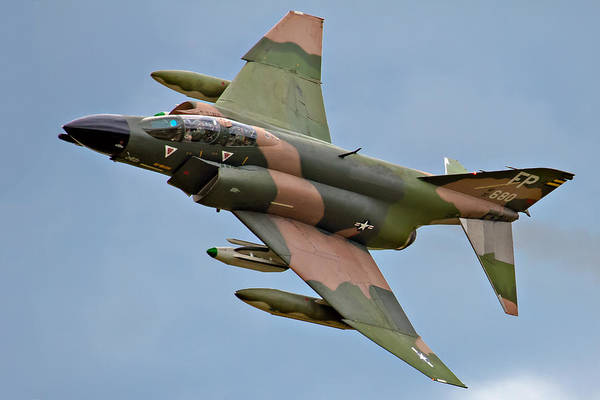
The RF-4 was a reconnaissance version of the F-4.  It carried cameras for taking pictures of areas before and after bombing attacks.  I asked Walt what the plan was if an enemy fighter showed up and he said he would get down on the deck and go really fast.  The F-4 was very fast at low altitude and the RF was much lighter than the fighter version.

His call sign was Holly and I would frequently double date with him and his wife.  We drove to South Carolina to visit his parents' farm.  We spent lots of time talking over beers about our aviation futures.

He will show up in a future chapter, which is when we started calling each other Holtzer.  I'll explain when we get there. 

Braniff was hiring like crazy at this time.  These were the early days of Airline Deregulation and Braniff's strategy was to fly everywhere.  They were flying B-747s all over the place and even had a Concorde.  I sent them a resume and application.  Someone from their  HR department called and said I hadn't filled in the part about college education.  When I said I didn't have one, the discussion was over.  They seemed to be very happy with all my qualifications except for that.  There were a few airlines that did not have that as an absolute requirement, but Braniff was not one of them.  You will see the irony in this in another, later chapter.

Sunday, February 21, 2016

Airline Transport Pilot

While in Atlanta, I decided it was time to get my Airline Transport Rating (ATR), which is now called the Airline Transport Pilot license (ATP).  It is the highest pilot license and is required to have a type rating on a transport category airplane.  Most of the airlines required a pilot to have this license before they would interview for a job.  I met the time requirement for this while I was in Butler, but didn't feel I needed it yet.  Now that I was getting close to applying to the airlines, I thought it was a good time to get it done.  It gave me a chance to do a little flying.  My boss, Doug, owned a flight school across the street and I got a nice discount for the airplane time.

Graham Aviation was a Piper dealer and I flew mostly Piper airplanes there, but also a few Cessnas.  However, I had never flown a Cessna 310.  You may remember that this was the plane the hero flew on the Sky King television show.  Most Cessnas had Continental engines while the Pipers had Lycomings.  I always believed Pipers and Lycomings were superior.  I got that from Jim Weber, my friend and instructor, who was also a mechanic.


When I met my instructor, he was a former Air Force pilot, who had flown F 4s, a fighter plane.


This was kind of like my helicopter check ride.  I had much more experience in the type of airplane we would be flying than the guy who was training or checking me.  It was not a big deal, he had been checked out, but there were some carry over issues.

For example, on our first take off, I was advancing the throttles at the same speed I always did and he kind of freaked out.  He thought I was doing it too slowly.  He thought I should do it very fast, because of his jet experience, he was worried about the possibility of an engine failure during takeoff and wanted to see it happen long before we got to the departure end of the runway.  I was thinking about preventing an engine failure in a piston engine airplane that I was not familiar with.  Our 310 looked like it had been run hard and put away wet and the length of the runway was not that big a deal.  F-4s use a lot more runway than light airplanes and jet engines can be advanced to full power much quicker than piston engines, without fear of causing some kind of failure.

The turbine engine has fewer moving parts than a piston engine and they are all moving in the same direction all the time, albeit very fast.  In a piston engine, many of the parts are moving in one direction, then suddenly stop and reverse direction.  They are also very susceptible to problems from suddenly changing temperature with sudden power changes.  With all my experience with them and with my time with Jim Weber I had learned to pamper the pistons.  I tried to explain all this to my instructor, but I'm not sure he was sold.  I guess we compromised.  Let's just say that in 5 years of flying these sensitive engines for 5000 hours, I never experienced an engine failure using my techniques.  I hope I opened his mind.

The training didn't take long.  I think it was only about 10 hours, about the same as the multi-engine airplane training and it ended up being about the same curriculum.  Weber had already insisted on having me do all the same stuff while flying on instruments and this is essentially what the ATP ride was like.

For my check ride, I would make the short flight to Atlanta Fulton County Airport to meet a designated examiner.  It started out with the usual format.  We went to his office when he asked me lots of questions about regulations, the airplane and all kinds of pertinent stuff.  I don't remember if I thought it was particularly tough.

Then he began briefing me on what we were going to do on the flight portion.  The part that caught my attention was when he said we were going to shut an engine down, then fly an ILS approach to a runway at Fulton County Airport.  I didn't like the idea of flying an approach to 200 feet with one of the engines shut down.  
I questioned him, to make sure I had heard correctly and when he said yes, I protested.  I told him that if he really wanted to do that, I would need a written statement from him that he would assume responsibility for anything that would happen to the plane or any person while performing that maneuver.  He seemed a little taken aback and asked why I felt that way.  I told him I had never simulated a failed engine when we were lower than about 3000 feet above the ground.  The engine was still running and available, just set at a power setting low enough to create the asymmetric power that is the real challenge of such practice.  Besides, this particular Cessna 310 was a dog and didn't perform very well on a single engine.

Eventually, he agreed to do it the way I wanted to.  I think about that all the time and consider the possibility that he was testing my judgement with that move.

By the way, I passed.  Still batting 1.000.  I became a Doctor of Aviation.
   

Saturday, February 20, 2016

Intro To Sleep Deprivation


Staying up all night is doing more damage than you might think

Business Insider Jessica Orwigg

The average adult requires between seven and eight hours of sleep a night, according to the National Institute of Health.

So it's no surprise that staying awake all night isn't healthy, but there's more to it than that.

An all-nighter actually alters the type of sleep our brains get.

Traditionally, sleep starts with a period of non-REM (rapid eye movement) sleep that consists of three phases: stages 1, 2, and 3.

Of the three, stage 3 is the most important for recovering and feeling rejuvenated the next morning. It's also the phase that's most affected by all-nighters because it's when slow-wave sleep sets in.

Slow-wave sleep and REM sleep are the two sleep stages where you're likely to dream as well as store memories, which is important for learning new skills or remembering where you left the house keys the night before.

Pulling an all-nighter deprives the brain of these two critical sleep stages, and puts you in what experts call "sleep debt."

"In the setting of ... an acute sleep debt ... there's different bankers you're going to have to pay back," Timothy Morgenthaler, a Mayo Clinic professor of medicine and the former president of the American Academy of Sleep Medicine, told Business Insider. "There's the REM banker and the slow-wave sleep banker, and the first one you have to pay back is the slow wave sleep banker."

Normally, slow-wave sleep comprises about a quarter of a normal night's slumber — but a night that follows an all-nighter is not normal. By the time your head hits the pillow, you've wracked up a pretty significant sleep debt, and your sleep pattern will show it.

"People tend to get a little bit more slow wave sleep when they're recovering from an acute sleep loss," Morgenthaler said. "The result is that when your boyfriend [for example] has an all night shift and he falls asleep on the couch, and then you wake him up to go to bed he has no clue where he's at," Morgenthaler said.

This confusion is a direct consequence of what experts call sleep inertia, which is also responsible for the grogginess you sometimes feel immediately after waking up.

Normally, the grogginess from sleep inertia lasts no more than 30 minutes after waking, but people who wake up out of slow-wave sleep tend to have more sleep inertia, which can take up to a few hours to completely diminish, Morgenthatler said.

Therefore, the effects of an all-nighter might stick with you even after you've gotten some well-needed rest.

Old news I know for those of us who live this. Good time to be operating heavy machinery.


We ran our simulator around the clock.  That is how you make money with those things.  They don't need to sleep. There is usually some time dedicated to preventive maintenance and sometimes it breaks and is down until it is fixed.  Everything was broken down into four periods of six hours each day.  A training session or check ride was 6 hours.  There was an hour pre brief and an hour debrief for the instructor.  It was possible to work 2 shifts of 8 hours within a 24 hour period.

I would be driving to and from work at all hours of the day and night.  I frequently would be eating in places that were open all night, such as Waffle House restaurants, which we called Awful House. 

Once, after working at this pace for a while, I was driving to visit a friend and found myself semiconsciously driving into the parking lot at work, before realizing my mistake.

This was an introduction to my ultimate destination on this career path.    

Friday, February 19, 2016

Dealing With Feds


Two years in the army, 5 years at various sales jobs and a failed marriage, 5 years at Butler Graham, one year at Flight International.  This was my adult life so far.

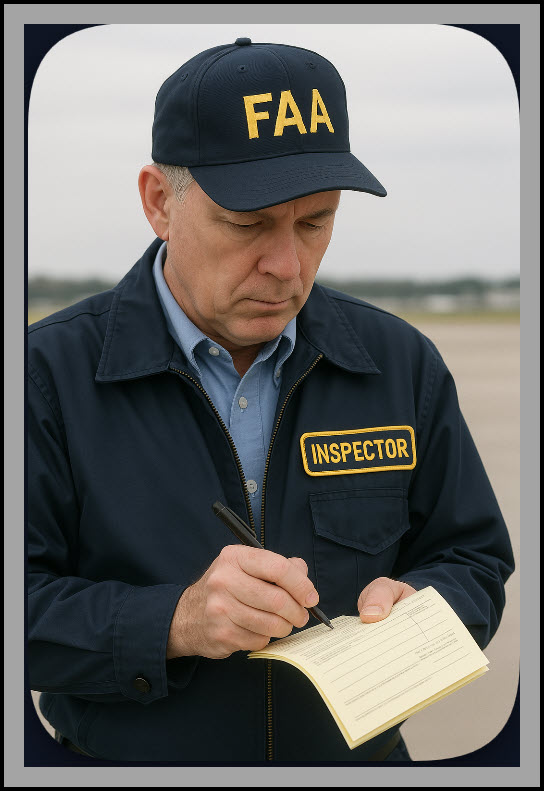
If you have been following me since the beginning, you know I have had to deal with FAA inspectors a few times or with people who out ranked me in the army.  Eventually, I had much more contact with the Feds at Flight International.

My experience in the army taught me to carry myself with what was called "military bearing".  We were taught how to stand straight and look like we were all business.  When I left the army, I had to tone my bearing down a little, but could crank it up when needed.  The important part of that is to know what you are doing and to look like you know what you are doing.  

Eventually, my boss, Rod, started assigning me to run the simulator for FAA check rides.  This came about because of some issues we were having with our pass/fail ratio.

In order to maintain our certificate to train flight engineers, we had to have 80% of our students pass on their first check ride.  We were falling dangerously close to that point.  The owner, Doug, called a meeting and announced some changes in policy.

One change was that each student would remain with the same instructor all the way through training.  This way, according to Doug, we would expose the "weak sisters" among our instructors.  You may remember me talking about my experience at the Allegheny County flight school way back in the early days of my flight instruction.  I had a different instructor each lesson and had to unlearn and relearn from one to the other.  It seemed like a wasteful process to me and it did at Flight International also, but hey, who was I to point that out to all the big captains I was dealing with.  So, you know I thought this change was a good idea.

Another change was that each instructor was going to start taking notes on everything that happened in the simulator with each different FAA inspector during a check ride.  We had a suspicion and wanted to document and confirm that.  Rod had checked pass/fail statistics among all the inspectors and although we were maintaining a slightly better than 80% average overall, one particular inspector was failing our students at a 50% rate.  Single handedly, he was bringing us down near the 80% mark.  All the others were near 90%.

It was becoming known that I did not get intimidated by the Feds.  When they were being unfair, or were getting the 727 mixed up with the DC-9 or something, I would stop them and correct them.  This is why Rod wanted me to run the panel for check rides.

The inspector in question was named Paul.  I got along OK with him, but when he saw me taking notes, he pointed out that he was taking notes too.  I just smiled and took a note on that.

Eventually, we had enough data that Rod went to the FAA office and made his case.  Paul was killing us and he was intimidating the students.  We tried to train them to follow procedures and he kept creating scenarios where procedures didn't work and the student had to improvise.

This revealed something I had learned about aviation.  People who have been involved in training for a long time, forget what it is like at the point where you have just completed training.  The training is very much like trying to sip water from a fire hose.  It is coming at you fast and furiously.  Your head is kind of spinning and when someone is messing with you from the gitgo, it can become very intimidating.  Paul would give students so many problems just getting electrical power on the plane with the Auxiliary Power Unit (APU) or Ground Power Unit (GPU), that they were losing confidence in the procedures and all we had taught them.

Paul's thought was that once someone got an FE ticket, there was no guarantee that they would be working for a big airline with all the support.  They could be working for some little operator who only had one 727.  The problem with that thinking is that the students weren't in a position to get a job like that.  It would usually go to a Professional Flight Engineer (PFE), who was also a mechanic.  Besides, it was just too much for a rookie to deal with.

Rod told Paul's boss what was going on and he was probably informed about that and warned to back off.  The next time Paul was scheduled to give 2 check rides, back to back, I was running the instructor panel.  Paul failed the first guy and the second guy was doing so poorly, Paul started looking worried and was actually trying to help him, but it was hopeless.  

He asked me to stop the process at that point, as he was about to have a 100% failure rate that day.  He asked me to step outside the sim. with him.  When we were out there, he asked, "Why me?  Why do I always get these weak students?"  I said, "Since you asked, they are not all weak.  You scare the hell out of them.  You have a reputation and they all know about you.  You did not have to fail that first guy.  If you had worked as hard to help him, as you were doing with the second guy, he would have passed.  He was not the best, but he could have passed if you had given him a break.  Let these guys have some success with the procedures early on and then get tough when they are doing the important stuff that can kill someone.  When you give them so many problems outside the procedures just getting the power on the plane, you rattle their cages and kill their confidence.  Wait until the plane takes off, for Pete's sake.  However, the second guy really is messed up."  I was thinking, "Sucks to be you today."

Nice little speech, eh?  I don't know how it worked, because this was late in my time there, but I was learning how to talk to FAA inspectors.


Saturday, February 13, 2016

Go With The Flow


This is a 727 cockpit view you usually don't see.  A simulator would look very much like this, except that there would be another panel in the right rear corner for the instructor to input his bag of tricks for the student.


This is a 727 flight engineer panel.  You can see it is a busy place.  In order to get students to understand how to deal with this panel, they are taught "flow patterns".  I tried to find a picture of a panel with flow patterns depicted, but could not. The way they work is to go to a starting point and then flow from there to an adjacent point, then continue until you have completed the flow.

This makes it much easier to do what is necessary.  For example, the engineer must check every switch, light, indicator and lever on the panel and other places in the cockpit.  It is too much to remember, so we give them a starting point.  Then they just move to the next item on the panel.  The patterns have names like "big U" and "little U".  Most indicators have color bands on them.  Green = good.  Yellow = not so good.  Red = bad.  It all takes time, but we spend lots of time getting it right.

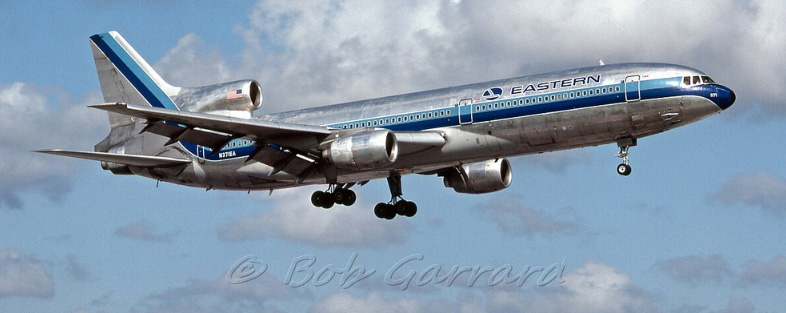
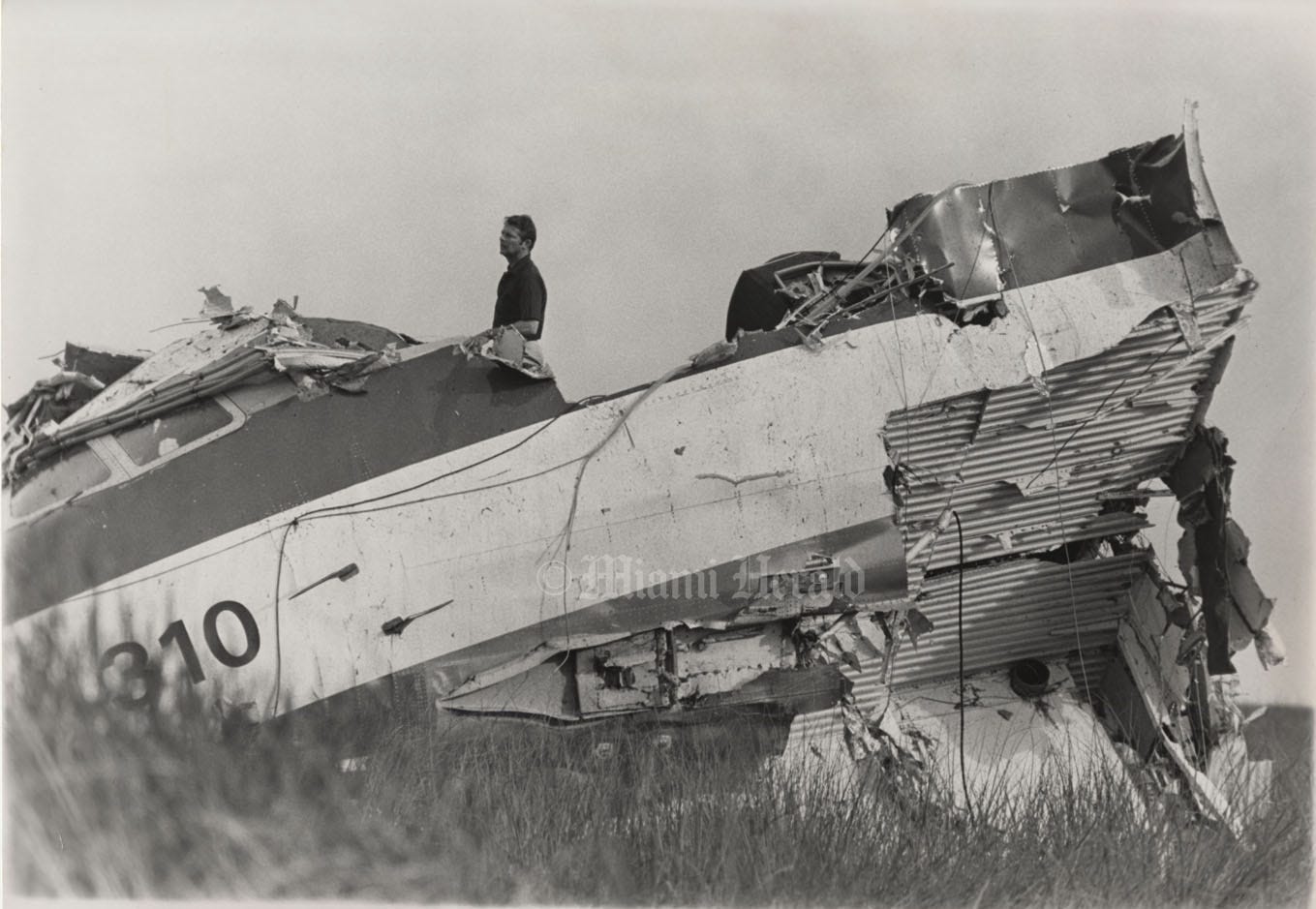
There are flow patterns for just about every checklist, normal, abnormal and emergency.  There are memory items for some emergency checklists that are immediate action items.  These are kept to a minimum, but are pounded into memory.  After accomplishing memory items, they are followed up by reading them on the checklist.  Every step is read by a crew member and verified to be correct by another crew member, one of the pilots.  The other pilot is assigned to fly the plane and concentrate on that.  There have been several crashes, because every crew member was paying attention to the procedure and no one was paying attention to what the plane was doing.  An L 1011 crashed in the Everglades, because of the failure of a gear down indication light.  Those kinds of mistakes are non habit forming.  Someone has to be flying the plane.  That is a priority.