Featured Post

Wednesday, December 30, 2015

Sky Prince the Snake Oil Saleman


We had no shortage of characters at BTP.  All of the guys who were flying there when I arrived had been in the Army.  Dave and BS had been in Viet Nam.  I mentioned that BS flew helicopters and I mentioned earlier, that this was a dangerous operation, because the chopper was a big aiming point.  Dave was in the infantry, a grunt and had been wounded, receiving the Purple Heart.

We were all kind of calm, relaxed and laid back, but we had all faced the possibility that our young lives could have been snuffed out early.  

I've told you about 2 people I had flown with who were killed flying airplanes.  The scenario of our potential for sudden death had been considered by all of us.  We were not fatalistic, in fact, we were just the opposite.  We all believed we were OK and should continue dealing with the problem, as long as the airplane was moving and that we would remain calm and be able to make the appropriate corrections.  This was not arrogance, just confidence.  We all strove to be as wise and careful as possible.

We tried to infuse our students with this kind of thinking.  Don't give up, don't panic, keep trying to deal with the problem, recover from your mistakes.

Here we are at one of our meetings.


One of our favorite students was the late, great John "Sky Prince" Phillips.  He was Jim's student when Jim was still mostly doing instruction.  John had lots of free time.  He was self employed and we were never totally sure what he did for a living.  He said he was in sales and that he was working on an automated telemarketing machine, that would just start dialing random numbers and then he would have people who would get on the phone to try to sell whatever it was he was selling.  I think I am still being bothered by one of those machines to this day.

We also called him JP, so I'll use that to economize on my typing.  However, I think I should explain why we called him Sky Prince.

When we were all kids, there was a TV show called Sky King.  It was about a guy who owned a ranch and flew around with his niece and nephew in his Cessna 310, the Songbird.  See the photo above.


Sky was always flying around catching bad guys and rescuing good guys and of course, was a great pilot.  How could you not be, with a name like Sky King?

So along comes JP and he starts calling Jim Weber Sky King.  This was appropriate, because we all believed Weber was the best pilot at the airport and maybe the best we would ever know.  When he was my instructor and I would screw something up, I would look at him out of the corner of my eye and he seemed to be half asleep, I thought maybe he had missed the mess up.  But nooo!!!  He always got it and mentioned it in the debrief.  Damn you Weber.

This does not take anything away from all the other guys there, they were excellent.  I learned lots from all of them.

I don't want to give too much away to those who don't know the rest of the story, but Sky Prince shows up later in my life.

Thursday, December 24, 2015

And furthermore.


I was talking to my son, Mike, about my last post, which was about some of the fun trips I have taken and he reminded me about two trips I took on back to back weekends to South Bend Indiana in 1976.

Sports fans know that South Bend is the home of the Notre Dame Fighting Irish football team.  The first trip was to fly an alumnus of the University of Pittsburgh and friends and family to the game between Pitt and Notre Dame.

This was the senior year of tailback Tony Dorsett at Pitt.  It was the year Pitt won the National Championship and Dorsett won the Heisman Trophy.  He broke a run for 61 yards on his first carry.  I was there.

By pure coincidence, the next week I flew a production crew from Allegheny County Airport to South Bend.  They were the guys who worked in the trailer for the TVcast of the Notre Dame games that were syndicated and telecast on Sunday morning.  The announcers were Linsey Nelson and Paul Hornung.  Hornung had played quarterback for the Fighting Irish and was the first player to win the Heisman while playing for a losing team.  He went on to fame and glory and other things as a running back for the Green Bay Packers championship teams of the past.

I dropped off the guys and then flew to Chicago O'hare to pick up the director, who was moonlighting from his normal job as a director for the NBC Evening News.

I was given a press pass, as if I were part of their team and could have gone just about anywhere in the stadium that day.  Upon further review, I decided that the coolest place to be during the game was in the trailer with my peoples.  I had seen a football game the week before, but I had never seen what the  TV production team does during a game.

There were 4 or 5 guys sitting at panels with monitors all over.  The technical director, who flew up from Pittsburgh with me, was Billy McCoy and he had all the switches and buttons.  When the director called for something to happen, Billy was the guy who made it happen.  They were all wearing headsets and there was lots of talking going on.  Don't forget that there were several cameramen outside in the stadium also on the same channel.

I was just kind of standing around in there and carrying on a conversation with the director and Billy and it dawned on me that they were also doing their jobs, communicating with the entire crew and each other, while answering my dumb questions.  It was very impressive.

I asked the director how he could keep track of all this action and still talk to me.  He said he was thinking the same thing as we were taxiing and taking off at O'Hare.

After the game, Hornung, whose nickname was The Golden Boy, needed to be flown to O'Hare to catch a flight.  To put the best spin on this that I can, he was polite, but not as chummy as the other members of the team.  He lives near me here in Louisville and I have seen him at a local restaurant and Starbucks, but have been a little resistant to reintroducing myself to him.  I think he has gained some humility in recent years and have decided to do so next time I see him.  

Wednesday, December 23, 2015

Fun!


Part of the fun of flying at Butler was going where our passengers were going.  The possibilities were many and various.

The best was going to the Steeler's first Super Bowl in New Orleans.  One of the guys who worked for his father's company owned a really nice Navajo CR (Counter Rotating Props.) He wanted to fly to the game with his wife and wanted one of the gunslingers to go with him.  For some unknown reason, I was the lucky guy.

The weather was lousy and we had strong head winds all the way down.  We had to make a couple stops on a flight we should have been able to do in two legs.

This was the game that was supposed to be the first event at the Superdome, but it was not completed, so the game was played at Tulane Stadium.  This was a really old stadium and I remember seeing guys lining up under the stands to urintate, because the facilities were not adequate to deal with the size of the crowd.

This game was against the Minnesota Vikings, who had played in the Super Bowl before and lost.  The conventional wisdom was that a team had to play in the Super Bowl at least once before it could win it, but the Steelers were 3 point favorites at game time.

It was a low scoring game and the Steelers were leading 2 - 0 at the half.  Jack, the guy I flew down there was upset because the Steelers were not beating the spread.  I told him not to worry, because you could see that the Steelers were just beating the hell out of the Vikings offense.

The weather was lousy, cold, wet and windy.  I got a sore throat and a cold from all the yelling.  I did not enjoy the post game celebrating in New Orleans.

Probably the next best fun, was when we were flying politicians.  I flew lots of trips for Bill Green, a Democrat for Philadelphia, who was running against John Heinz for his first senatorial campaign.  I got to attend several rallies which were kind of fun and I got to eat the rubber chicken.

Green was a congressman and I stayed at his rented Georgetown home one wintery night.  We put in long days and I remember flying his family into Johnstown on a nasty winter night, with low visibilities in fog and blowing snow.

This was 1976, the year Jimmy Carter was elected and probably the point where I figured I had better start getting up to speed on what was going on in national politics.

There were some other politicians I flew for.  One was the Republican leader of the state senate.  Another was a judge who was running for the state supreme court.

I flew a furniture store owner and some of his employees to a convention in North Carolina.  They were some wild and crazy guys.  There were some guys from a nearby Buick dealership who chartered two planes to go to the auto show for new Buicks in Detroit.  Dave flew one and I flew the other.

One of our biggest customers was an electric company who had us fly electricians around the eastern US to power plants.  These guys maintained the very bright strobe lights on the stacks.  They had to climb the ladders to get up there and I climbed a few times myself.

Once, I got half way up there and started getting an upset stomach and muscle cramps.  For a while, I couldn't go up or down and was having unpleasant thoughts about falling.  That passed and I completed the mission.

On another trip, they were working on one of those big concave cooling towers at a nuke plant.  When you climb one of those, the first part is facing the tower, but as you near the top, you have to turn outward and are climbing a ladder facing away from the tower.  It almost looks like you are just out there in open space.  

When I got to the top, there there was what looked like a big, secure and stable railing along both sides of the walkway around the big opening.  I kind of nonchalantly reach out and put my hand on it and it moved much more than I had anticipated.  In fact, I had not expected it to move at all.  It freaked me out and I had to sit down for a minute to get my head right.  The electricians laughed about that, but I got even with some slightly unusual attitudes on the flight home.

One of the coolest flights for me was the time I took my dad with me, flying the Twin Comanche to Shelby NC.  We did this flight frequently and were just taking stuff, not people.  He had been a little reluctant to fly in small planes, but I invited him and my mom to an open house we had and they took a ride with Dave.  I told Dad to observe all the planes taking off and landing without having a major crash.

On the way to Shelby, we were in the clouds, but it was a very smooth ride.  In fact, it was so smooth and boring, the old man fell asleep.  I jiggled the plane a little to wake him up and when we looked at each other, he realized that my message was that it was no big, scary deal to fly in small planes.  

Sunday, December 20, 2015

Under The Weather


We've already talked a lot about weather.  Pittsburgh is fortunate to not be prone to some of the worst weather phenomena Mom Nature can produce.  Tornados are not nearly as common as they are in flatter country, starting in Texas and Oklahoma and stretching all the way up to our next door neighbor, Ohio.  They happen, but not with the frequency of the section of the country known as Tornado Alley.  Hurricanes do not occur in Western PA.  Big low pressure areas do occur and they can have deadly impact.  The Johnstown Flood of 1889 was an example of the devastation they can cause.

As you would expect, we did lots of flying to and over Johnstown.  It was on the route to Harrisburg and Philadelphia.  On one such trip, the lighting was just right to see the true nature of the terrain at Johnstown.  It is like a funnel, turned on its side and cut in half, with Johnstown at the part where it gets skinny.  It makes you wonder what they were thinking when they built a city there.  There was a bad flood there during this period, I think it was 1977, but nothing as serious as the 1889 flood, in which more than 2000 deaths occurred.

Typical weather here is hazy in summer with thunderstorms and cold and snowy in winter.  The haze was so bad, that it was a real challenge to teach primary students to fly the plane with reference to the horizon.  There was no horizon, just a kind of cone of downward visibility.  We didn't have any wimps flying at Butler.

In the summer, we had to be able to avoid thunderstorms, often without the benefit of weather radar.  We became very resourceful in doing so, often with the help of ATC.

In the winter, the problems were gusty winds, low ceilings and visibility and icing condition, just to name a few.  Icing occurs when flying in the clouds, where there are "super cooled water droplets".  The temperature is below freezing, but the water droplets have not completely frozen.  We came along with our airplane wings and smashed into these droplets and the disruption of their shape caused them to form on the leading edges as ice.

Icing causes drag and a change in the shape of your airfoils, thereby  eventually destroying the ability to create lift.  The wings will stall and the plane will fall.

Bigger, more expensive planes have systems to deal with icing.  For example, there are electric heating elements on the props and wind screens and inflatable pneumatic"boots" on the wings.  


Jets use wing and engine cowling leading edges that are heated, usually by "bleed air" from the turbine engine compressors.


We had some planes with boots and we had some without.  I can't explain it in any reasonable amount of space or time, but we learned how to determine when we could fly in icing conditions and when we could not.  For example, one method was to determine that the clouds tops were not above an altitude at which we could fly the plane and that the layer of icing conditions could be penetrated quickly.  If we did not build too much ice on the climb, we would break out on top and the accumulated ice would sublimate and just disappear over time, as if by magic.  We became very good at getting and understanding all the weather and pilot report information we could.

Of course, there was always the possibility of misjudging the situation or of something unexpected happening.  It was also possible to encounter conditions that exceeded even the capabilities of our best planes.

One such story is the time I was flying somewhere down east and the weather in our area was winter crappy, low ceilings, high tops and lots of ice in the clouds.  I had to get a clearance through the Flight Service Station to take off in IFR.  That meant ATC kept the airspace at Butler clear for me, until I called them airborne, or until the time ran out.  No one would be cleared for an approach into the airport.

I was the only occupant of the Navajo Chieftain, a very nicely equipped plane.  I called ATC and was given a heading to the southeast and a climb clearance, but it was not above the tops of the clouds.  Ice started forming on the plane at an alarming rate and I was using all the stuff to prevent it and remove it.  It continued building any way.  When the hot props are working, they sling off chunks of ice and you can hear it whacking the side of the fuselage.

Normally Pittsburgh Departure Control would quickly give us a heading or a clearance direct to some place to the east, a climb to our filed cruise altitude and a handoff to Cleveland Center, the enroute facility.  This time, I was getting heading changes to the south which was keeping me in Pittsburgh's airspace and kept at an altitude where ice was building on the plane.

You know me, big mouth.  I was bugging the controller for a higher altitude and could tell he was becoming annoyed.  I didn't care.  This was a period of time in which the controllers were becoming militant.  They were under the influence of a union leader who was threatening to strike and the hotbed of this movement was in Pittsburgh.  We frequently suspected that they took action to gum up the works, to put pressure on to achieve their goals.

After several exchanges, with me whining as much as I could, I finally explained that I was sitting down here building ice on the plane at an alarming rate and needed a clearance to climb.  He asked me if I wanted to declare an emergency.  I said I did not want to declare an emergency, I wanted to prevent one.

Some times, you just think of the right thing to say.  To this day, I don't know if he was just then able to get a hand off to the Center or if he finally stopped playing games, when he realized the reality of the situation.  He gave me a turn to the east, a climb to my cruise altitude and a hand off clearance.  Adios My Friend (A.M.F.).

Saturday, December 19, 2015

Man Of Constant Sorrow


The five years at Butler had a certain element of sorrow to them.  First there was the divorce.  Then there was the overwhelming challenge of getting airline qualified, about which my mind created the metaphor of a large mountain.  I had made a conscious decision to remain unattached, not married, while I was still building the career, layer by layer.  I wanted to remain as flexible and mobile as possible.  I would not say the sorrow was constantly at a high level, but it was always there in the background.  I just wanted an excuse to add that very cool version of the song.  This was played at the end of episode 6 of the TV series, Fargo.

Of course, it was also a time of great enjoyment and accomplishment.  The guys I worked with were a social bunch.  We often went to a local bar dive called the Planeview to debrief drink beer and eat pizza.  BS and Jim were married when I first started there and Dave got married a couple years later.  Dan Wylie came to work as an instructor and since he was single, we did some running together.  We had to take it easy, because we worked long hours and could not afford to be hung over while working.

I owned several cars while working at Butler.  I had a Sunbeam Alpine at first.  The transmission blew up and I had to change it myself.  I didn't have much money, so my student, Bill Scott, who owned a car repair shop, let me bring it there and put in a used tranny (not that kinda tranny) I bought in a junk yard.  I had it up on jack stands and was under there on one of those little scooter things, trying to insert the shaft into the flywheel.  It was heavy and wasn't going in easily, when a big glob of hot grease fell down in my eye.


I felt the frustration and anger trying to take over my mind and body.  Then I remembered that I was under a car on jack stands, with a transmission in my out stretched hands.  I forced myself to remain calm, laid the transmission down and slid out from under the car.  Then I released a string of some of the language I had used in the Army.

Then I bought a Triumph TR 6.  I was into two seat, British roadsters at the time.  I love the sound of the exhaust on that car.  I was driving it to work on Route 8 one winter morning, when I saw a pickup with a trailer start fish tailing as it approached on the icy highway from the other direction.  The trailer came swinging out in my direction with a snap not unlike a ground looping J3.  I moved a lane to the right, but the trailer kept coming my way.  Finally, I had to go across the shoulder with all wheels up on a little hill at the side of the road to avoid being hit by that trailer.  I saw it swing closely by in my peripheral vision, because I was looking intently at where I was driving the car.


I had lots of trouble with that car also.  After all, it was a two seat, British roadster.  I thought I would buy a more reliable, American car.  I bought a Pontiac Le Mans from my old pal, Dick Sturman.


Before long, I had some big issues with the engine.  I took it to Sturman's dealership and complained to him for screwing a friend with a lemon.  He said, "You gotta screw your friends, because your enemies don't come around."  I had to laugh at that one.  He gave me a free rental car as his boys fixed it.  I traded that on a new Pontiac Sunbird coupe with a 5 speed transmission.


I drove that one for a couple years then bought a Trans Am, my favorite car of all time.  You have to remember that I have had a thing for fast modes of transportation since about age 2.


https://youtu.be/lLEYSBRFsgk?si=IqkqyHC8lOgPv351


Here We Go Stillers, Here We Go!!


With regard to where I am in my story, the tradition of playing Renegade at an opportune time in the second half of a Steeler game, is new.  You can see how this song, along with video highlights on the Jumbotron of Steelers knocking opponents on their asses, gets the crowd and the team fired up.  Can you imagine being a member of the other team when this is transpiring?  I've been there.  It is very cool.

I was also there back in the bad old days of our Stillers.  My first game attended was at Pitt Stadium, with members of my grade school football team, the Blue Devils.

At that time, there were several Steelers who came to the local park to workout in preparation for football camp.  This is where the kids went to the swimming pool.  After their workouts, some of the players would hang around to play basketball and touch football with the kids.

Two such players were John Reger and George Tarasovic (a great name for a Steeler player).  Those two would play basketball against 5 kids.  Tarasovic was a giant, with knuckles that dragged on the ground.  He would play defense and get all the rebounds, then pass the ball to the other end of the court to the cherry picking Reger.  We didn't care, we were in Stiller Heaven.

One day, there was a young quarterback there.  He played touch football with a gang of us.  He was going to be the constant quarterback.  He would switch teams to always be on offense.  I guess he wanted to work on his passing accuracy and timing.

What I remember about that game, was that the first time my team was on offense, he told me to run downfield 15 yards, then cut to the left and look for the ball.  When kids are throwing the ball, you make your cut, get some separation from the guy who is covering you, the QB sees the separation and then throws the ball.  By the time it gets to you, the guy covering you has time to recover, if he is quick enough.

I ran downfield 15 yards, made my cut, got my separation, looked for the ball and it was about 4 feet from my chest.  I was not ready and it bounced off my chest, BOINK!  That was a lesson for me about how the pros throw the ball.  He threw the ball to a spot where he told me to be and he threw it long before I got there.  By the way, you may have heard of this rookie Steeler quarterback.  His name was Len Dawson.  He had the misfortune of being there during the Buddy Parker/Bobby Layne era.

Along came Chuck Noll.  Please tell me I don't have to say anything more about that.  

All this transition from NFL doormat to NFL dynasty was happening during the 70s, when I was building my flying career.  It was a truly magical time.  One of my students had season tickets and when he could not attend games, he gave them to me.  What a blast to go there and make fun of guys like Billy "White Shoes" Johnson as he walked to the locker room at half time.

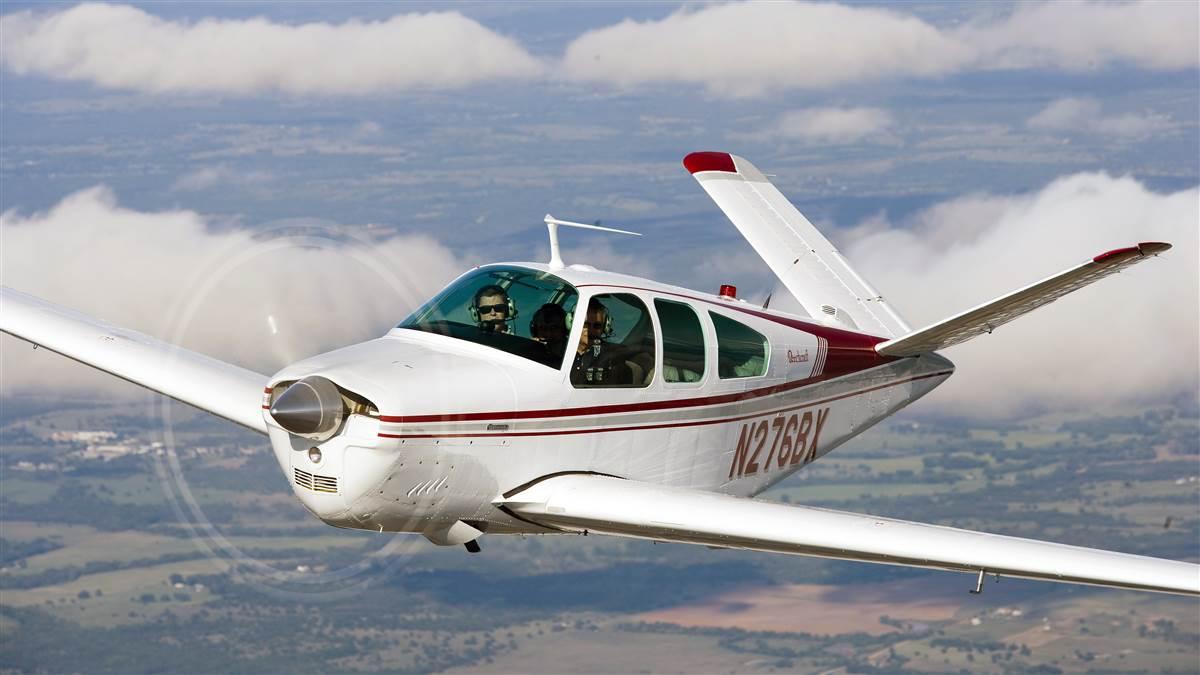
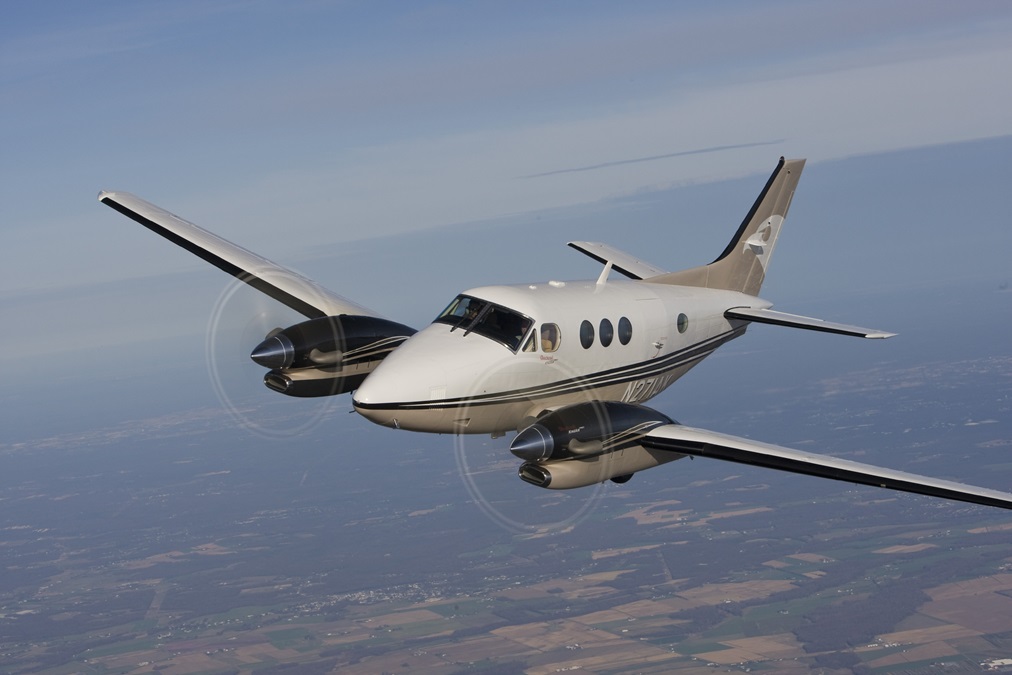
Chuck Noll along with being a football coach and saint, was a pilot.  He flew at Allegheny County Airport and eventually bought airplanes.  He started with a Beechcraft Bonanza, then a Beechcraft Baron and eventually a Beechcraft King Air C-90.  All great airplanes.


The Bonanza was famous for its V-tail design.


But I think Coach Noll had a straight tail version.


Baron


King Air C-90

Chuck Noll's instructor brought him to our little airport to take his check rides with Wild Bill McCowin.  Bill gave us all a heads up and we got to meet him.  That's like dying and going to hog heaven in that part of the country.

Later, I bumped into Coach Noll at the Pittsburgh FAA General Aviation District Office at Allegheny County.  He assured me the Stillers were going to go the the Super Bowl and win AGAIN!!  Ha, it was a great time to be a Burgh Boy.

One day, the women in the office told me I would be flying a trip that night in one of our new Seneca IIs and it would be with Rocky Bleier.  

Long story short.  Rocky was one of the starting running backs.  He had been drafted by the Stillers out of Notre Dame and gone to Viet Nam.  He was injured and there was a question about whether he would walk again, let alone play football.  When he came back, he worked extremely hard to get back on the field.  He had a prosthetic made for his damaged foot.  He was the guy who threw the lead blocks for Franco Harris.  He also ran for 1000 yards during a season when Franco did also.  


Franco with one of his biggest fans.

Rocky was going to a speaking event for people who worked in the industry that made prosthetics.  I flew him for one more such trip.  He was a great guy and we spent lots of time talking about inside team stuff.  Of course, I cannot reveal any of that.

Once, as we arrived at the site of the speaking engagement, a crowd of people, with big smiles on their faces, were approaching us.  I turned to him and said, "Hey Rock, these people are going to be asking for my autograph.  I hope you don't mind."

Friday, December 18, 2015

Is There Gas In The Car?


Five years, 5000 hours.  That's how long I worked for Graham Aviation and flew that many hours.  That's a lot.

The first couple years were mostly flight instruction.  That means about one hour per flight.  Lots of flights.

The third year was a kind of transition from instruction to flying trips, either charter or pilot service for people who owned their own planes.

The final two years were mostly flying trips with some instruction thrown in for fun.  I mostly worked with some of the folks who were my students in the early years on advanced ratings, etc.

I'm going to tell you some of the stories of those students and pilots that might be interesting, whether funny, whacky or tragic.

Let me preface this by saying that I was learning that not everyone is cut out to fly.  It does not necessarily have anything to do with intelligence, although the complete lack of intelligence would definitely rule someone out.  Some really smart people have major issues.

Let me give you some examples.  I had a student fairly early on in my time at Butler who was a doctor.  Let's say his name was Julio November.  Those are the phonetic words for the letters J N, with the first one being switched a little for gender purposes.

This doctor owned a plane and had been flying with other instructors for a long time.  He would get up to the point where he was supposed to start flying cross country flights and then disappear for such a long time, that he needed to be brought back up to speed when he returned.  I worked with him on his cross country flying and when I thought he was ready, boom, he did not show up for months.  I finally got him to complete some of the shorter cross country flights, but he was required to fly one with longer minimum length legs.  He disappeared.  

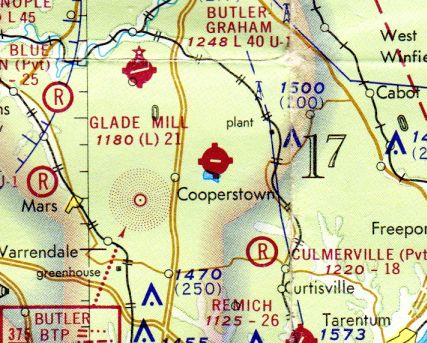
I concluded that he was afraid of getting lost.  Another instructor told me about a time he was flying from the Glade Mill Airport to Butler, a distance of 4 or 5 miles, and had gotten lost.  He was calling on Butler's unicom frequency and somehow someone helped him get unlost.  It was a pretty easy flight, because it was not far away and all you had to do was follow Route 8. 


Remember this?


The next time I saw him, he had completed his long cross country in Florida and passed his private pilot check ride.  He wanted to start working on his instrument rating.

I looked in his log book to see where he had done the long cross country.  He flew north along the coast, from the Ft. Lauderdale area of Florida.  He landed at an airport, then flew farther up the coast to another, then back to where he had started.  You just keep the blue stuff to the right and green stuff on the left to the first airport, then do that again to the second airport.  Land there, get your logbook signed by someone then head back home, this time keeping the blue to the left and green to the right.  There is a nice, white, sandy line to follow also.

Later, he bought a really nice new Seneca II, but would not fly it out of the Butler Graham traffic pattern without one of the pros who worked for Graham Aviation.  I shouldn't complain.  I made lots of money flying for guys like that.  He was just an extreme.

During the later years there, I had the mental image of all of us being like the gunslingers you see in western movies.  They just kind of hang around town until the guy who hired them gets in a fight, then he sends the gunslinger in to fight it for him.  We would hang around the airport when the weather was good, watching these guys coming and going in their planes.  Then when it was bad, they were calling us to fly with them on their trips.  Smart.

We flew a Seneca for one such gentleman, who owned a company that required moving people and things around the country.  He would fly the plane, while one of us would sit in the right seat, dealing with all the IFR stuff, like filing flight plans and talking to ATC.  Let's call him Bravo Hotel.

One of the funny things about Bravo was that he would fall asleep while flying.  He turned on the autopilot and got comfortable, then kind of passed out.  One day I was flying with him and it was a pretty nice day, except there was the one lone thunderstorm way out in front of us.  As we were flying toward that storm, Bravo would wake up and make a big turn with the heading selector because of where that storm was, then pass out again.  I would reach over and get us back on course.  A few minutes later, he would wake up again and make another big heading swing.  I finally pulled the circuit breaker on the autopilot and hand flew it until we passed the storm.

On one trip, we were moving several of Bravo's employees around the country.  We flew some down to Louisville, dropped them off,  picked up some others, then flew to Atlanta.  On the way down there, we would be flying over some of the highest mountains east of the Mississippi.  It was not summer, could have been winter, but I was not worried about big buildup thunderstorms.

This was one of those, "I learned about flying from that" trips.  We flew into some heavy rain and very bad turbulence over the mountains.  I remember looking back at Bravo's employees and their eyes were big as saucers.  We were unable to maintain our assigned altitude.  We had to be careful we did not stall the plane or exceed maximum speeds.  Fortunately I had selected an altitude that gave us plenty of separation above the mountains.

I called the controller and told him we were not able to maintain our altitude and were going 2 or 3 thousand feet above and below.  He said, "Don't worry, I don't have anyone else out there.  Just let me know where you end up."  Not very encouraging.

On another trip, Bravo wanted me to fly to a very small airport near his home, about a 15 minute flight north, to pick him up and fly him to Maine.  I was not crazy about this field, because it had a very short runway with an actual fence at the very end.  I thought, what the heck, it will just be Bravo and me.

When I got there, he told me his neighbor and the neighbor's daughter would be joining us for the trip.  #$%&*^%$#@ would be about what I was thinking.  I said, "OK, but I am making the takeoff and landing here."  I taxied as close to the opposite end of the runway as I could get, held the brakes and ran the engines up almost all the way, before releasing the brakes.  We made it, but the decision to bring the extra folks would jump up to bite him again.

The winds were behind us and we had a very high ground speed.  We made it all the way to Maine without stopping to refuel.  The Seneca II only carried about 4 hours of fuel.  (We always thought about fuel in terms of how long you could fly before silence.)

We would always ask our people when they were returning to the airport, so that we would know how to flight plan for the trip back home.  They always lied and came back later.  This would be a factor.

The return flight was now going against a big head wind, with a very low ground speed.  We did not have enough fuel to make it to the place where I picked them up and then to Butler, even though I had topped off in Maine.  Fuel was not available at the little airport.

On top of that, I was checking weather reports and forecasts on the radio and there were supposed to be severe thunderstorms near the destination at about our ETA.  We would be flying all the way across the northern half of Pennsylvania and I knew that the radar coverage of ATC at the altitudes we would be flying was not the best to help us with thunderstorms.  The plane was not equipped with weather radar.

I decided to land at Wilkes Barre PA for fuel and a better weather briefing.  There was a Flight Service Station there and I would be able to get a better picture of what to expect back home.  It was not pretty.

I told Bravo I was not going to fly, because the weather was going to be very bad at our arrival time.  He tried to talk me into going.  He said, "Why don't we go and take a look at it?"  This was a comment you would here from some of these kind of guys frequently.  I said, "We don't have anything to look at it with."  They were calling for a squall line of thunderstorms and we would be in Instrument Meteorological Conditions (IMC) about half way across the state.  The controllers would be up to their eyeballs trying to keep airliners separated and would not be able to tell us where the storms were with their less than ideal radar in that area.  We did not have radar on our plane.  Once we got in the clouds, we were blind.  Furthermore, we could not wait the weather out, because it was moving toward us.  There were not many airports that I thought would be suitable to duck into along that route of flight.

I told him that he had all the ratings and licenses to fly the plane if he wanted to and I would spend the night in Wilkes Barre and pay for my own ticket on Allegheny in the morning.  I reminded him I had flown in some pretty crappy weather for him in the past, but I was not going to do it this time.

Reluctantly, he decided to stay.  That is where the extra passengers bit him again.  It cost him another hotel room.  I was hoping he learned a lesson from this.  Some people think if you have an empty seat, you can put someone in it, without consideration for weight and balance or take off and landing distances.

When we met for breakfast, Bravo told me he had called home and that "we" had made a good decision.  The weather had been "pretty bad" and there had been a tornado reported in the area.

The next story has a different ending.  A guy we will call Jake scheduled a flight in a Piper Warrior one day.  When he showed up, he said he wanted to fly over the upper Allegheny River Valley and the Clarion River Valley.  He had a woman with him, who he introduced as his student.  He was the head of the Physical Geography Department at the University of Pittsburgh and later told me he was from the "land between the Tigris and Euphrates Rivers".  He spoke English very well.


We flew to the area and began circling at about 1000 feet above the ground as Jake and his student discussed the way the boulders on the river banks were arranged by a glacier during the last ice age.  On the way back, Jake told me he was taking flight lessons at a school at Allegheny County Airport.  It was not the one where I had flown and it was one that we all considered to be a pilot factory.  In other words, they pushed people out the door for their check rides and hoped they passed.  It was kind of like throwing mud or something that looks like mud against a wall to see how much sticks.

Anyway, I told Jake that we had a Piper J-3 Cub that would be better at doing what we had just done, because it flew very slowly, had a high wing and you could open up a big door on the side when flying to get a better view of the boulders next to the rivers.  Always the promoter.


He said he would come back when he got his license, because he wanted to get checked out in the Warrior we had just flown, to rent it.  When he did, I could see that he was not as well prepared as we usually prepared our students at Butler.  I checked him out on the Warrior, then the Arrow, a plane with constant speed prop and retractable gear, then the big ol' Cherokee 6.  Jake and I were becoming pals.

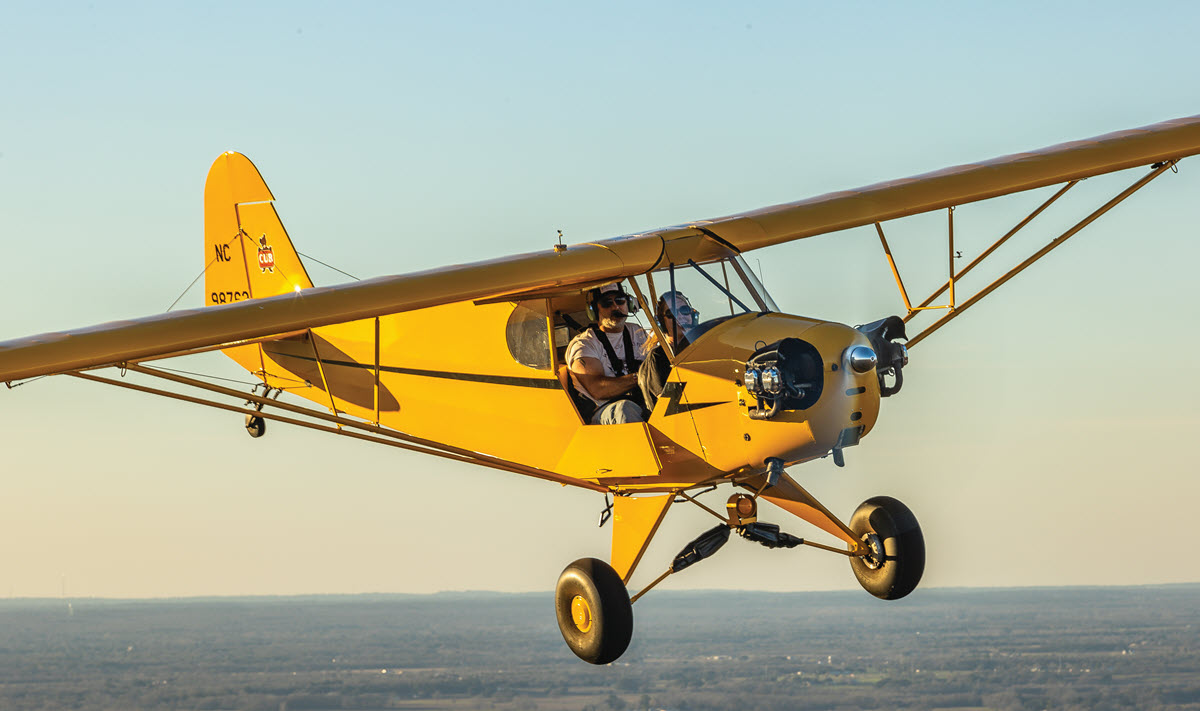
Then we started on the Cub.  This was going to be a far greater challenge.  As you can see in the picture above, the Cub has conventional landing gear, a tailwheel.  All the other planes Jake had flown had nose wheels, tricycle gear.


On a tricycle gear, the center of gravity is in front of the main landing gear.  On a taildragger, the CG is aft of the main landing gear.  This means that when you land and slow down, the taildragger wants to swap ends, ground loop.  It requires more attention as you get slower in a taildragger, while you can relax a little as you slow down in a tricycle plane.  The weight actually pulls the plane forward.

As the plane gets slower, the flight controls become less effective.  There is less airflow over them.  If the taildragger starts trying to swap ends and you don't detect that fast enough and make a correction, it really whips around very fast, out of control.  You have to be aware of what you are doing until you tie it down or put it in the hangar.

This was part of the problem we had with the particular school Jake had graduated from.  We believed they did not teach students how to land, but just to get close to the ground and let things develop.  You can't do that in a taildragger.

From the check outs we had done, I suspected the Cub would be a plane too far for Jake.  We flew and flew.  Most people check out in the Cub in about 10 hours or less.  We were at 20 and I began to think I might be a little too nervous with Jake.  Maybe I was talking too much, too soon.  Taking the plane from him instead of letting him go and waiting to see what he would do.

I decided to sit on my hands and bite my tongue for the next landing.  He got the mains on the runway, the tail started swinging a little to the right, I watched, it swung more, I watched a little more, then it went way out to the right and we were heading for the rhubarb.  We took out one of the runway lights and ended up on the grass on the side of the paved runway.

I remained calm, said everything was OK, taxied back for another take off and trip around the pattern.  I was determined to see if I was interfering too soon.  I was not.

This time, the plane started swinging the tail so quickly, it kind of tipped up on the right main wheel, we stopped moving down the runway and spun 270 degrees before we stopped.  At least we never left the center line on that one.

I had been in some serious car crashes in my younger days and usually did not get too scared while things were still moving.  That held true this time, but when we stopped and I took control of the plane to taxi back in, I was pretty mad.  Mostly at myself, but I might have taken it out on Jake a little.  I told him I could not teach him how to fly the Cub.  We had more experienced instructors he could try if he wanted.  He did not. 

The next time I saw him, he had just landed a Cessna Skyhawk on our runway and collapsed the nose gear structure.  When I asked him what happened, he said it was about to collapse anyway.  That is highly unlikely.

He told me he had bought an old Cessna 320, a light twin that looks like a 310, but is a little longer.  I asked where it was and he told me he had been flying in the Bahamas with some students.  After taking off from one island, an engine failed.  He said he thought the runway on another island would be better for landing with an engine shutdown and flew there.  His approach was a little high and a little fast.  This is a common mistake in this situation.


He landed long on the runway and did not get stopped on the pavement.  He went across the beach and the plane stopped at the edge of the water, tipped up on its nose.  He broke his nose and that was the only injury. 

I never saw Jake after that.  Some time later, I heard he had bought another 320 and was landing it at Allegheny County Airport on a gusty day.  He was flying straight in to runway 27 on the ILS and there was a corporate jet overtaking him.  The tower asked him if he could land on runway 30 and he said he could.  This required making a left turn to a right base then a right turn to final.  On that turn, Jake allowed the airspeed to get too slow and the plane stalled and spun into the ground.  Jake had his wife with him and both did not survive the crash.