Featured Post

Wednesday, December 16, 2015

CRM

Flight hours are very important for professional pilots early in their careers.  Hours equal experience and qualifications.  Insurance companies also charge premiums based on flight hours.

Within the overriding category of total time, there are sub-categories.  Pilot in Command time (PIC), night time, instrument time, multi-engine time, turbine time, cross country time.  The aspiring professional pilot is always looking for ways to build that time in all categories.

In looking through my logbook, I noticed that I was becoming too busy working with students to fly every day with BS on my instrument training.  That is not a bad thing, because the aspiring professional pilot is also looking for ways to build his bank account.

When the weather was not quite good enough to fly with my students, I could get a lesson or two in with BS.  Another possibility was to go on a charter trip with Dave or McCowin and later with Jim.  This was good to gain experience flying in various weather conditions and to build time in the log book.

Later in my career, after I had left Butler, some dude asked to look at my logbook and said I had too much instrument time, according to some percentage it was supposed to be relative to total time.  Having been scrupulously honest about the times in my logbook, I immediately felt the sting of his insult.  He immediately felt the sting of some of the attitude I developed when I was a drill sergeant.  I asked him how much time he had spent flying out of an airport in western Pennsylvania.  When he said none, I pointed out that this was not some candy ass area like California or Arizona, we had real weather up there and the weather was bad even on good days.



On one such lousy day, when it was too rainy and too windy to fly with my students, McCowin asked me if I wanted to fly on a trip with him.  He was flying a Piper Aztec to Allegheny County to pick up a passenger, then to a small airport at Painesville, Ohio to wait, then return via the same route.  He got to tell the passenger that there were two pilots and I would be able to log several hours and fly the light twin on the legs the passenger was not onboard.


I was flying on the way to AGC and I still have a visual memory of McCowin's skinny old hand trying to touch something on the panel, but bouncing all around because of the air turbulence.  It was not comfortable.

We picked up the passenger and took off for Painesville, McCowin flying, me talking on the radio.  We bounced and listened to rain pelting the wind screen.  It had been raining in the region for days.

As we arrived there, the visibility was good, when we descended below the relatively high ceiling of clouds.  It was still raining. There was one paved runway and it was roughly parallel to the shore of Lake Erie, which was not far away.  The stiff wind was from the northwest and perpendicular to the paved runway.  A direct crosswind.  I can't remember the wind velocity, but it was high.

Wild Bill flew an approach to the west runway and when he got close to the ground, we were in a pretty good crab angle to the right to maintain our direction.  He added power and leveled off above the runway, flying straight down it while judging the crosswind.  Suddenly, he added power and started climbing.  I thought the wind was steady enough, not gusting to try a landing, but who was I to argue with the Big Captain?

He made a left turn and leveled off.  He pointed out a grass runway that was perpendicular to the paved runway and more into the wind.  I did not have a good feeling about this, but who was I to argue with the Big Captain?

As we turned our base leg, we saw a power line ahead and Bill had to add power to level our descent a little to clear it.  He turned final and pointed out a road to the right side of the big, wide grass runway.  I assumed he intended to land on that.  It looked like two long ruts filled with water to me, but who was I to argue with the Big Captain?  I thought McCowin was going to demonstrate how to land an Aztec on water.
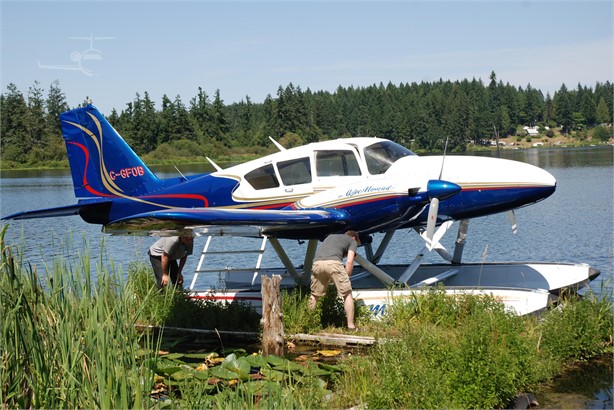


When we touched down, the muddy water washed up over the windscreen and it became dark as night in the cockpit.  We decelerated quicker than anything I had ever experienced in an airplane.  McCowin realized that we were getting bogged down in something that closely resembled a swamp and added power to try to keep the plane skimming along.  We had a long way to go to get to pavement or solid ground.

I started hearing a WHAP! WHAP! WHAP! sound and realized the props were hitting something.  I announced my realization in a loud voice.  I didn't know if he would continue or stop, but finally felt compelled to tell him what I was realizing.  I probably should have started doing that sooner.

He pulled the power back and we settled into the muck.  The windshield cleared a little and we began to see what we had gotten ourselves into.  The rain was washing the mud off the windows and we saw some guys driving an old open Jeep with big tires out to where we were sitting.  We got out and started walking around in muddy crap over our ankles.  

Always the professional, McCowin got the guys in the Jeep to drive close to the wing, so our passenger could get in without walking in the muck.  The guys took him to the little terminal building, where he met his people.  Then the Jeep came back to pick us up.  The ends of the prop blades were bent as much as 90 degrees and about 6 to 8 inches from the tips.  The funny thing was that the tips had been bent forward, from the force of trying to pull us through the swamp.
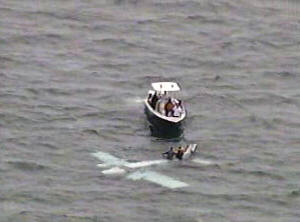

Blub, Blub, Blub!!


When we got into the building, we found some coffee and went to a waiting room.  Bill looked at me and said, "Well, you just saw the Ol' Captain f%#& up."  I asked him what happened there and he said when he saw that road, he thought it was like the old road that crossed our grass runway at Butler Graham.  It had been paved at one time, but was breaking up over the years.  He thought this one was like that.  I was in my 20s and he was about 30 years older.  My eyes saw exactly what it was and assumed he saw the same thing.  

This was my first practical lesson in what the airlines call CRM, Crew Resource Management.  Briefly, this means that captains should not in any way discourage input from other crew members and other crew members should speak up when they are aware of a potential problem that the captain may not be aware of.

We called back to our office and they sent Jim Weber up with another Aztec to pick us all up when our passenger had completed his business.  The weather was improving rapidly.

The Butler Beacon


On October 22, 1973, I flew with the Big Captain himself, Bill McCowin, for my instrument check ride.  I don't remember what we did, but it lasted one hour.  I'm sure we flew an ILS at Allegheny County Airport, then VOR and NDB approaches at Butler.  Both of those approaches do not exist today.


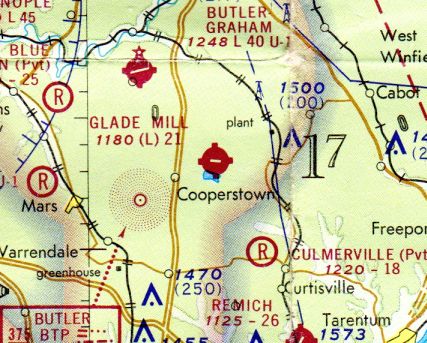
The picture above is a sectional chart, with the Butler airport and the Butler Beacon depicted.  You can see the information box of the beacon in the lower left corner.  The NDB approach was based on this beacon.  NDB approaches are a kind of a nemesis for most pilots.  All of us who flew out of Butler were not bothered by them, because we flew this approach so frequently.

There were two reasons for that.  The weather in this area is frequently Instrument Meteorological Conditions (IMC) and it was the shortest distance when arriving from all directions except the west.  The VOR approach started farther away from the airport, to the northwest.  Without getting down into the weeds, the NDB approach requires more thinking than the VOR.  

Neither of these approaches were straight in to a runway.  The VOR required less of a circling maneuver, but once again, we preferred the NDB, because as you can see, when flying from the Butler Beacon, the course is nearly perpendicular to the runway and it is easier to see in poor visibility.  

These are a few examples of the kinds of things you start thinking about when making instrument approaches.  We flew these approaches so much, we were familiar with all the landmarks in the vicinity of the airport.

When teaching private pilot students to navigate, we teach pilotage and dead reckoning.  Dead reckoning is calculating a heading to fly from point A to point B.  This involves things like knowing the variation between true and magnetic north, the direction and velocity of the wind at the altitude at which you will fly, the airspeed of your plane and lots of stuff like that.  Pilotage is using a map with a course line drawn on it and marking check points along the way, calculating estimated times of arrival (ETA) at each one based on all the dead reckoning stuff.  It's a lot of work.

Pilots who don't have instrument ratings or are new instrument pilots can be a little intimidated by instrument flying, but I found that it was easier, once you got the hang of it.  

There are 2 sets of flight rules, Visual Flight Rules (VFR) and Instrument Flight Rules (IFR).  With VFR, you have to maintain minimum distances from clouds and minimum visibility.  With IFR, you just fly straight through the clouds and hope they aren't thunderstorms or anything like that.  


Monday, December 14, 2015

Opening Day.


Above is a picture of the Butler Graham Airport when it was first opened on September 27 and 28, 1929 as the Pittsburgh - Butler Airport.  

When I was younger, I used to hate learning dates in history class.  Now that I am a geezer, the significance of dates and times makes lots more sense to me.  I understand the perspective of time differences.  

This airport opening was occurring at about the same time as the Wall Street Market Crash of 1929. 

The view of the picture above is toward the southeast.  Those 2 large hangar buildings were both still there in the 70s, when I worked there.  Part of my job when I was a line boy was to push those gigantic steel hangar doors open and closed.  All the Graham Aviation offices were in the low attachment to the west side of the northernmost hangar. 


The lower picture is from nearly the same direction as the one above.  You can see the east-west, paved runway in this picture.  When I worked there, the airport had a north-south, grass runway.  There are ramps and buildings where it used to be, just to the left of the center of the paved runway and extending to the left, where you can now see a plowed field.  That land was sold by Mr. Graham.  We loved that runway, because we used it for emergency landing practice with our students.  

You can see a road coming toward the hangars from the upper left corner of both pictures and extending across the old grass runway to the trees at the bottom of the lower picture.  I will have a story about that road later.

When the airport first opened, there was no paved runway, just lots of grass.  The planes would just take off and land into the wind on the grass.  They didn't have long takeoff or landing rolls.  

The article you will see if you click on the words Butler Graham Airport above talks about Amelia Earhart flying here to get her instrument rating and to have long range tanks added to her plane.  I did not know that part of the history of the field when I flew there.

McCowin used to tell us about barnstorming shows in which he flew, back in the day.  He said he took off in an open cockpit plane, with a dummy dressed the same as he was - googles, leather helmet, etc.  Then he would throw it out while doing aerobatics and it would fall to the ground, with the poor spectators thinking he had fallen out of the plane.

There was an aerial photo of the airport, with the paved runway on the wall in one of the offices.  I'm not sure when it was taken, but it was taken from directly overhead and you could see the scarcity of homes in the vicinity of the airport.  I always liked to look at that picture when we got calls from people who had built homes nearby, then complained about airplane noise.


Sunday, December 13, 2015

My Boys And Girl

Since I was the new guy at the bottom of the seniority list, I was picking up all the people who were being dropped by the other pilots at Graham Aviation.  

The way things go, as a pilot at an FBO moves up the list, he (we only had guys in those days) starts flying more trips in the air taxi service (charter) or providing rent a pilot service for aircraft owners.  (Remember that necessity is the mother of qualification) This means that the students get handed down to a less senior pilot.  Nearly everyone I was giving dual instruction to at this time was a hand me down, not that there is anything wrong with that.

It was not until September 2, 1973, that I gave a first lesson to someone who was just beginning.  His name is Tom Jones (not that Tom Jones) and he would be my first student from zero hours, not a hand me down.  He would also be one of my best friends for the rest of my life.

Tom had recently left the army and gone to work for his father's company.  He is a very high energy guy and I had to calm him down.  He did everything too fast.  I had to teach him that it was frequently smart to wait a little to decide what to do while flying.  Acting too quickly could lead to mistakes.  Some of our older Cherokees had a pitch trim handle in the ceiling and Tom would reach up there and crank that thing very rapidly and bang me in the head with his elbow.  Years later, when I told him I was getting checked out in an airline jet, Tom would kid me by asking if I could handle that big thing.  I always kidded back that I believed the greatest challenge of my aviation career was teaching him to fly.

On October 3, 1973, I gave a first lesson to Dick Sturman.  He was a partner in a big Ford dealership in Pittsburgh's North Hills.  Dick would be the first guy I took from zero hours to a private license, instrument rating and multi-engine rating.  He and I became good friends also, but unfortunately, he passed away a few years ago.

Tom was the first person I signed off for solo.  That must have been a nail biter for me.  Then I had 3 guys who were hand me downs before Sturman soloed.

Dick passed his private license check ride about 2 months before Tom.  In that time period, I recommended five guys I had inherited and one of them failed.  This was a real mystery to me.  

The guy who failed had been doing very well.  He practically never made a mistake and was very easy to correct when he did.  He took his ride with McCowin and I inquired about what went wrong.  Bill told me the young man was nervous and did something wrong early and then just fell apart after that.  I guessed that since things had gone so smoothly with me, he was always relaxed and the check ride introduced an element he was not ready for.  He never came back to train and retake the ride.

After this, I decided that in the future, I wanted to see my students make mistakes, so that I could see how they responded and recovered.  If I had to over load them to get that mistake, I was going to do it.  I wanted to simulate the pressure of the check ride in their training.

It was at about this time that I had a high school girl as a student.  She lived several miles south of the airport along Route 8, the highway between Pittsburgh and Butler.  She had saved baby sitting money to pay for lessons and all she wanted to do was solo, which usually took about 10 hours.  Her parents were not in favor of her taking flying lessons and would not drive her to the airport.  She hitch hiked.  When I learned that, I told her to schedule as my first or last student of the day, so that I could at least give her a ride in one direction.

Her name was Heather and I have always considered her to be my sharpest student of that period.  She would make an occasional mistake, but once I corrected it, she never did it again.  After she soloed, I never saw her again. 

Log Books

I don't know how many log books I have.  I started out with a little, private pilot log book, then had to graduate up to a much bigger, professional type log book when I passed my Certified Flight Instructor (CFI) check ride.  I would be doing lots more flying and would have to record much more information about my students.

I just dug my first two log books out of the dusty flight bag they have been stored in for years.  It is interesting to see how sporadically I flew for 3 years, then suddenly got serious.

My first flight was Oct. 11, 1968.  First solo was December 19, 1968.  I started flying at Allegheny County Airport in July, 1969, Beaver County Airport in November.  It was not necessary to have a private license to begin flying on the GI Bill at that time, I just needed the minimum time, so I bypassed that for a while and began on the commercial pilot training with Gail Kimmel (a dude) and Ivan Wable.

Ivan pointed out that I could take friends and relatives with me on some of the cross country flights, if I had a private license, so we worked on the stuff I would need to do for that check ride and I passed that on July 3, 1971 with a designated examiner named Harold Ford at Zelionople Airport.

In May of 1972, I began flying at Butler Graham Airport.  I flew with Dave until mid October, then really got busy with Jim.  I had about 125 hours at that time.  I passed my commercial check ride, with Jack Redman, the manager of Graham Aviation, who was also a designated examiner, on February 2 1973, with 198.6 hours.  I was flying nearly every day, some times twice a day.

Jim and I began on the CFI a week later.  I was sitting in the right seat for all of this.  I passed that check ride on June 7, 1973, with 239.7 hours.  I gave someone a plane ride that same day, so that must have been the day I began working for Graham Aviation.  The first dual instruction given was June 9, to a guy named Dave Miller.  I checked a guy out on the Cherokee 140 on the 10th and took my first instrument rating lesson with BS on the 11th.

Since I hadn't flown a Cessna 150 for a couple years, I was checked out on one, so that I could give instruction to a guy named Bill Scott, who had just bought one and is a friend of mine to this day.

I hope I haven't bored you to death with all this detail.  It is fun to go back in time and with hind sight, be reminded of how much fun this time of my life was, except for the divorce.  I used the negative energy from that to fuel my assault on the task of acquiring all my necessary licenses, ratings and experience.  Hours.


Friday, December 11, 2015

In The Shit.

My good fortune with pilot associations continued at Butler Graham.  I already talked about Bill McCowin, Dave Orris and Jim Weber.  When I was ready to begin working on my instrument rating, Jim did not have his instrument instructor rating yet, so I was to fly with Bob Smith, who we all called BS.  

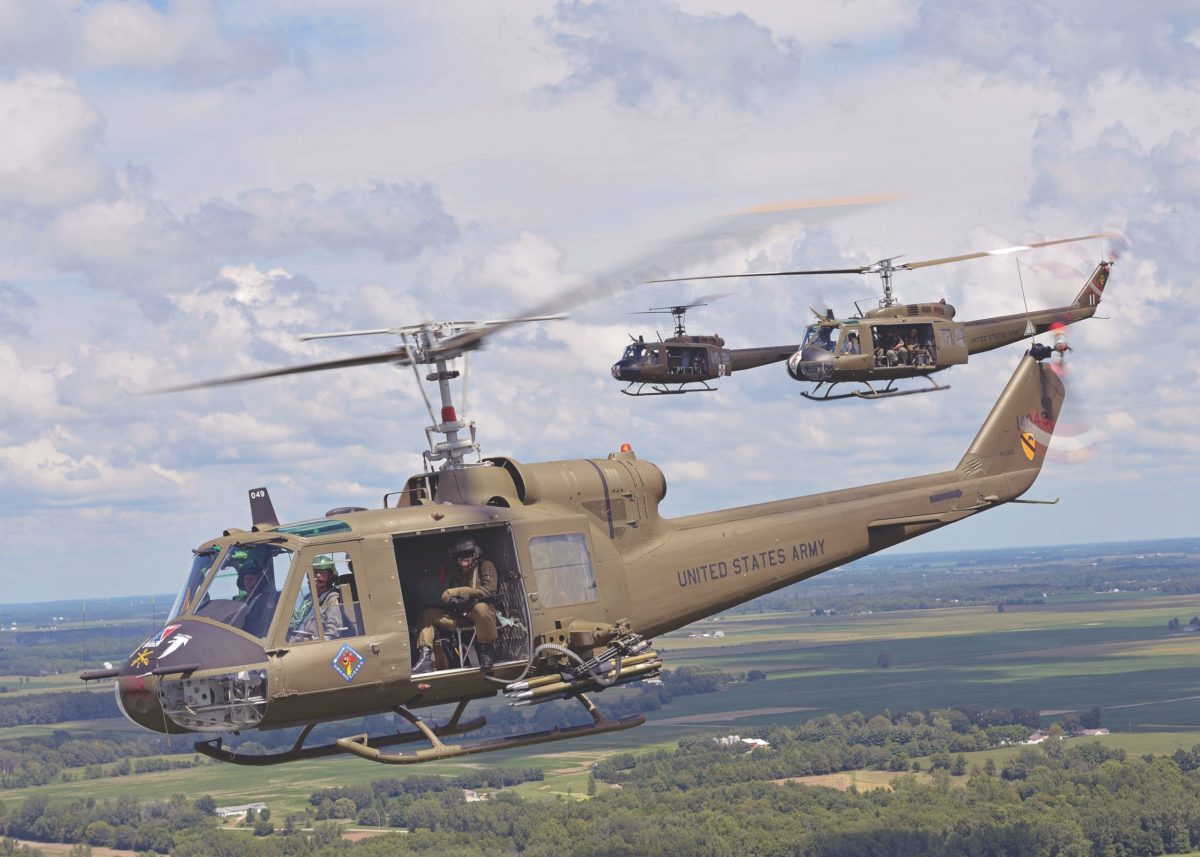
BS had been a helicopter pilot in the Army, flying Hueys in Viet Nam.  I think he was not quite as comfortable in airplanes as he had been in choppers.


When learning to fly instruments in an airplane, you wear a hood on your head.


No, more like this.


The instructor is very busy, explaining the procedures and techniques, maintaining clearance from other planes and possibly talking to air traffic controllers, at first.  As in all forms of instruction, you use a building block method, starting with the basics and then building upon that, layer by layer.

At first you just learn to control the plane's attitude with reference only to the flight instruments.  You learn to scan them quickly, but thoroughly.  You don't forget to look at any of the instruments, but you don't stay on any one too long.  You learn which are the primary references for the different phases of flight.  You could easily convince me that following this fundamental process of flying an airplane for 4 decades leads to a low level of anxiety to be constantly shifting your attention through a series of processes.  For example, I am watching a Jason Bourne movie as I try to remember my past and type this.

Then you learn to begin navigation in 3 dimensions with instruments and radios.  You learn how to read and understand aviation navigation charts for departures, enroute, arrivals and approaches.

So, BS and I are spending time in ground school discussing all this stuff, then going out and putting it all together in the plane.  Shortly after takeoff, I put the hood down so that I cannot see outside.  We practice non precision approaches to airports, in which we descend to about 500 feet above the ground, following the course depicted on an approach chart.  When I would fly correctly to a spot where I could see the airport in the minimum weather conditions for that approach, BS would let me take the hood off.  These approaches are frequently not lined up with the runway and require a circling maneuver at low altitude to a  point where we are lined up to land.  

If I had not flown correctly, the hood stayed on and we would fly a missed approach, which was part of the approach chart.  Some times we would do a missed approach even if I had flown it perfectly, because, some times the weather is not good enough to see the airport.  Eventually, I am doing all this and talking to Air Traffic Control (ATC) and all BS has to do is sit there and enjoy the ride and the torture he is putting me through, while making sure we don't collide with another aircraft.

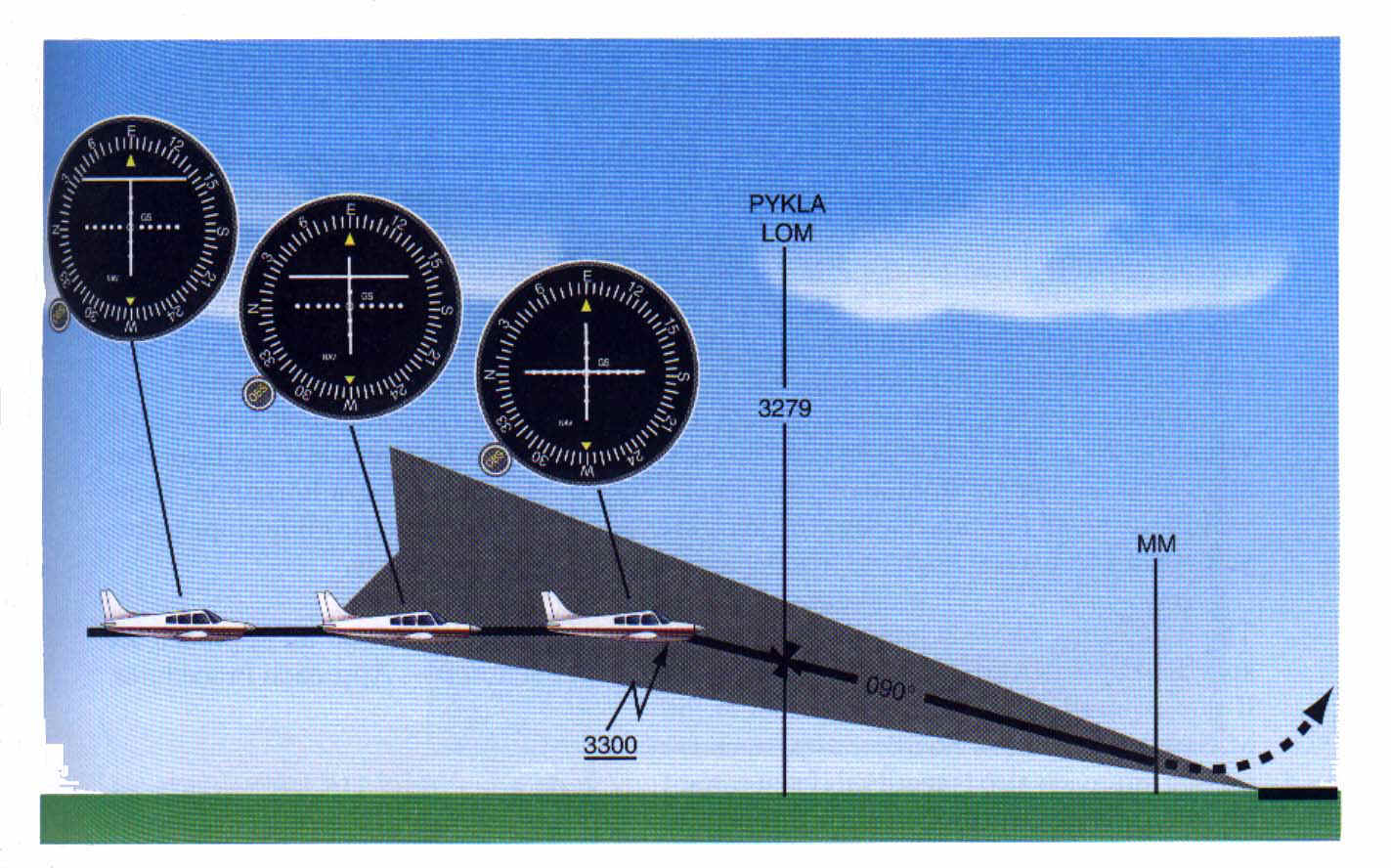
Then we started flying precision approaches, Instrument Landing System (ILS) approaches.  These are called precision approaches, because they are very precise.  Ha.  They provide very good course information called the localizer and very good glide slope information via a radio receiver in the plane.


With the training and equipment we had at that time, we flew the ILS to 200 feet above the ground and if BS was going to give me the weather we needed, the hood came off and we landed.

I have to tell you that your mind plays tricks with you doing this stuff, because you kind of don't trust that the radios are taking you to the right place until you have done if many times.

I guess I was pretty good at this, because one day as I was plugging away under the hood, BS asked me, "You like this shit, don't you?"

Trees

I was very fortunate to know and hang out with some really good pilots in the early days.  They instilled good, tough attitudes in me from the very beginning.  Harold Bennett, my first instructor, the WW II bomber pilot, did this no less than any other.  However, we are all susceptible to making mistakes.  You just try to keep them small and to a minimum in number.

Harold made several big ones all in one day.  He had not flown for many years after the war and had to go back through all the training for his instructor rating, etc.  After I had flown with him, he got his instrument rating again.  Instrument flying is something that needs to be practiced regularly to maintain skills.


I'm not sure how much instrument flying Harold had been doing before his fateful day, but heard it was not much.  He agreed to fly a couple guys on a business trip in a Mooney, a plane he had not flown much.  It belonged to one of the other members of the Condor Aero Club.  I think the trip was not exactly a legal charter trip.  You could get away with this kind of stuff, if you claimed you were giving flight instruction to one of the passengers.


One of the problems with business trips is that the weather does not always cooperate.  The men arrived at the Zelionople airport on a very foggy morning.  The airport which was down in a hole, was surrounded by lots of hills. These were obscured by the fog.


Harold probably should have canceled the trip, but must have felt lots of pressure to go.  I can only speculate as to why he would do that.

He took off to the north and failed to out climb a gradually ascending slope to the ride of the departure path.  The Mooney hit the trees and crashed to the ground in flames.  All on board were killed.

I'm not exactly sure when this crash fit into my time table, but it was certainly during my time at Butler Graham Airport.