Featured Post

Tuesday, January 6, 2026

DECAF, DECAF??!!

 I thought I had already written about this one, but I couldn't find it, so here goes.


After the Mount Whitney hikes, the Mount San Gorgonio hikes and the hike on the Pacific Crest Trail that began on September 11, 2001, one of the guys suggested doing a hike in which we established a camp and then did daily hub and spoke type hikes.  This way, we did not have to make and break camp every day and carry a heavy camping backpack while we were exploring.

I started looking for a location where we could do that.  I had several books that suggested various hikes in California and chose Glacier Lake, north of Lake Tahoe.  It is located near the Black Buttes and can be accessed by hiking from the Grouse Ridge Campground.

https://maps.app.goo.gl/evCkWcgbAPd6CDZn9 

The hikers would be Lloyd, Jon, Darin and myself.  We were all UPS pilots.  Lloyd, Jon and I had worked together at Florida Express and Braniff 2, then got hired at UPS.  Darin was Japanese American, had flown in the Navy and lived in Davis, just west of Sacramento.  I flew with him when I was a captain on the 757 and 767.

The 3 of us flew into Sacramento and met Darin there, at our layover hotel.  He had a big Suburban, with 4 wheel drive and would provide our transportation.  

On the morning of the first day, we had breakfast at the hotel, then drove to the Donner Memorial State Museum.  There is quite a bit of history in that area about the westward migration.  


From there we went to the appropriate Ranger Station to get our camping permits.  The rangers had a plastic bag of fresh bear scat on the counter, that had been deposited behind the building.  They told us it was still warm.  I took their word for that. 

The drive from Interstate 80 to Grouse Ridge Trailhead was about 16 miles, the last part of which required using Darin's 4 wheel drive.

https://maps.app.goo.gl/eTStJdb6okrLjc2W8 


The hike to Glacier Lake started out down a steep hill for about a mile.  After that it was relatively flat until the last half mile.  It climbed slightly to the primitive campground next to the lake.  I'm guessing it was about 5 or 6 miles from the parking lot.


Jon was not experienced at camping and needed help setting up his bivy tent.  Darin gave him a hand.


We set up all the tents, ate our evening meals and knowing it would not rain, did not put the rain flies on the tents.  We were close enough to have a conversation, while in our sleeping bags, before drifting off to sleep.

Before the trip, I had told Lloyd I intended to bring a box of Folger's Coffee bags, then all we would have to do is heat water and pour it into the cups with the bags.  Lloyd told me not to bother.  He had a new coffee press and wanted to use it. He would bring the coffee. 


We ate breakfast in the morning and Lloyd used his press.  We decided to climb a chute to the ridge south and east of the lake, called Black Buttes.  We had to go around the south end of the lake and do a hands and feet scramble.


As we reached the top of the first level, I began to feel as if I was getting a flu.  I decided to stay there as the other guys continued climbing toward the top.  I would take some photos.  They are probably in that one, but too small to see.


I 80 is visible in the distance.  We made our way back down the chute, around the lake, and relaxed a little before dinner.  I was not feeling well.  Another night without rain.  


The next morning, during breakfast, Lloyd just happened to mention that we had been drinking decaf.  I will add a video of this guy to give you an idea of how I melted down upon receiving that news and understanding why I had been feeling like crap for the last 24 hours.


"DECAF, DECAF??!!  DECAF ISN'T COFFEE!!  YOU SAID YOU WERE BRINGING COFFEE!!  NO WONDER I FEEL LIKE 💩!!  I'M A &*%$ING ADDICT!!

I couldn't believe he had done that.  I was thinking about how far we had hiked from the Suburban and how far we had driven from civilization.  I would have to spend most of the day trying to find a place to buy freaking Folger's coffee bags.

Quietly, Darin said, "Denny, I have green tea.  Would you like some?"  "Does it have caffeine?"  "Yes."  "Yes, I need some.  Thank you."

Darin saved the day. I began feeling better immediately.  We followed a trail to the north from our campsite and found some beautiful lakes.  It was a great day.


Tuesday, July 22, 2025

How The Mind Works

 I had to drive the coach three and a half hours to Mayfield Kentucky on Sunday.  I had an appointment to have some things fixed early Monday morning.  The drive is beautiful and fun in the coach, once I pass Elizabethtown and get on the Western Kentucky Parkway.  The pavement is smooth and the traffic is light.

Temperatures were working their way up into the 90s.  The outside air temperature indicators on the coach were indicating 93degrees when I arrived there at about 8 PM.  I had to disconnect the Jeep and back the coach between a small RV and a large mobile dwelling that I am not going to waste too much time trying to describe.  The space was wide enough for someone who was good at backing coaches, but that ain't me.  Furthermore, the rear tv camera system wasn't working.

It took me 3 attempts to back in from one direction and 3 more from the other, to finally get it in there.  Because the tv wasn't working, I had to stop the coach, set the parking brake and jump out to go back and check my distance from the large garage type door I was backing toward.  I had to do that 3 times.  I say jump, because the stairs were one of the things I was getting fixed there.  I don't jump so well anymore.  Then I had to step up to the bottom level of the coach entry door, which is about hip high to this geezer, then hold the hand rails and pull myself up and it.  Guess who was overheated and sweating profusely in this 93 degree heat.

The drive out there had been easy and fun, but it had become progressively warm in the driver's seat.  There are 4 air conditioning systems in my coach, Enigma.  Three ACs are in the roof and they are the ones that cool the house part of the bus.  The other system is similar to those you are familiar with on automobiles.  It has an engine driven compressor and creates cool air that comes at you from openings in the dash.  The problem is that the Enigma's engine is in the back of this 43 feet long beast and the air has to be ducted to the dash, which is all the way to the front.  It can become inadequate in very hot ambient air situations.  

It is possible to supplement the dash AC, by running one or more of the house ACs, but that requires running the generator, which uses very small amounts of the diesel fuel, because of the high electrical load.  The batteries and engine generator just can't carry that load.  

I didn't start feeling hot until I was almost at my destination and didn't feel like taking the time to stop and do what was necessary to run one of the house ACs.  I wanted to disconnect and park before dark and find a place to eat dinner before 9 PM.  Mayfield rolls up the sidewalks early.

After I finally got the coach parked, I was able to plug in 50 amp shore power from the dealership's building.  When I saw that it was providing power to the coach, I turned on the minimum number of circuit breakers that I would need to spend a comfortable night sleeping, after I had eaten dinner.  I wouldn't be needing the electric, fake fireplace or washer and dryer, for example.  I did close the CBs for all 3 house ACs.  I turned them on and got in the car to drive to the nearby Cracker Barrel.  I walked in the door at 8:45 PM, thinking the coach would be nice and cool by the time I returned.

I like Cracker Barrel, because you know what you are going to get.  It may not be fancy, but it is good and you can stuff yourself for $15.  

When I climbed back into the coach, it was not cool and comfy.  I knew there was something wrong.  I went to the panel that controls the cooling and heating of the interior and saw that the front unit was running, but the middle and rear units had E7 faults.  This indicates a circuit breaker fault.  I went to the CB panel and surprisingly, the CBs were not in the tripped position, they were full on.  Strange.  Nonetheless, I turned them off and back on and went back to turn the ACs on again.  E7 times 2.  I must have done this 3 times totally, because my mind was fuzzy from the drive, the heat, and the hour.  Mayfield is in the Central Time Zone, so it was after 1030 on my body clock.  The temperature inside the coach was indicating 88 degrees.

At this point, I had enough knowledge and information to figure out what was wrong, but I was tired and hot and soon started thinking about the alternative to sleeping in the coach.  I knew it would not cool down enough for me to fall asleep for hours.  I would have to go to a hotel to get enough sleep to deal with the things I would be facing in the morning.  That is what I did.  Cracker Barrel opened an hour before the dealership, so I was the last customer one day and the first the next. 

I drive to this dealership, because there are not acceptable RV repair places for me closer to Louisville.  There is one in Nashville, but that is a drive of about 3 hours and is just not as easy for me to deal with.  At the one in Mayfield, I actually get to talk to the guys who are working on the coach.  There is so much lost in the transfer of information, when you have to talk to someone between the technician and yourself.  

After a good night's sleep in air conditioning and breakfast with coffee, I was probably able to break the code on my AC problem, but I left it in the capable hands of Cody, the guy who works on Enigma there.  He told me he found there was a mix up with the CBs for the 2 problematic units.  The middle unit was actually on the CB labeled Washer and the rear unit on the CB labeled Fire Place.  When Cody told me that, a cartoon frame of me would have had a lightbulb above my head.

During our previous stay in Florida, over the winter, we had a short on the CB panel, nearly causing a fire.  We went without total power for several days, waiting for parts and for our mobile technician to be able to rebuild the panel.  He must have gotten the position of the CBs switched in those two cases.  The ACs had worked fine after that, but we had all the CBs on, and had not left some of them off selectively, assuming we wouldn't need them, as I had done the night before. 

Now, to get back to the title of the post.  The whole time I was working on figuring out why the ACs weren't working, there was something in the back of my mind telling me I had all the information I needed to solve this problem, if I only worked on it and calmly thought my way through it.  My subconscious mind knew the answer to the problem, but my emotions were getting the best of me, due to fatigue and discomfort.  I kept going back to the CB panel, knowing it held the answer, but just allowed frustration to prevent me from working it out. 


Tuesday, July 15, 2025

Unusual In The Extreme


Early in this video, you will see a Burghboy say nice things about Ohio.  That is Unusual In The Extreme.  That is because there is a somewhat friendly rivalry between people from Pittsburgh and the state of Ohio.  There are decades old rivalries in professional sports and just the natural antagonisms of living close together.

However, there are truths that cannot be denied.  Ohio had some very important people, Grant and Sherman, Wilbur and Orville would be just a few and Pittsburgh has a football team that can win Super Bowls.

Early in my life, I became interested in the way humans always give names to everything. When I talk to one of my doctors and they ask me about prescriptions, I am always impressed by their ability to remember the names. 

I have decided to name an upcoming, bike ride with my friends The Quest.  In the immediately preceding post, I gave you the story that is the partial inspiration for that name.

We call the series of rides we have been doing for more than a decade the Tour De Nbo.  This is a clever play on words our riding pal, Ed Quigley, came up with based on the Tour De France and the nickname they all call me, Denbo.

I may have blogged about how I acquired that name, but I will now provide a refresher.  When I was a gradeschooler, my dad would take my brother, Jim, and me to visit his parents, Pap and Gram.  Jim was always a more gregarious kid than I was and as we walked into the big room where Pap was always sitting in his lounge chair, doing crossword puzzles and spitting tobacco juice in his spitoon,  Jim would always give him a big, cheerful hello.  Pap would return the enthusiasm with a big, "Hey Jimbo".  There was much less enthusiasm in my exchange with Pap.  I was just a shy kid.  This happened several times and finally, one time I guess Pap must have seen the look on my face and broken the code that I was just not as outgoing as Jim and was disappointed in not having a nickname.  Pap always came up with the family nicknames.  He said, "Hey Denbo". 

Years later, as I was sitting in an office, just off the showroom floor of the car dealership, where I worked as a salesman, I was engaged in a discussion about nicknames.  The discussion was with one of my favorite people of all time, Eddy Link.  Eddy liked to give people nicknames also.  He had named the parts manager Towhead, because he had blonde hair.  He asked me if I had a nickname and I said a good friend had always called me Denny The Weasel.  Ed didn't like that one, so I related the story about Jimbo and Pap.  He liked that and started calling me Denbo on a regular basis.

Several more years later, I was having a similar discussion about nicknames with good friend and another of my favorite people, Lloyd, who was called The Lloydster.  (I always call him the guy with the redundant L).  He liked Denbo also and that is what he called me on our many hiking and camping trips in western mountains.  One of those trips was our first hike to the summit of Mount Whitney and we were joined by a fellow UPS pilot who had been a fighter pilot and as you may know, they all have call signs, which is what they call nicknames.  This guy's call sign was Snake.  Snake began calling me Denbo also.  Snake and I are both active on a chat room that our union of UPS pilots established called the Bar And Grill.  He always referred to me as Denbo on the BnG and it caught on there.  Snake joined us on one of our Tour De Nbo rides, referring to me as Denbo, so it caught on there.  Sorry, I tried to make that as short as I could.

Whew!  Then I began naming each ride.  Smell The Roses, Zest For Life, Toxic Masculinity and The Phoenix are examples.  I am calling our next one The Quest.  The name was inspired by the story in the preceding post and the fact that I will be 80 years old on this ride.  It will be 9 days of riding from Washington DC to Pittsburgh on the Chesapeake And Ohio Canal Towpath and the Great Allegheny Passage (GAP), 335 trail miles.  The Quest will be to see if I can ride 40 miles a day, sleep on the ground and get up and do it again and again...

I have my new Category I ebike to provide an assist and I rode it 250 miles on the Katy Trail in Missouri last October, but I slept in a bed every night.


Hang around me long enough and you will hear me say, there is a thin line between genius and insanity.  I don't know if that is true, but I like to say it, because many of the really smart people I have known or observed are a little nutty.

The discussion in the video above is about the Wright Brothers and their signature accomplishment, First Flight.  I think it is ironic, that these 2 guys, who did not go to college, solved the mystery of human flight.  It was accomplished because they were both very smart, but more so because they were persistent and did not allow setbacks to discourage them.


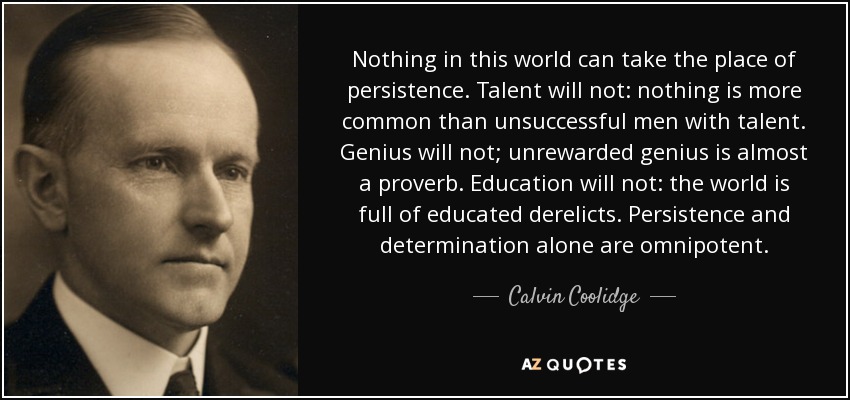
Silent Cal is not considered one of our Rushmore worthy presidents, but I think he hit the accomplishment nail on the head with the above quote.  In an earlier blog post, titled Psycho Babble, I discussed a book, by Dr. Maxwell Maltz, Psycho Cybernetics.  This book makes the case that we succeed by making mistakes, learning and then pressing on.


Tuesday, April 1, 2025

The Quest

When we study history, we often know the end of the story and fail to understand, that the outcome was not inevitable.  Take for example, the event that actually created the United States of America, the American Revolution.  The successful separation from England was in doubt until the very end of significant conflict at Yorktown, Virginia.  Early in the war, Washington was defeated and routed in the Battle of Brooklyn, by what was probably the first Hail Mary attack in America.  Stormin' Norman Schwarzkopf is famous for his end around attack in the Kuwait War, but that is not the first involving Americans in conflict.  Another was the attack by Stonewall Jackson, on behalf of Robert E. Lee at Chancellorsville.  This attack was against General Fightin' Joe Hooker, who Lee referred to as Mr. F. J. Hooker.

Washington's American army was huddled on the shore of the East River, outnumbered and outclassed.  The Brits decided to wait until morning to finish the job, but a miraculous fog appeared on the river and Washington managed to escape Long Island for Manhattan Island in small boats and live to fight another day.  This is but one example of the battle losses and narrow escapes of Washington's ragtag army.  No one at that time gave the former colonies any hope of winning that war against the most powerful army on the planet at that time.  During the Civil War, World War II, just about every war our country has engaged in, there were points where victory was in doubt.

As I wrote my blog, Flexible Flyer, How Not To Build An Aviation Career, I knew how it ended, but while I was living it, there was always great uncertainty that I would achieve my goal of having a financially successful career as an airline pilot.  If you read the blog, you will see how it developed, step by step and see how bleak things looked at several points.  There were times when my resolve was nearly broken.  There are also many elements that helped build and rebuild that resolve.

I have been thinking about a small part of that process lately.  When I was in the army from October 1965 to October 1967, I spent most of my time as a drill sergeant at Fort Knox Kentucky.  My best friend and roommate was Howard "Ricky" Richter, a Jewish guy from Cherry Hill, New Jersey, near Camden and across the Delaware River from Philadelphia.  Ricky was fascinated by the 1965 musical, Man of La Mancha, which was based loosely on the 17th Century novel, Don Quixote by Miguel de Cervantes. Ricky loved the principle song from the musical and he would sing it often as we drove from Fort Knox to Louisville, to do the things young men strive to do.  Ricky did not have a good voice and could not carry a tune, but he did not allow that to deter him. 

In recent years, I search the World Wide Web for Ricky and found his obituary.


To dream the impossible dreamTo fight the unbeatable foeTo bear with unbearable sorrowTo run where the brave dare not go
To right the unrightable wrongTo love pure and chaste from afarTo try when your arms are too wearyTo reach the unreachable star
This is my quest to follow that starNo matter how hopeless, no matter how farTo fight for the right without question or pauseTo be willing to march into hell for a heavenly cause
And I know if I'll only be true to this glorious questThat my heart will lie peaceful and calmWhen I'm laid to my rest
And the world will be better for thisThat one man, scorned and covered with scarsStill strove with his last ounce of courageTo reach the unreachable star

Wednesday, August 14, 2024

Dr. William P. Garvey

 The idea to write this chapter occurred as I was watching a YouTube video of an interview of Shelby Foote on Book TV, a C-Span2 program.  Foote is famous for his three volume effort, The Civil War: A Narrative.  This series was made famous, popular and successful by Foote's appearance on Ken Burns' PBS show, The Civil War.  You can click on all the hyper links if my discussion is insufficient.

Brian Lamb began the interview, by asking about the cause and impact of the Civil War.  This reminded me of my high school history teacher, Dr. William P. Garvey.  At the time he was my teacher, Mr. Garvey was still working on his masters and doctorate in history, at the University of Pittsburgh.

Garvey was my teacher for Pennsylvania history, during my freshman year and American history in my junior year.  Of course, the major discussion of the Civil War was in American history.

The thing I remember most was his explanation of the underlying causes of the war.  He compared it to an explosive device, a bomb.  I will have to paraphrase, because of faded memory, but it went something like this. 

First there has to be an explosive substance, something that will blow up, under the right conditions, such asTNT or nitroglycerin.  In Garvey's opinion, this was the vagueness of the Constitution with regard to the relationship of the Federal government to the states.  You have to remember the situation when the Constitution was created.  Briefly, the states had been operating under the Articles of Confederation, which created a very weak central government.  The states did not even have a common currency.  Some of the Founding Fathers did not believe there should be a strong central government and of course some did.  Jefferson was one who opposed it and Hamilton was in favor.  Jefferson was out of the country at the time and was not happy when he learned what had been created.  Hamilton would have made it stronger. Jefferson was from a southern state and Hamilton a northern state.  As you can guess, this was beginning to become a regional disagreement.  The Framers of the Constitution had to tread carefully and compromise to get enough  agreement to accept it.  Therefore, there was so much vagueness, that some states believed they could secede from the Union, if they had a fundamental disagreement with policy.

Secondly, a bomb must have a fuse, an ignitor, something that will cause the explosive substance to explode. Garvey asserted that slavery was this fuse. As I pointed out, the Constitution created a strong central government and there was concern in the South, that the 'Peculiar Institution' of slavery would be abolished by the government, because of growing anti-slavery sentiment in the North.

Third, the bomb must have a spark to light the fuse.  If my memory is correct, Garvey said the election of Lincoln as president was this spark.  I don't think Lincoln ran strongly on abolishing slavery, but his position was well known from the famous Lincoln Douglas Debates, which occurred when Lincoln ran against incumbent Illinois Senator Stephen Douglas in 1858, two years before the Civil War began.

Once again, I use hyper links to provide additional information and I use WikiPedia a lot, despite the many criticisms of its accuracy, because it has a standard format for comparison.  If more information is required, you can make use of your research skills on the World Wide Web.  An in-depth discussion of the preceding is not in the scope of my post.

After all, the blog is about my favorite subject, the one about which I am best informed, me.  I have been discussing the elements that went into the development of my career, as a professional pilot. I am describing how, step by step, the pieces came together, like a jigsaw puzzle.

I am the beneficiary or victim of 12 years of education in Catholic schools.  I say beneficiary, because it was a very good education.  I believe I was taught more pertinent things in 12 years, than most people learn through post graduate degrees today.  I don't really see myself as a victim at any stage of my life, but I used that word to get your attention.  I believe my parents and educators developed the Type B side of my personality and the US Army helped me develop the Type A side.  In my professional pilot career, I believe both sides came in handy.

Mr. Garvey was the teacher of whom I have the strongest memories.  In my life as an instructor, I think I used techniques I learned in his classroom.  He spoke in a way that demanded your attention.  The instructor training in the army taught that and explained how and why to do it.  I discussed some of that early in the blog, talking about military bearing, etc.  He knew the subject and it was obvious he enjoyed it.  He allowed and even required class participation.  You could ask questions and even disagree, up to a point.  There were the usual time constraints and the lesson plan must be completed.

Garvey instilled a love of American history in me. As I have blogged previously, this came in handy when I lived in Atlanta and encountered people who harbored a resentment of people from northern states, although they often lacked a good base of knowledge about WTF actually happened.  With even the most basic reading about the war, I was able to shut most of them up.  Some of them reminded me of the Japanese trying to build a case that they were actually the victims of World War II.

Of course, the internet did not exist for most of my life.  Some time after it showed up, I decided to search for William Garvey.  Through a typing error, I learned that there was a Dr. William Harvey, who discovered the circulatory system of the human body.  At the time of my research, Bill Garvey was president of Mercyhurst College.  

We have all probably been asked at some time, what person, dead or alive, we would love to meet and chat with.  Garvey would have been such a person for me, based on our time in class and my subsequent obsession with American history as an adult.  Lincoln and Grant would be historic people in the category for me also.

I decided to call Mercyhurst to see if I could have a phone chat with Mr. Garvey.  I talked to his secretary and had to make an appointment.  She called back at the appointed time and after assuring it was me, connected Doctor Garvey.  He acted as if he remembered me and said I was a good student.  I was tempted to throw the bullshit flag on that.  I told him about my memory of things I learned about teaching from him and that I modeled my techniques after them.  I told him I had 2 kids and he told me to send them to Mercyhurst.  I would have gotten into more of a history discussion, but the secretary, appointment, and Dr. Garvey crap kind of knocked me off my stride.  I didn't want to take up too much of his precious time.

I think it is worth mentioning an incident I witnessed in the classroom during my freshman year in high school.  Garvey was lecturing on something in Pennsylvania history and standing about 6 feet from the classroom door, when the bell rang.  Bill continued lecturing and all members in the class were wise enough to remain seated as long as he was speaking, except one.  Michael "Mickey" Markle got up and started walking from the left side of the room, toward the door and between Garvey and the class.  As he passed, Bill grabbed the back of Mickey's head and smashed his face into one of the desks in the front row.  Mickey's glasses were broken, but I don't remember much more about that.  

Actually, this was not as shocking as it may seem now.  In that, my 9th year of Catholic eduction, I was not unfamiliar with physical punishment.  I always say I believe the good Sisters Of Saint Joseph invented some of the submission holds of modern day Mixed Martial Arts.  My parents also did not spare the rod.  Despite that, I still do not see myself as a victim at any time during my life.  If I got a whoopin', I probably deserved it. 

Bill Garvey was still around two years later for my American history classes, so I'm guessing he paid some price for that episode, but was obviously not fired.

Garvey was born 10 years before me, so he was about 25 to 27 at the time I was his student.  There were some things about him that seemed a little strange to us, but nothing we could pinpoint.  At the time I began to research him on the internet, there were positive articles that mentioned the things that were in his obituary, when he died in 2017.

https://www.burtonquinnscott.com/obituaries/dr-william-garvey

However, not long after our phone conversation, this kind of stuff came to the surface.

https://www.goerie.com/story/news/local/2017/08/10/garvey-former-mercyhurst-president-dies/19823413007/

Yes, my educational hero was accused of sexual child abuse and an investigation paid for by Mercyhurst found that the accusations "appear to have merit".  By that time, it was past statute of limitations for criminal investigation and prosecution.  Garvey was forced to "retire".

Although he seemed unusual, there was never anything I knew about that indicated Garvey was a pedophile.  The accusations were about his time teaching at a Catholic grade school in Erie, PA, both before his time at my high school, North Catholic of Pittsburgh, as well as after.  Decades after my days there, I received correspondence from the school mentioning that there had been some incidents with some of the religious teachers, brothers and priests of the Marianist Order.  I was being asked if I knew of any such incident.  Once again, there were some weird dudes, but I never heard anything specific with regard to pedophilia.  I had nothing to report.

I guess this is another example of the complexities of human beings.  A complete study of just about every person will find that there are many levels of good and bad in everyone.  The greatest among us often have some darkness in their story


Sunday, March 24, 2024

Skylark

 Doreen and I are in Savannah for a week, staying at Red Gate Farm RV Park.  It was raining like hell, when we drove here, arrived, set up the coach, all night and half the next day.  Fortunately, the lot was crushed limestone and not muddy, but there were a few puddles on the way in.  I will have to hose off the wheels before we leave.

We are working our way back to Louisville from Lakes Park RV, in Fort Myers.  Our next stop is at Tanglewood RV Park, near Mocksville NC, where we will have MagneShades installed on all our front windows to reduce the exchange of heat through them.  The front of the coach is a challenge for the cooling and heating systems to keep up with, depending on ambient outside air temperature.  The Magne Shades will help mitigate that problem.

After Mocksville, we will stop at Anchor Down RV Resort, in Dandridge TN, for a night.  We stayed there last year, sweating the threat of heavy thunderstorms and tornadoes.  From there, we drive home, in time for the second annual, day before Easter musical show for geezers, starring our son, Mike, and many of his great musical friends from high school and college days. (I'm thinking Weaver will wear a clean shirt this time.  These videos are from a Christmas season reunion show they did several years ago.)  Last year, they all brought their wives and kids and it was a fun reunion.  I call it a show for geezers, because it will be held at the Tin Roof bar on Shelbyville Road in Louisville at 4:30 in the afternoon, as opposed to their normal starting time of about 10:30 PM, back in the day.  The musician are now in their 30s.

Yesterday, after the rain stopped, we drove in to town to begin exploring this very historic and interesting town.  We drove around for about 45 minutes, getting the lay of the land and looking for a place to park.  Since it was a Saturday, there were tourists everywhere.  We finally headed toward Forsyth Park and, by good fortune,  ended up at Monterey Park, where we found a parking spot on the street.  There was a meter, but parking was free on weekends.  This was fortunate, because the Mercer Williams House is on the square occupied by Monterey Park.  This is the only historic house Doreen wanted to visit in Savannah.  The house is historic, because it is the site of a murder made famous by the non-fiction book, titled Midnight In The Garden Of Good And Evil and the movie, by Clint Eastwood, of the same title.  Doreen has read the book and seen the movie several times. 

I titled this post Skylark, because the movie opens with the K D Lang version of the Hoagy Carmichael/Johnny Mercer tune, Skylark.  Mercer is a native of Savannah and wrote the lyrics to the song.  The Mercer Williams House was owned by a family member, but Johnny never lived there.  If you would like to hear the song with a little more energy, there is an Aretha Franklin version,  There are several other Mercer tunes on the soundtrack.  James Gandolfini, aka Tony Soprano, has a small role, as the second cook during a scene at Clary's Cafe.

For more information and fun, click on the hyper links at the different colored words.


Sunday, March 10, 2024

Chattanooga

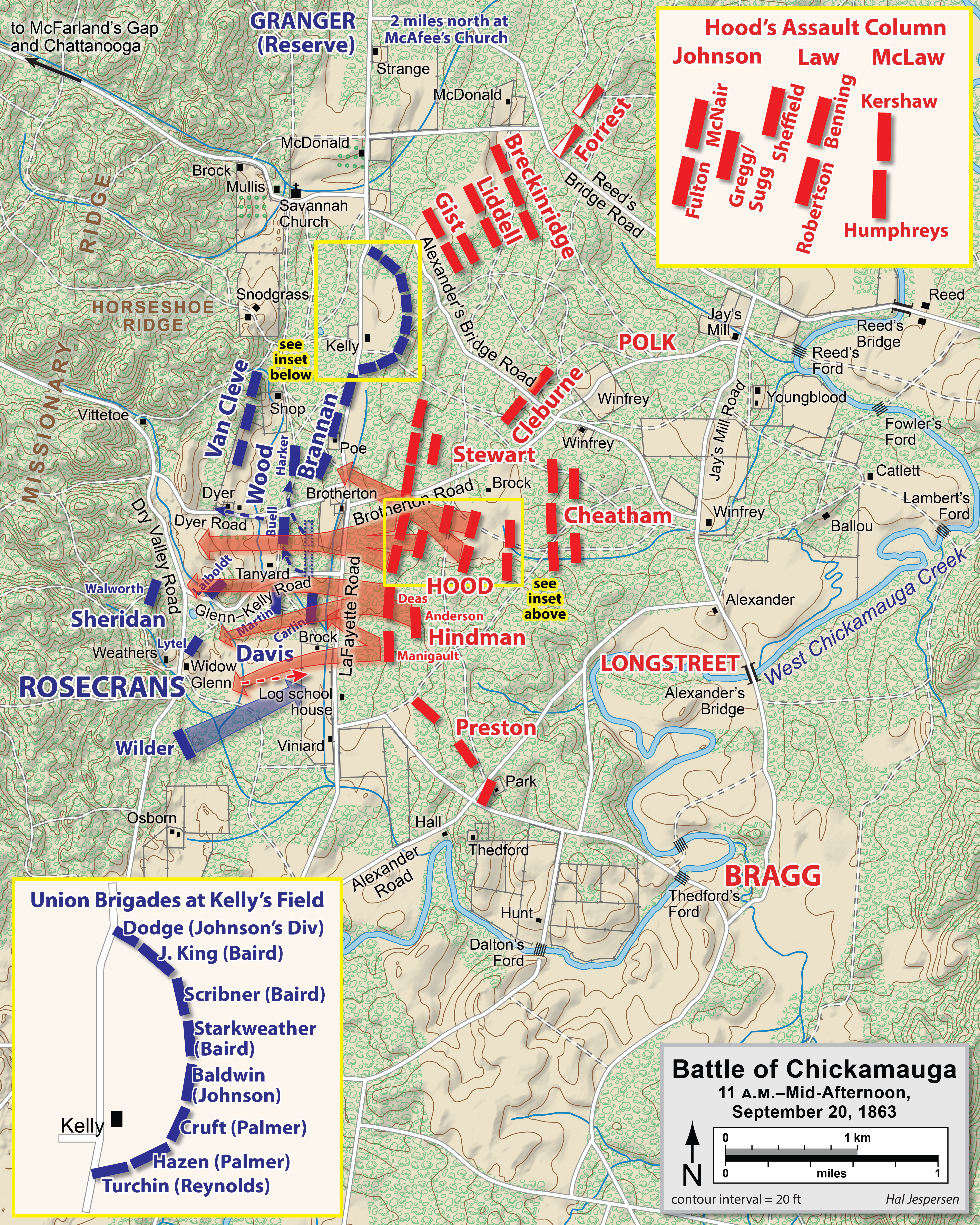
 In my previous post, Uncle Billy, I discussed my time living in Atlanta Georgia.  As part of my effort to become more aware of the American Civil War, I drove to the Chickamauga GA battlefield.  It was a humiliating defeat for the Union Army of the Cumberland.  The army was routed and made a disorganized retreat to the city of Chattanooga Tennessee. 


The Army of the Cumberland, under Rosecrans, was put under siege by the Confederates, under Bragg.  Supplies were difficult to come by and the troops were reduced to quarter rations. 


 Rosecrans


Bragg

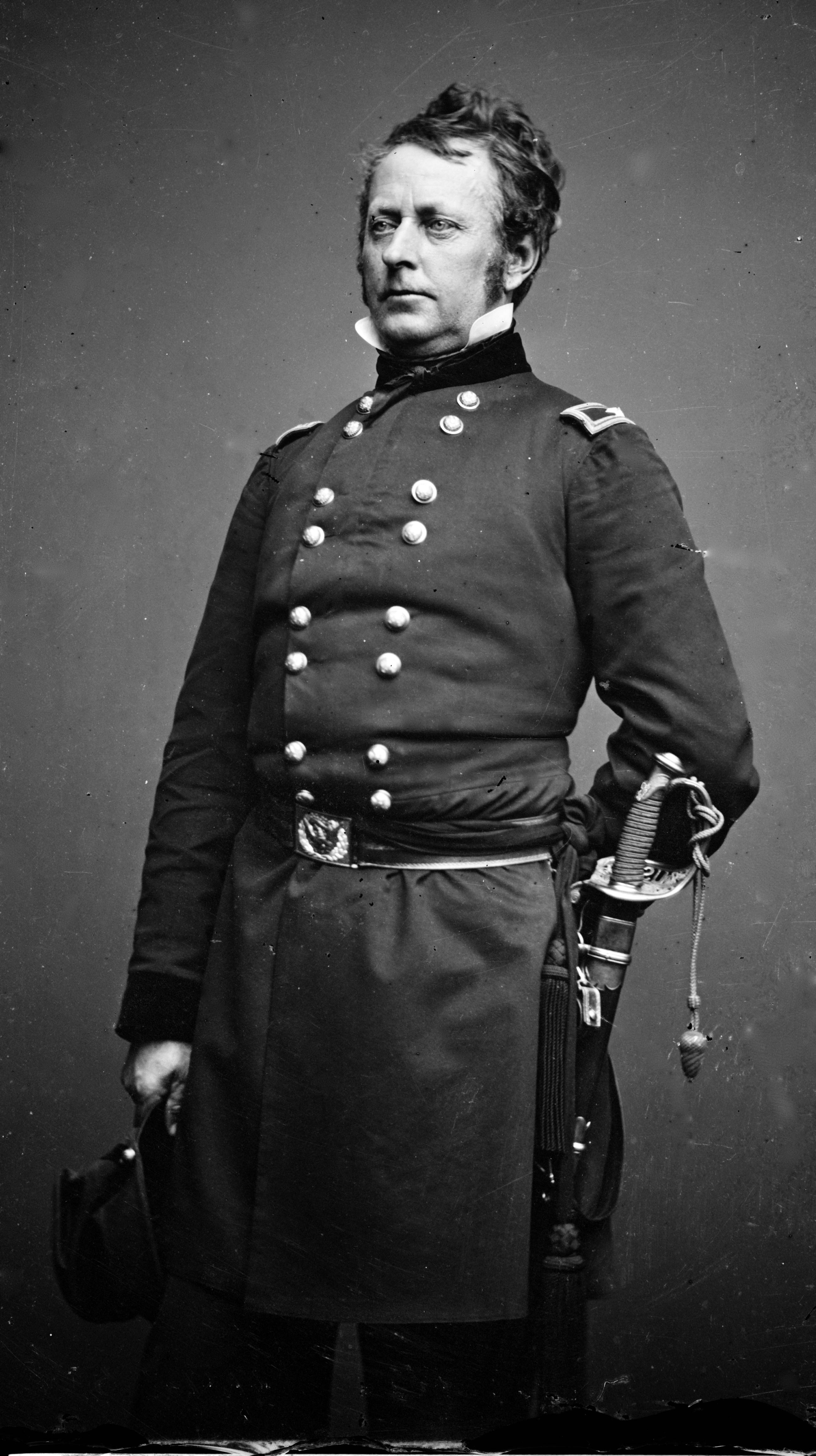
Generals Grant and Sherman made their way to Chattanooga, with the Army Of The Tennessee, after a successful campaign at Vicksburg Mississippi.  General Joseph Hooker arrived, with an element of the Army Of The Potomac after a victory at Gettysburg.  Grant took charge of al the Union troops and devised a successful plan to greatly improve the line of supply in Chattanooga.


Grant


During this time, the men and officers of the Army Of The Cumberland were taking lots of abuse, at all levels of rank, from their counterparts in the Armies Of The Tennessee and The Potomac.  They had been embarrassed at Chickamauga and it was mostly because of a communication malfunction at the highest level of command.  They were seething.


Eventually, Grant's troops outnumbered Bragg's and they were better supplied.  Grant became tired of being under siege and wanted to start trying to break out.  His plan was to send his most trusted subordinate, General Sherman, to attack the Confederate right and rolling their line along Missionary Ridge.  Before this, General Hooker led an attack on Lookout Mountain and won what became known as the Battle Above The Clouds.  This victory was important, but not as important as some of the stories of the time made it out to be.


Hooker

After visiting Chickamauga, I drove to Chattanooga.  I made my way through the neighborhoods to the summit of Lookout Mountain.  I drove to Orchard Knob and Missionary Ridge.  The city has kind of consumed the battlefield, but there are historic plaques and statues everywhere.  It is easy to get the lay of the land and understand how the terrain effected the battle. 

Sherman's efforts were foiled by his misunderstanding of the terrain at the far right of the Confederate line.  There were more hills there that he was not aware of.  As his attack faltered, Grant ordered the Army Of The Cumberland to threaten Missionary Ridge at the center of the line, to draw reinforcements from the right.  His orders were to take the trenches at the base of the ridge only.  He still thought Sherman should be the emphasis of the effort.  

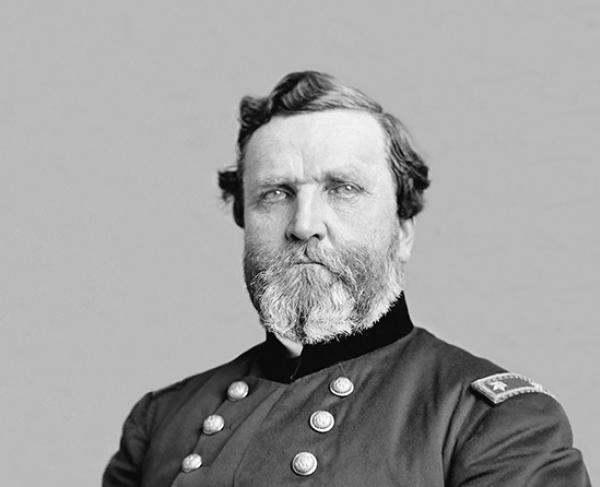
The Army Of The Cumberland, now under General George "Pap" Thomas, the "Rock of Chicamauga", advanced to the base of the ridge, driving the Confederates up toward the top.  When they got there, they began to climb the ridge, contrary to orders.  It was a spontaneous movement, not commanded by anyone and they began to drive the rebels from the top of Missionary Ridge.  This became an avenging rout of the army that had routed them at Chickamauga.  It was another victory for Grant, despite the fact that it was not according to his plan.


Thomas


After reading much more about this battle and the entire Civil War, I have come to the conclusion that this was a very under rated battle. It played an enormous part in the final outcome of the war.  

Gettysburg and Vicksburg had just happened and were rightfully seen as critical Northern victories, but Chattanooga did several things that kept the momentum going.

First of all, it helped Lincoln install Grant as the overall commanding general of the entire Union Army.  Despite his record of winning victory after victory, Grant was accused of being a careless drunkard.  There may be some partial truth to that, but he was a hard fighter, who wanted the enemy to worry about what he was going to do, rather than the other way around.  He fought like hell and he won.  Lincoln's previous choices as commanding general had been mostly failures.  Grant's assumption of command eventually led to the Overland Campaign, which resulted in Lee's surrender at Appomattox Court House.

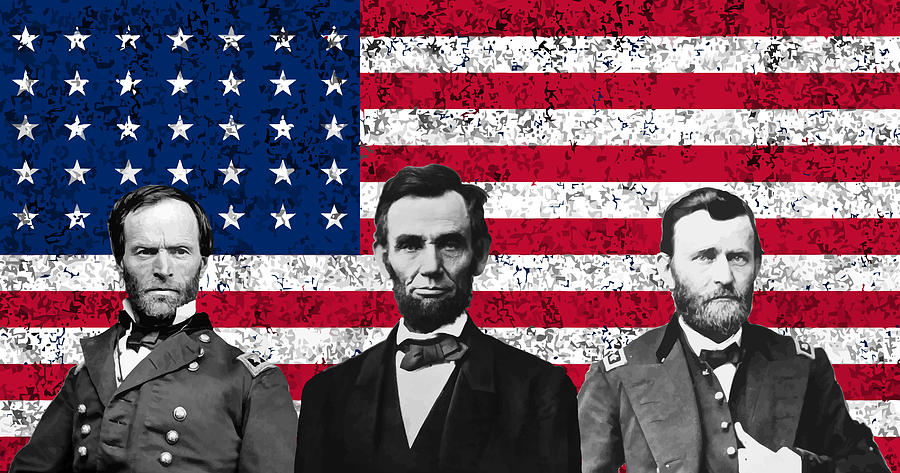
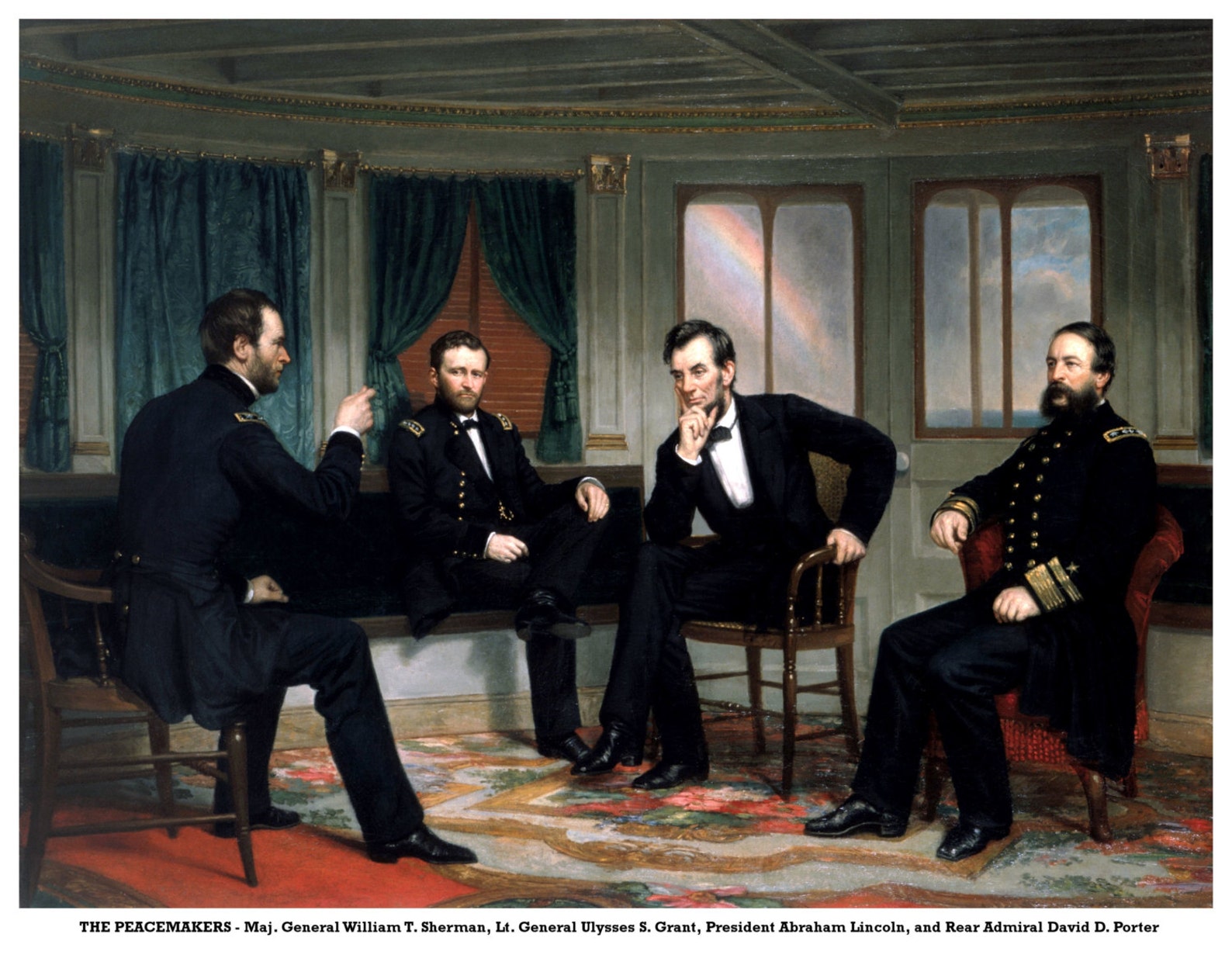
Secondly, it turned Sherman loose on Georgia.  That is what I talked about in my previous post.  Lincoln, Grant and Sherman met after Chattanooga, to discuss and plan how they would conduct the remainder of the war.  Grant and Sherman would use the same strategy as they advanced on Richmond and Atlanta, respectively.  Previously, Union generals would fall back after a major encounter with the Confederates.  Grant and Sherman just maneuvered around the enemy and continued their moves toward the objective, forcing the enemy to abandon a strong defensive position and try to move to block them.  Eventually Richmond and Atlanta were placed under siege.  This was the beginning of a change from the older forms of battle, which involved armies lining up on opposite sides of the field and shooting volleys at each other, to the more modern, trench warfare.

Lincoln, Grant and Sherman understood the importance of breaking the will of the population of the enemy, the civilians, as much as the army.  You can see this in all levels of competition.  If the people supporting the competitors realize there is no way they can win, everyone on both sides is aware that it is only a matter of time.


The only reason the Confederacy lasted as long as it did, is because of the incompetence of Yankee generals and the hope that there would be recognition of the Confederate States Of America by European countries, that it was indeed a separate nation.  The major Union victories eventually killed that hope.

Chattanooga set Sherman and Grant up to be able to demonstrate in the Eastern and Western Theaters that the North would eventually prevail. 


Saturday, March 9, 2024

Thin Air

 I'm reading The Oregon Trail, A New American Journey, by Rinker Buck.  Buck and his younger brother, Nick, followed the Oregon Trail in a wagon, like the ones used by the early pioneers.


I just reached the part of the story where they are crossing the lowest point on the Western Continental Divide and spending lots of time above 7,000 feet elevation.  Buck discusses an incident when he watered their mules and then left one of their 3 water buckets and a ladder behind on the trail.  He attributes this absent mindedness to the hubris and euphoria of hypoxia.

If you have read my blog to this point, you know a little of my experience hiking and skiing at higher elevations.  Of course, I also had some experience at high altitudes and high cabin altitudes in airplanes.  For clarification, I distinguish elevation, altitude and cabin altitude in this way.  An elevation is the height of a point on the ground above Mean Sea Level (MSL).  Altitude is a height above MSL in the air.  Cabin altitude is the equivalent altitude in a pressurized airplane.  For example, a pressurized airplane flying above 30,000 feet would have a cabin altitude equivalence of about 7,500 to 8,000 feet.  The air density in the cabin would be the same as that at those altitudes.

The Mount Whitney Trail, which I have hiked several times, begins at 8,300 ft. and goes to the summit at 14,500 ft. elevation.  I have flown airplanes as high as 41,000 ft. (rarely) with cabin altitudes between 8 and 9 thousand feet.  Most flying of jets is done in the 30 to 39 thousand foot range.  

During the early years of my flying career, I flew only two types of pressurized planes.  Almost all of my flying time was in unpressurized airplanes.

The one experience I was reminded of by Rinker Buck's tale of euphoria on the Oregon Trail was very early in my 5 years flying for Graham Aviation FBO in Butler PA.  I was trying to build flying time and experience and always looking for ways to do so.  Technically, I was still married to a flight attendant for Allegheny Airlines and able to fly with a  non-revenue pass.  We were a Piper dealer and the single engine planes we sold were made in Vero Beach Florida.  They then had to be flown to Butler.  That is where I put all of the above together and told the boss I wanted to travel to Vero Beach and fly a new Warrior back.


It has been a while since that trip, early in my career, but what I remember about it was my first personal exposure to the effects of high altitude euphoria, which can be deadly.

I had flown planes back from Vero Beach before.  Jim, BS and I brought 2 Cherokee 140s back, when I was still a student, working on my commercial license.  I learned about the range capabilities of these planes and knew I would have to stop for fuel, at least once.  I think the Warriors range was a little more than the Cherokee's but would still have to stop for fuel.  The best place to do that was before I began crossing the Appalachian Mountains, somewhere in North Carolina.  Options thin out until the border of West By God Virginia and Pennsylvania.  I had thought about this long and hard and knew this was the smart move, when I was on the ground.

Unfortunately, we had this thing called the 1973 Oil Crisis.  Fixed Base Operators (FBO), where struggling to get enough Avgas for airplanes.  They are the gas stations for general aviation flying across the country.  This was before the internet and getting information about availability was not easily available.  Typically, you could call them on the radio to ask about fuel availability, except that the plane I was ferrying had no radios.  They would be installed by our shop, when I arrived at Butler Graham.

I had planned where I would stop.  I don't remember which airport, but it was not one that required radio communication with Air Traffic Control.  To extend the range, I decided to fly at 12,500 feet.  Piston engine planes get a higher true air speed and burn less fuel at higher altitudes, to a point.  By regulation, 12,500 ft. was the highest altitude I could fly without supplemental oxygen or pressurization.  As I neared my planned airport, I checked fuel quantities and thought I could continue farther.  After some time, I was beginning to see the mountains to the north. I suddenly realized that I must have been experiencing euphoria from my time at 12,500.  It hit me like a baseball bat.  I was beginning to think I could extend all the way to Butler.  That was probably a very fortunate and unusual realization, for someone in that situation.  I checked the map for the nearest airport at which I could land and began my descent, getting smarter with each 1,000 feet. 

I think it was Mount Airy, North Carolina, but would have to check my logbook to be sure and it is currently 1000 miles away.  I got refueled, probably got something to refuel myself and flew the rest of the trip without incident.  

When I would tell my parents about trips like this, they were always shocked to learn that you could fly around the country like this without getting permission and talking to someone all the time.  God Bless the good ol' USA, for as long as we can keep it, which is not looking very promising at this time.


Tuesday, February 20, 2024

Uncle Billy

 Since 1979, I have virtually stopped reading fiction, except for those few articles I may read in today's newspapers.  Just kidding...kind of.  I prefer reading books about American history and biographies of people who made an impact on American history.  

The only fiction I have read would be books that are sometimes called "faction", because they are novels about historic events, people and places.  Examples would be Burning Ground, by D.A. Caldwell, about the exploration of what is now Yellowstone National Park.  Caldwell also wrote Fatal Ground, about what is called Custer's Last Stand.  I have also read many of the novels of James Michener, which cover a wide range of history.

The reason for my interest in American history began in 1979, when I was living in Atlanta Georgia.  I had gone to attend a school to acquire my flight engineer rating and was hired as an instructor afterwards.  I met many Southerners while I was there.  One of them is still one of my best friends, about whom I wrote in earlier posts.  However, there were some who were still carrying a grudge against people from the North.  They put them in two categories, Damn Yankees were those who came to visit and left and Goddam Yankees came and stayed.  At that point, I seemed to fall into the latter group.

At that point, the Civil War had been over for 114 years.  Growing up, I had learned about the war as early as grade school and in much more detail during my junior year in high school.  However, I had moved on and was very surprised to learn how people in the South held a grudge more than a century later.

I wanted to try to gain an understanding of the war to have something to say to them, when they told my how terribly the people of the North had mistreated them.  I wanted to learn about their war time experience and their reasons for fighting the war.   Some explained that the focus of their anger and hatred and the excuse for their behavior to me was General William T. Sherman.  My thoughts were that no one from my family had come to the United States until the later 19th Century, so WTF?

Sherman had brought the war to Georgia, taking the city of Atlanta and then marching across the state to Savanah.  To execute that march, he had severed his supply lines and his army lived off the land, taking what was needed from the farms along the way.  What he didn't need was destroyed.

As I read, I got a better understanding of Sherman's thinking.  When the war began, he was the head of a military academy in Louisiana, that became Louisiana State University (LSU).  Sherman was from Ohio and had graduated from West Point.  David French Boyd, a close friend, recalled Sherman declaring at that time:

"You people of the South don't know what you are doing. This country will be drenched in blood, and God only knows how it will end. It is all folly, madness, a crime against civilization! You people speak so lightly of war; you don't know what you're talking about. War is a terrible thing! You mistake, too, the people of the North. They are a peaceable people but an earnest people, and they will fight, too. They are not going to let this country be destroyed without a mighty effort to save it ... Besides, where are your men and appliances of war to contend against them? The North can make a steam engine, locomotive, or railway car; hardly a yard of cloth or pair of shoes can you make. You are rushing into war with one of the most powerful, ingeniously mechanical, and determined people on Earth—right at your doors. You are bound to fail. Only in your spirit and determination are you prepared for war. In all else you are totally unprepared, with a bad cause to start with. At first you will make headway, but as your limited resources begin to fail, shut out from the markets of Europe as you will be, your cause will begin to wane. If your people will but stop and think, they must see in the end that you will surely fail."

Southerners were not convinced.

I am now convinced that I know far more, than my antagonists of 1979, about the causes, execution and aftermath of the Civil War.  The following video provides the best and easiest to grasp explanation of what drove Sherman to do what he did in Georgia.


Sunday, February 18, 2024

Communication Skills

 We learn to communicate almost immediately after birth.  Infants can see facial expressions and infer meaning from them.  They communicate with their own facial expressions in a very short time.  It is not difficult to see when they are happy or whether something is bothering them.

When my kids were learning to swim at a very early age, the guy who was teaching them had developed his PhD around a system of teaching young children to swim.  He taught us that different cries from infants meant different things.

There are cries of anger.  There are cries of fear.  There are cries of hunger.  There are cries of, "Hey, I messed my laundry and I want someone to do something about it".  There are many other messages being sent by this crying, but in all cases, a response is expected.  "Let me know you have heard and understood what I am communicating and that you will do something about it".

We moved on to learning the alphabet, then putting it together in words and eventually, sentences and paragraphs.  Even before that, kids are learning language, simply by hearing others speak and trying to imitate.  I've long said that the first time a child says no is the beginning of the development of that child to become an independent and self sufficient adult.

Communication becomes more and more sophisticated as we grow and have more life experience.  I was fortunate to be a child and teenager during the 50s and 60s, when there was more discipline and eduction going on in schools, as opposed to much of the indoctrination of today.  I attended Catholic schools through high school.  We were drilled with correct spelling, grammar  and diagramming sentences.  

As you may know, if you have read my blog from the beginning, I did not attend college.  In some ways this is beginning to look like a blessing, although college was probably not as bad then, as it is today.

Two years after graduation from high school, I was drafted into the United States Army.  I have written extensively about that experience. This morning, I was thinking about some of the things I was taught about communication while in the army.  During my second 8 week period of training, Advanced Individual Training (AIT), we were being taught how to talk on radios.  This was primarily because we were being trained to be scouts for armor units.

As scouts, we would be probing advanced areas, searching for the enemy and reporting back to the main body, the location, nature and size of enemy units.  We would also be calling in artillery strikes.  Precise and clear communication was critical. Mistakes or misunderstanding could cause lives to be lost.

Sometimes it was necessary to spell words in radio communicaion.  It has been decided that the normal alphabet can be easily misheard or misunderstood.  Therefore a phonetic alphabet was developed.  Words are used to represent letters.  You may be familiar with the phonetic alphabet that was being used by the US military during World War II, from seeing the TV series Band Of Brothers.  It covers E Company, 2nd Battalion of the 506th Parachute Infantry Regiment of the 101st Airborne Division, "The Screaming Eagles".  At that time the phonetic word for E was Easy.

At some point after WW II, the countries of NATO changed the phonetic alphabet.  This new one was the one we learned in 1966.  For example, Easy was changed to Echo.  Supposedly, the reason for the change was to make communication between people who spoke different languages more easily understood.

Not long after I left the army, I began learning how to fly and as you can imagine, precise and easily understood communication is as important in aviation as it is in the military.  Here, I encountered the familiar NATO phonetic alphabet again.  This makes sense, as airplanes can easily be flown anywhere in the world, it is necessary to have a standardized method of communication.  It was decided that English would be the language of international aviation communication and the NATO phonetic alphabet would be the standard.  Lucky for me, I did not have to learn new ones.  Not so lucky for those who want to be involved in aviation and their first language is not English.  Life can be tough.

Another aspect of critical communication, that I touched on slightly in discussing infant communication, is acknowledging reception of messages. In aviation, a read back is usually expected and sometimes required.  When air traffic controllers tell pilots to fly a certain heading, change to a different altitude or clears them for takeoff, landing or an approach, they want to hear back from the pilot, exactly what they have cleared them to do.  Simply saying Roger, will usually piss someone off.  The read back should also include the call sign, to assure that the correct airplane will do what the controller expects them to do.

Although it is usually not as critical, normal communication between humans should also have some standards.  When someone says something to you, it is good policy to acknowledge in some way.

OK, the reason I started thinking about this, is that I have a mobile repair guy, here in Fort Myers, I have been dealing with for a few years and I have been trying to get information from him.  He and his office have not been getting back to me and I am pissed, but I don't want to dust him off.  He is very good, when I can get him out to work on the coach.

Wednesday, January 31, 2024

Stillers FedEx Connection

 It is being reported, that the Steelers have hired Arthur Smith as their new offensive coordinator.  Smith was fired after 3 years as the head coach of the Atlanta Falcons.  He led the Falcons to 3 seasons of 7 and 10 records.  Prior to the Falcons, Smith had spent 10 seasons with the Tennessee Titans, the last 2 as offensive coordinator.  During that time, he has been credited with rehabilitating the career of quarterback, Ryan Tannehill, and developing the Titans' running game, behind Derrick Henry.

At first glance, this appears to be a typical Mike Tomlin move.  Many were discussing the many young, up and coming, offensive minded coaches who could be promoted to Steelers offensive coordinator.  Smith seems to have peaked out during his time with the Titans.  As a fan, my hope is that Smith is an example of the Peter Principle and will be able to thrive again as a coordinator.  Head coach may have been a bridge too far for him.  Dick LeBeau would be an example of a coach who was better as a coordinator than as a head coach.  Mike Tomlin may be another.

I had not paid much attention to Smith as the head coach of the Falcons.  I only saw parts of Falcons games on NFL Sunday Ticket Red Zone and he seemed to have the deer in the headlights look that we have seen on Tomlin's face, when the Stillers are losing late in games and he doesn't have an answer.  They would make good book ends.  During one game, the announcers seemed to be talking more about Smith's new mustache than his coaching abilities.

This morning I watched a YouTube video of Tomlin apologist, Rich Eisen.  He is all in on the Smith hiring, but he really likes Tomlin also. One of the points in his argument in favor of Smith, is that he does not need to work.  He is one of the 10 children of FedEx founder, Fred Smith.  Fred has a very interesting story, which you can read by clicking on the hyper link on his name above.  He is reported to be worth in excess of $5 Billion.  Eisen's rationale was that since he is the son of Fred Smith, the billionaire, Arthur did not need to work and was coaching because he loves it, just like Tomlin.

Steelers owner, Art Rooney, is starting to indicate he is getting tired of just not having a losing season.  For what it's worth, so is Snoop Dogg.


Saturday, June 24, 2023

Reflection

In this chapter, I intend to do a review of the entire blog, so far.  But first, I want to address something I have observed about myself, compared to many other pilots.

I have seen and heard many pilots express that they are tired of the job of flying airplanes.  They become tired, bored or jaded.  Sometimes they seem to think they are just too cool for the job. 

As I neared retirement age, some of my friends talked about how they were looking forward to retirement.  One friend was going on and on about that and then stopped and looked at me and said, "You don't feel that way, do you?"  I quietly said, "No."  

When I first went to work for UPS, I quickly learned not to be the first to tell my sob story, about how hard it had been to develop my career to that point.  There was always someone in a group who had more challenges.  However, I had many challenges and it took a lot of time, with twists and turns, to get to an airline job that met my original goals.  When I was still in the struggle, it would piss me off to see or hear those who had gotten the type of job I was seeking and then act like they could not give a shit.  I believed they did not deserve it.

Granted, most of my challenges were of my own making.  Not going to college was the biggest obstacle and that was my fault.  I always thought that was a bullshit requirement, but it was a big and well known requirement.  Some airlines liked to brag that, they had only college educated pilots, but it was primarily a way to thin the herd of applicants, when supply exceeded demand.  I had 12 years of Catholic education, which was very rigorous and I have seen the results when I have read things written by some of those college educated pilots, with grammar and spelling errors that the good Sisters of St. Joseph would never have tolerated, not to mention that much of it was simply incoherent.

The subtitle of the blog is How Not To Build An Aviation Career and I  would not advise a young person to do it as I did.  My success, despite my self created challenge was the result of hard work, perseverance and luck.

Now, let's get to the review.

As a child, I loved vehicles, from scooters, to tricycles, to bicycles, to cars, to motorcycles.  I thought everyone did, but have learned over time that not everyone has the same love of controlling a vehicle that I do. 

At first, I did well in school, but in high school, I really began to get tired of it.  After high school, I was just drifting and existing.

I was drafted at the beginning of the Viet Nam War.  1965. 

On a nasty winter night, as I was flying to my next phase of training in the Army, I made some important changes in the way I viewed the world.  I decided to try to be all I could be. 1966.

I had an opportunity to attend several classes in the military, including the drill sergeant school.  With the help of the Army, I turned myself from a mild mannered young man into a drill sergeant.

After the Army, I tried several jobs, not doing well enough to be successful, because I needed to have something to hold my attention and inspire me to work hard.  I needed something I could love to do. 1967.

I married a flight attendant and that planted the seed that I should be an airline pilot, but at that point in time, getting there looked like a nearly insurmountable obstacle.  It would take lots of time, work and money. 1968.


For a few years, I kind of messed around, but eventually, after many stumbles at my other jobs, I decided I was going to be a pilot come hell or high water, even if it meant not being an airline pilot.  My experience in flight training told me I could do it and I knew I would be happy doing it.  I could be happy as a flight instructor or crop duster, but I would always work toward my goal. 1972.

Shortly after this, my flight attendant wife decided she didn't want to be married to me anymore.  I used my anger about that to power my efforts to build my career.

There were 5 great years of accumulating flight hours, knowledge and experience at Butler Graham Airport.  We put in long days there, flew under equipped airplanes in lousy weather and had as much fun as young men can have.  I was also acquiring lifelong friends. 1973 to 1978.

Airline Deregulation was coming and 2 of those friends talked me into breaking out of the rut.  I kind of landed in another rut, but was gaining a level of knowledge about transport category jet airplanes that probably exceeded what most pilots know.  I was actually teaching systems and procedures to airline pilots.  When a new entry airline sent its pilots to the school where I was teaching, I latched on to them like a tick. 1979 to 1982.

My efforts were rewarded when I got my first airline pilot job with Pacific Express.  My new wife and I moved to California and our daughter was born there.  I gained great experience there.  Flying in the West was quite a bit different from what I was used to.  The mountains were higher and more beautiful.   I had some issues at first, but was getting the hang of it and had upgraded to captain, just before my first airline bankruptcy. 1982 to 1984.

I had friends in management at another new entry airline in Orlando.  I got the job and moved my family down there, as I assumed the position at the bottom of my second seniority list at Florida Express.  It was another low paying, hard working job, but was probably the most fun job I ever had. My son was born in Orlando.  Florida Express began to struggle and was bought by Braniff Airlines, what we called Braniff II.  1984 to 1989.

The Braniff II bankruptcy was much tougher than the first.  I was unemployed for 3 months, the longest such period since I got my Social Security Card at age 15.  I now had a wife and 2 children and was very long in the tooth to be getting hired by an airline, but I had 7 years of airline experience, flying jets to go with my 5 years of flying in General Aviation professionally, nearly 10,000 hours total time.  There were a few opportunities for a guy like me, but there was a reason for that.  Some friends had gotten hired by UPS and were reporting that it was not a great job.  However, I needed a job and life experience told me it had to be a flying job.  I managed to get my defecation in sequence long enough to get through the interview process with UPS and they hired me.  December 27, 1989.

It didn't take me long to learn not to be the first to tell my sob story.  It seemed everyone else had a much more interesting one.  It reminded me of what an old boss used to say, "The first liar doesn't stand a chance."  Anyone who could, was leaving UPS for greener pastures.  I moved up the seniority list rapidly, because pilots senior to me were moving on.  We were working under a contract negotiated as members of the Teamsters, when the company held all the high cards.  We had 3 month bid periods, reserve was a 24 hour per day nightmare (when do you sleep?), and the pay was low, with no hope of even getting back to the atypically low airline pilot pay at the 3 new entry airlines where I had worked previously.  I was a flight engineer on the DC-8 my first year and took the first opportunity to bid to the right seat of the 747, even though I was still on probation.  1991.

I spent the next 5 years flying the Whale to Europe and Asia, as well as to Alaska and Hawaii and a few cities in the USofA.  They were basic trunk routes, carrying lots of stuff between hubs in the hub and spoke system.  It was great fun and experience and I came to admire the captains who could take someone like me, who was not experienced in international flying and go anywhere in the world.  During my first year doing this, we were flying military flights in support of Desert Storm.  During this time, the pilots were able to form their own, independent union, the Independent Pilots Association and negotiate a much, much better contract.  We were now earning a significantly improved amount of money and working under far better conditions.  It was not quite what the traditional airlines were paying, but it was working in the right direction.  Fewer pilots were leaving.  1991 to about 1996.

It became apparent that I was getting close to being able to upgrade to captain and that the junior airplane was the Boeing 757.  I had heard stories about the challenge for geezer pilots, like myself, who had spent their careers flying what we called "steam gauge" airplanes, trying to learn the new generation airplanes with flight management systems and glass cockpits.  I decided to bid to the right seat, as a first officer, on the 757, before I was able to upgrade.  I wanted to learn the plane on someone else's ticket.  Training was a challenge, but my instructor got me through it.  I learned that flying the plane was actually easy, it was a terrific airplane.  The problem was all the computer stuff, but I eventually figured it out, with the help of patient instructors and captains, while flying the line.  My logbooks are currently 1000 miles away at this time and I am guessing this was about 1996 or 1997.

By the time I upgraded to captain, I knew the plane well and felt very comfortable flying it.  I think it was around that time the B-767 was added to the fleet and it was included in the 757 type rating, so all that was required to fly it was some differences training and some time with an instructor in the actual airplane.  The computer stuff was the same, the big difference with flying the 76 was that the cockpit view was higher during landing.  There is a radio altimeter that talks to you during landing and it helps a lot, telling you your height above the runway.  I had a few opportunities to fly the 767 across the North Pacific, from Anchorage to Tokyo.  It was different having only 2 engines, but I flew the 757/767  twice as many years as the 747 and never had to shut down an engine.  There were 2 shutdowns on the 747 that I can remember for sure and maybe a third.  The difference, of course, is that losing one engine out of four is not a big deal.

60 was the retirement age for airline pilots when I reached that age in August 2005.  For many reasons, I could not afford to retire at that time.  UPS still had DC-8s and B-747s, that required flight engineers.  There was no mandatory retirement age for engineers, so I decided to continue working and downgrade to second officer on the DC-8.  The plan was to work for 5 years.

At about 2 to 2 and a half years, the retirement age changed to 65.  There was much anger among younger, junior pilots on our seniority list about that. They wanted the older, senior pilots to just go away.  To them, this meant 5 more years to wait for upgrade and quality of life improvement to occur.  

I could see their point, but had my own concerns.  Because of the setbacks of multiple bankruptcies, with furloughs from which there were no recalls and very low paying years, I had to work as long as possible at the best paying position I could hold.  I was getting close to retirement and had to build up my pile of money as much as possible.  In the debate, I eventually told those who were angry, that I was as concerned about their issues, as they were about mine.

We weren't sure what the company would do with regard to upgrades.  Would they allow an actual upgrade when a position became available that I could bid for in seniority, or would they just award the position for pay purposes and keep us in our previous position, without training for the upgrade.  UPS decided to allow the actual upgrade, probably because they knew of the division within the pilot group.  Regardless, I had to bid for the increase in pay.

It took some time before an actual vacancy bid, but when it came, there were so many pilots in my category as flight engineers who were senior to me, that a captain position was not available to me.  I was able to hold a first officer position on the B747-400, based in Anchorage Alaska.  After discussion with Doreen, I bid for that position and got it.  I had about 2 years to go to age 65 retirement.

The plane was easy for me to learn, because I had flown the B747-100 and was used to the size and weight and because the 400 had basically the same technology in the flight management system to the 757/767.  My simulator partner had never flown any of the electric airplanes and had similar experiences to my own when I first learned the 757. 

I loved the international trips on the Whale and was able to return to my favorite international layover cities, Cologne and Hong Kong.  Hong Kong had been turned over to the Chicoms by the Brits since I was last there, but not much had changed by 2009.  

We began flying a trip that went around the world, albeit only in the Northern Hemisphere.  It began in Anchorage, flew to Louisville, then to Cologne.  From there it went on the longest leg I had ever flown, 12 hours + from Cologne to Hong Kong.  After that, the version I flew was back to the west to Dubai, layover, then to Cologne.  We did the Cologne to Hong Kong leg again, then on to Anchorage to finish the trip.  We flew one really long leg per day, then had a layover of some multiple of about 24 hours, waiting for the next Whale to come back.

The big issue was commuting.  I had never really done that for very long before.  I was looking at 2 years to age 65 retirement and considered buying a condo in ANC, but ended up just getting into a crash pad with several other commuters.  I had to be careful in planning my commute and jump seating on UPS was the preferred option of travel.  It was a 6 hour flight each way and I brought a sleeping mattress and sleeping bag to catch a few Zs for the trip.  It worked out better than I thought it would and I really enjoyed the flying.  

After about a year, I was able to hold a captain bid on the Airbus A300.  The automation was a bit of a step back from the Boeing system, but I stumbled and bumbled my way through my last year on the Bus.  

I was beginning to sense that it was time to hang it up and I had done the best I could do to facilitate a reasonably comfortable retirement.  

I am looking back on all that now, with 13 years of retired perspective and frankly still don't understand those who are so hot to retire.  I absolutely loved everything about my career and in retrospect, would not change any of it.  There were several times in my life, when something that seemed like the worst possible thing that could happen, turned out to be a very good thing.  A few examples would be, getting drafted in the Army, getting divorced from my practice wife, not getting hired by USAir and the Braniff II bankruptcy.  All of those turned out for the better, after several years of letting things work themselves out.